
What is the approximate stakeholder breakdown of your ecosystem?
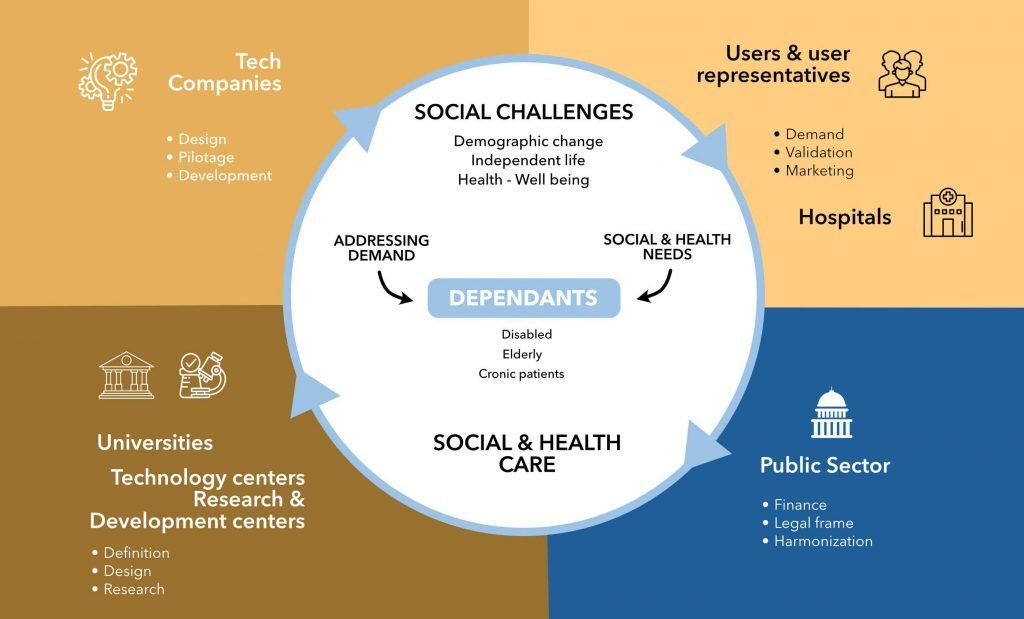
The Castilla y León Health and Social Care Ecosystem, coordinated by the Cluster Innovative Solutions for Independent Living (SIVI, for its acronym in Spanish), is based in the region of Castilla y León, Spain. Castilla y León is a community with socio-demographic characteristics that position it as a genuine “social laboratory” and a profitable territory for the development of a reference model to promote the autonomy and social integration of dependent people.
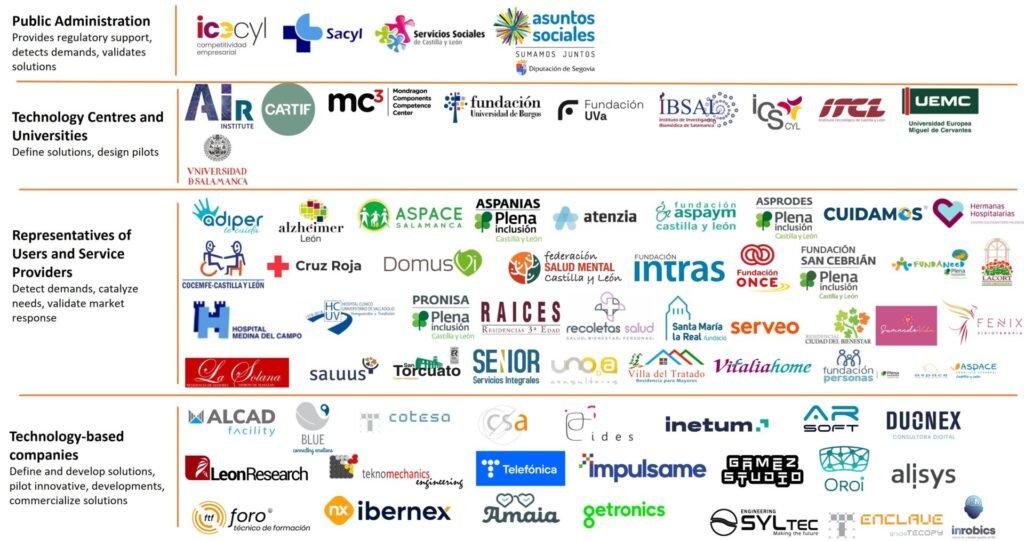
For this reason, the ecosystem brings together a significant number of public and private organizations of the quadruple helix (providers of socio-assistance services, technology companies, university research groups, technology centers and the third sector) with experience in the design, development and application of innovative technological solutions in the fields of active and healthy aging, mental health, disability and independent living. It has a strong representation in the area of social services, the field of dependence and care as spaces to deploy the great potential of person-centered technology thereby contributing to the social and economic development of the territory.
Who are the top 3 champions from your Ecosystem?
It’s difficult to mention just three; many of the entities that make up the SIVI Cluster’s Health and Care Ecosystem are leading international technological advances, leading to global breakthroughs that have and will continue to bring numerous benefits to the sector and the target population.
The level of evolution in all areas covered by the Health and Care Ecosystem in Castilla y León is truly remarkable. Furthermore, considering the nature of this sector, it is worth highlighting the advances in research, development, technologies, and even at the organizational level. An increasing number of interesting projects are being carried out within this ecosystem, both in terms of number, capacity, quality, and cooperation.
Furthermore, although numerous cooperative projects have been developed, the SIVI Cluster, together with its partners, is implementing strategies and actions to further strengthen this collaboration, with the aim of generating diverse projects and involving more inter- and intra-sector stakeholders to generate new synergies and provide significant value.
What EU funding/collaboration are you involved with, or you would like to be part of?
The SIVI Cluster and its ecosystem, have participated in and promoted various R&D projects such as:
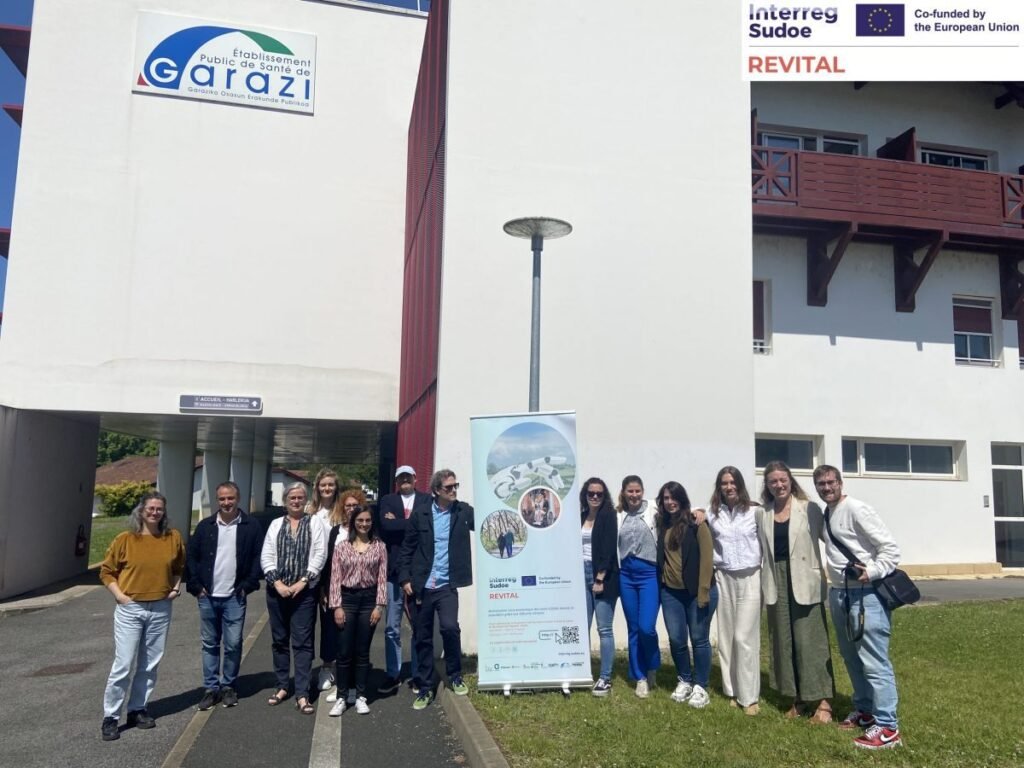
The project has a clear strategic focus on strengthening social cohesion and territorial and demographic balance through social innovation and endogenous development. The challenges and needs to be addressed are clear: responding to depopulation and aging in inland rural areas by attracting new residents with social and healthcare training; preventing elderly and dependent individuals from having to migrate to urban areas to access advanced clinical services; and developing sustainable production systems based on telecare and telerehabilitation technologies, addressing the social needs that are not sufficiently met in the field of social and healthcare services.The Innovative Solutions for Independent Living Cluster (SIVI) is coordinating this project, which includes the participation of the Social Services Management of Castilla y León, the San Cebrián Foundation, GOGOA Mobility Robots, the Superior School of Advanced Industrial Technologies (ESTIA), the University of DEUSTO, the GARAZI Public Health Institute, the Beira Baixa Business Association (AEBB) and the Castelo Branco Polytechnic Institute (IPCB), which make up the entire consortium.
This is an area that is being strengthened and prioritized now, with more and more projects in which the cluster is entering to participate, both locally, nationally and internationally. This, among others, is one of the objectives for which SIVI Cluster is becoming part of networks such as ECHAlliance, MEDIC-NEST, ACESABIO, RSCN, etc.
Apart from the European calls we are already involved in, we are also interested in collaborating within other European initiatives such as Interreg POCTEP, Erasmus +, and Horizon Europe.
What are the key priorities and themes for your ecosystem?
Could you highlight some services, solutions or champions from your ecosystem that target the following areas either: 1) Women’s Health 2) Healthy Ageing 3) Mental Health or 4) Cancer?
Our ecosystem brings together a diverse number of partners with solid initiatives in different areas, such as those mentioned above. Each of them is a leader in their sector and stands out for their outstanding work in these fields:
1) Women’s Health: Recoletas Women’s Unit – The objective of the Recoletas Women’s Unit is to promote women’s health at all stages of their lives, with a multidisciplinary and integrated approach through a broad portfolio of services and an excellent medical team. The Unit was created from the union of two leading healthcare teams and will specialize in improving women’s gynecological, obstetric, sexual, and reproductive health. It will offer comprehensive, highly specialized medical care with the latest clinical and technological innovations.
2) Healthy Aging: In 2014, the regional administration approved the comprehensive healthy ageing programme that includes all the activities and services that, in terms of dependency prevention, are developed from the active ageing programmes carried out by the public administrations of Castilla y León and private entities financed totally or partially with public funds. In addition, it has the network care project that combines care at home and in residential centers in order to offer individualized care to the elderly through different initiatives.
Cluster SIVI, together with the Regional Government of Castilla y León, inaugurated the Living Lab SIVI this year within the Innovation and Technology Hub “La Aldehuela” in the city of Zamora. This Living Lab brings together a wide range of cutting-edge technologies aimed at supporting independent living for individuals facing various types of disabilities, including age-related conditions. It recreates real-life scenarios in a controlled environment to test and evaluate technologies and services under development—focusing on usability, accessibility, and real-world impact. Elderly individuals are actively involved in the process, being invited to test and experience these solutions firsthand. Through workshops and other participatory activities, they contribute to shaping innovations that can foster a more independent, less isolated, and better-integrated lifestyle.
3) Mental Health:
Mental Health Federation: Through the Mental Health associative movement, they work every day to improve the quality of life of people with mental health problems and their families, as well as to defend their rights.
INTRAS Foundation: Its objectives are to improve the quality of care for people with mental health problems. To promote and support clinical and epidemiological research in mental health. To promote and support research in the management and organization of social services, especially those associated with mental health.
4) Cancer:
Fénix Fisio: This program focuses on the rehabilitation of patients who have undergone mastectomies, specifically addressing the pain and loss of mobility that can arise after this surgery. It uses gentle manual therapy techniques to improve mobility and reduce pain, combining them with therapeutic and strengthening exercises tailored to each patient’s needs.
What is your primary strength as an ecosystem?
The ecosystem aims to make available to the entire care sector new and better services that are supported by a digital transformation process that complements and facilitates professional care. Its main objective is to improve the quality of life of people in situations of dependency through the application of innovative solutions with a high technological component and to boost and promote the competitiveness of the sector. We are promoting the development of new technologies to support people through advanced remote assistance and co-creation processes for the development of prototypes of various technical assistance which have been executed through innovative public procurement processes. The multisectoral nature of the ecosystem allows it to cover all stages of an innovation project: conception, design, development, testing in application groups, exploitation of results and marketing.