
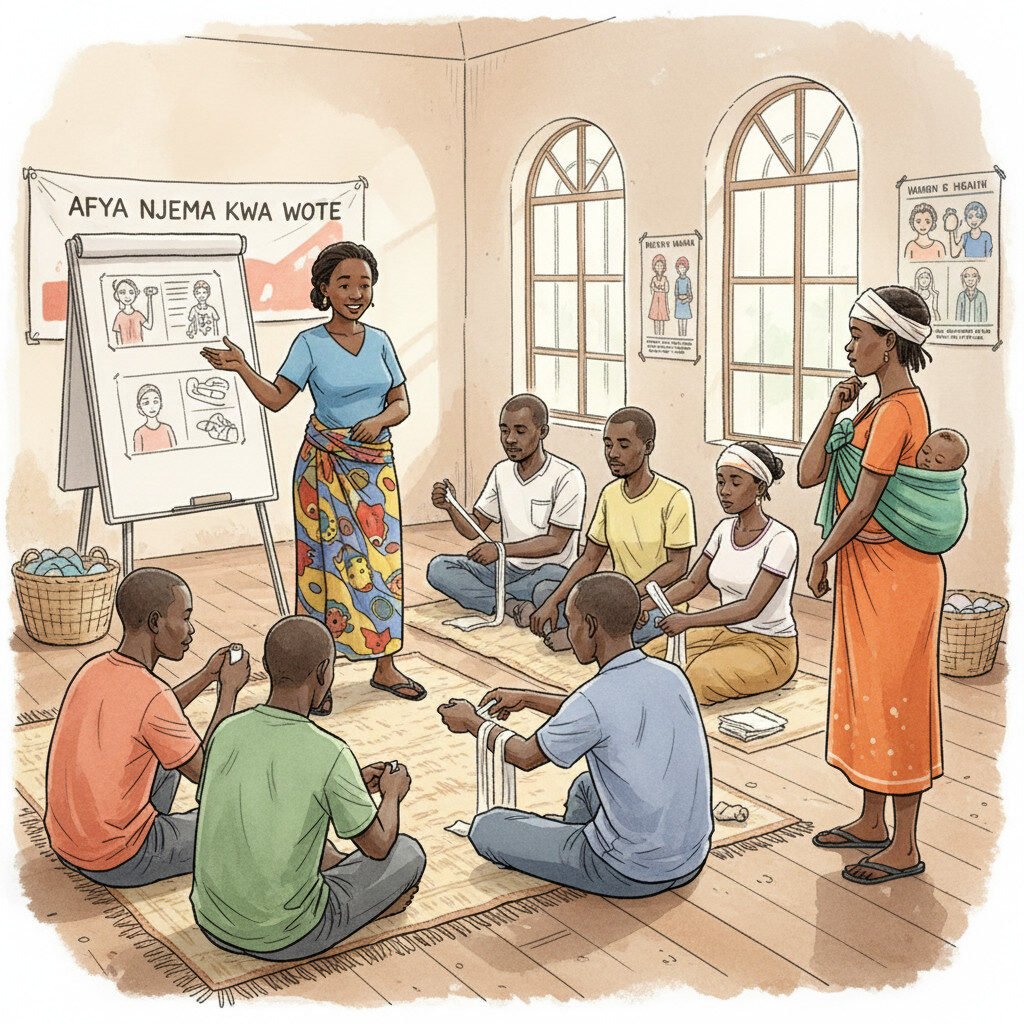
The QuickFix Learning Hub, an American Heart Association – certified training site in Nairobi, is expanding its community-based STOP THE BLEED® Kenya Initiative to address one of the leading causes of maternal death: postpartum hemorrhage. With many births in Kenya still happening outside health facilities, empowering caregivers and bystanders with lifesaving skills is key to protecting mothers’ lives.
Every day in Kenya, 13 people die in road crashes, but an equally urgent and often less visible crisis is unfolding in maternity wards and homes across the country: mothers dying from severe bleeding after childbirth, known as postpartum hemorrhage (PPH). Globally, the World Health Organization (WHO) estimates that around 14 million women experience PPH each year, leading to nearly 70,000 maternal deaths. A woman still dies every two minutes from complications of pregnancy or childbirth.
In Kenya, progress has been made in maternal health, but many families continue to face risks because not all births take place in hospitals or under skilled care. In rural areas especially, community members, traditional birth attendants, and even family caregivers may be the first – and sometimes only – responders when a mother begins to bleed heavily after delivery.
This is where The QuickFix Learning Hub comes in. As an AHA-certified training site, we focus on building capacity within communities to respond effectively to medical emergencies. One of our flagship programs, the STOP THE BLEED® Kenya Initiative, has already trained over 1,000 people across seven counties to recognize and control life-threatening bleeding in emergencies such as road crashes, workplace injuries, and community incidents.
Now, we are integrating a dedicated module on postpartum hemorrhage into our training programs. Our goal is simple but vital: to ensure that those most likely to be present when complications arise – community health volunteers, caregivers, boda riders, teachers, students, and birth attendants – are equipped with basic, practical skills to control bleeding and stabilize mothers while awaiting professional care.
This effort is informed by WHO’s 2023 – 2030 Roadmap to Combat Postpartum Hemorrhage, which calls for urgent global action to improve prevention and response. While advanced medical interventions — like uterotonics or surgical procedures — are essential, first response matters. With timely recognition, simple actions like applying external pressure, positioning the mother correctly, and activating emergency transport can save precious minutes, and ultimately, lives.
Our community-focused approach emphasizes:
For us, this work is not abstract. During trainings, participants often share stories of mothers, sisters, or neighbors lost to postpartum bleeding. These are not statistics — they are loved ones, and their absence leaves lasting scars on families and communities. By giving people simple, proven tools to act, we believe we can help rewrite that story.
As we move forward, our vision is to create a culture of readiness in Kenya — where every community has people who can respond to emergencies, whether it is a road crash victim, a farmer with a workplace injury, or a mother in childbirth. Each life saved strengthens families, supports healthier communities, and contributes to Kenya’s broader development goals.
At QuickFix Learning Hub, we know that sustainable impact comes from partnerships. We welcome collaboration with health providers, policymakers, and community organizations who share our belief that no mother should die from preventable causes. Together, we can ensure that when postpartum hemorrhage strikes, communities are not caught unprepared.