
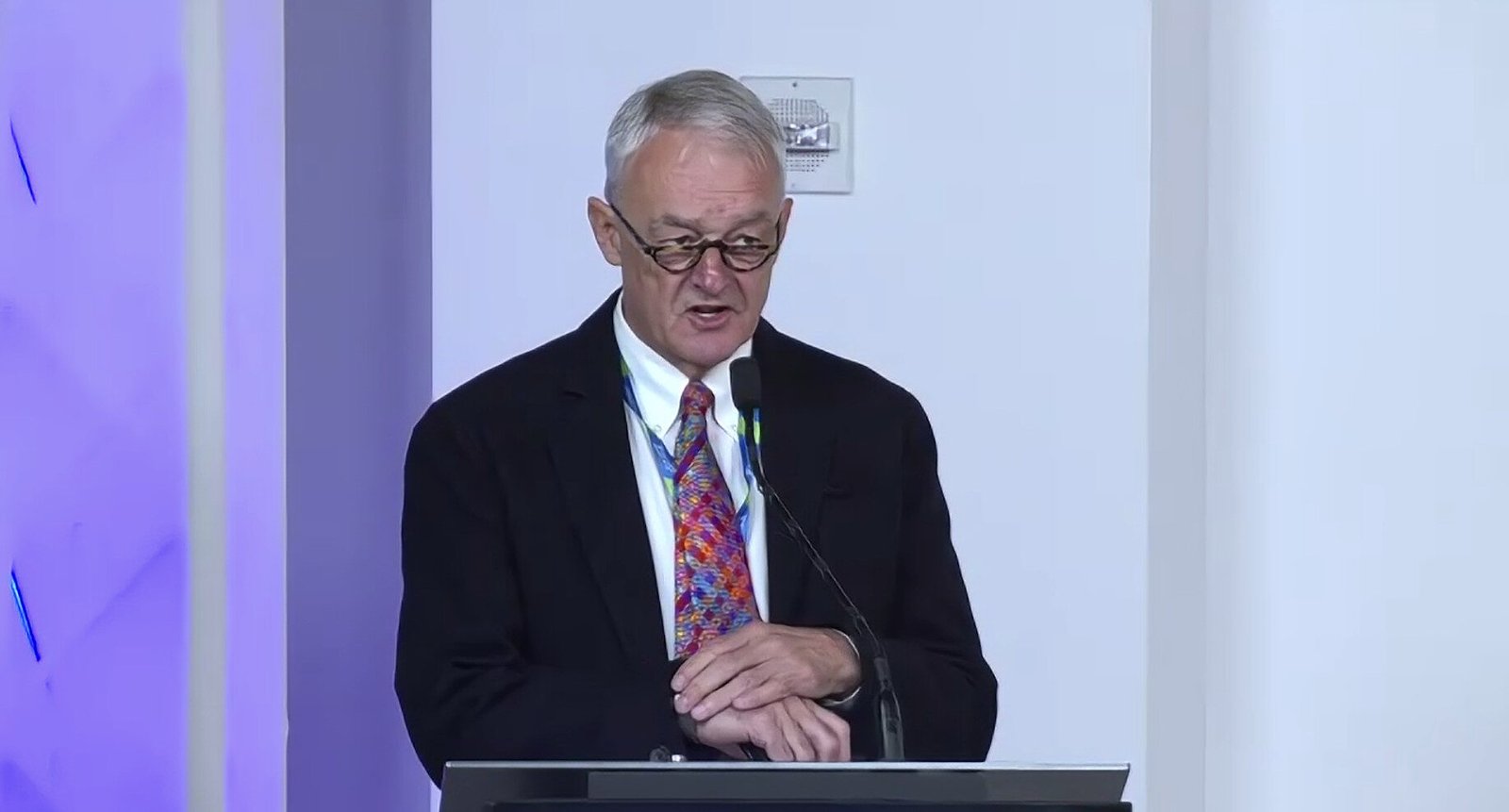
Bleddyn Rees, Deputy Chair of Global Health Connector, draws on his background in law and healthcare innovation to explore how intergenerational knowledge sharing can accelerate progress in global health.
As a lawyer, I realised knowledge was the tool of my profession and trade. After getting your degree, you start to soak up practical information and learn from experienced people and mentors. Not all professionals will pass on their best knowledge, seeing it as a competitive advantage to retain their positions.
A challenge for many businesses is knowledge loss when people leave — whether through retirement, cutbacks, or changing employers. Technology has, in recent years, provided tools to make it much easier to capture important corporate know-how that exists in people’s heads and create know-how databases for all types of organisations.
When I started working in healthcare, I was surprised by how clinical practice and health management could vary from clinician to clinician, organisation to organisation, and place to place (whether regional, national, or international). This challenge is not only knowledge loss but also not even knowing that knowledge exists somewhere else. That is why the Global Health Connector was originally set up — to transfer best practices and lessons learned from place to place and across borders. Like a pandemic, we know no borders.
The vision of the Global Health Connector is “A connected, collaborative world transforming global health, wellbeing, and longevity.” We do this by connecting brilliant minds across the world and fostering learning and collaboration to accelerate global improvements in health.
We recently organised two days at the United Nations General Assembly Science Summit, where a very striking comment was made about intergenerational knowledge transfer. One generation may have encountered a particular challenge at a point in time and acquired knowledge about what worked or did not work — and this important knowledge is lost if it is not passed between generations of healthcare professionals, managers, and policymakers. A challenge is that this knowledge can come from anywhere and from so many different people.
Global Health Connector has a range of tools and services to enable knowledge transfer, including:
We also foster CollaborAction with our strategic partners such as:
So how could intergenerational healthcare knowledge be shared? Is anyone aware of anyone doing this now? If not, how could it be organised? If you have any information, ideas, or want to help us, please reach out. We would love to hear from you.