“The problem of women has always been a problem of men.” — Simone de Beauvoir
A Global Mirror for National Challenges
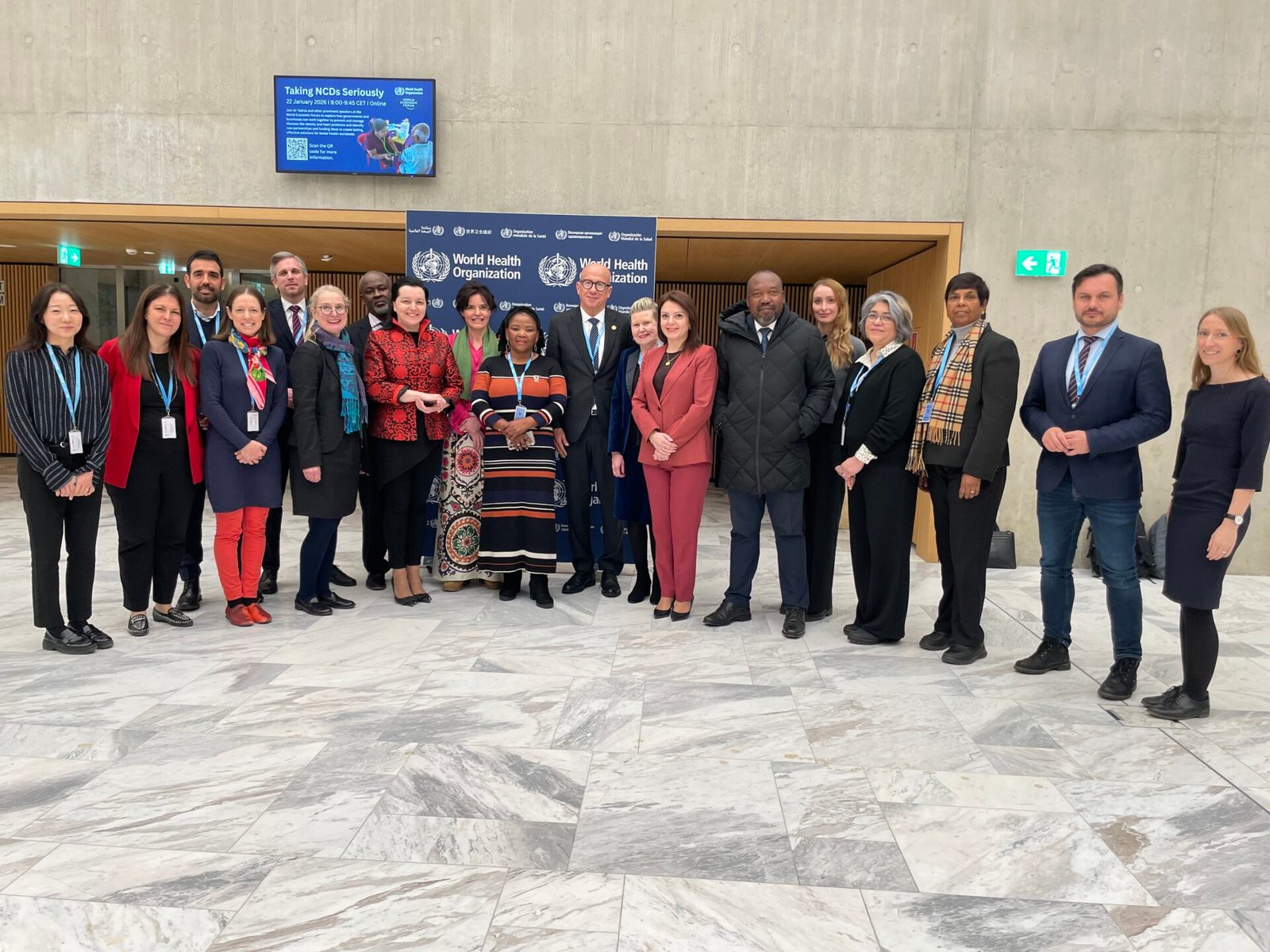
From 19th to 21st, 2026, Geneva hosted a parliamentary dialogue on women’s health that created a strategic opportunity to connect global priorities with national realities. Convened by UNITE Parliamentarians Network for Global Health and the Konrad Adenauer Foundation (KAS), the meeting brought together legislators, multilateral organizations, and academic institutions to develop evidence-based policy strategies to improve women’s health outcomes. In this column, I propose that these international dialogues be viewed as a mirror that compels us to rigorously review both the progress achieved and the challenges that remain in guaranteeing women’s full right to health. For my country of Mexico, where I am an elected member of the Legislature, the themes discussed during the event felt particularly pressing.
The dialogue focused on four thematic areas: non-communicable diseases and cancer in women, the mental health of women and girls, strengthening health systems (access, quality, and data), and promoting women’s leadership in health governance. While Mexico has made significant regulatory and programmatic advances in these areas, persistent gaps continue to produce inequality, fragmentation, and preventable suffering for millions of women.
Non-Communicable Diseases
Mexico is undergoing an epidemiological transition in which chronic non-communicable diseases (NCDs) —cardiovascular disease, diabetes, cancer, and chronic respiratory conditions—are now among the leading causes of premature death and disability. The 2025–2030 Sectoral Health Program acknowledges this shift and sets a clear goal: reducing the probability of death from these diseases between ages 30 and 70 from 15.05 in 2023 to 13.50 by 2030.
For women, the burden is intensified by structural inequalities in access to care, gaps in sexual and reproductive health, and territorial, cultural, and economic barriers. These risks increase during midlife and menopause, a stage associated with higher cardiovascular and metabolic risk, osteoporosis, and other chronic conditions that remain insufficiently addressed by the health system. Breast cancer screening illustrates this gap: mammography coverage among women aged 50 to 69 is just 20.2%, far below the OECD average, leading to late diagnoses, higher mortality, and rising costs.
Law, Policy, and the Implementation Gap
Mexico’s legal framework is robust. It’s General Health Law recognizes NCDs, including cancer, as a public health priority and mandates prevention, early detection, registration, and control. Official standards such as NOM-041 (breast cancer) and NOM-014 (cervical cancer) operationalize these obligations. The challenge lies not in regulation, but in implementation—ensuring timely, effective access for every woman, in every community.
Mental Health
Mental health was a central issue in the Geneva discussions. In Mexico, the data are alarming: in 2023, 14.9% of the population reported moderate or severe depressive symptoms, and in 2024 anxiety (52.8%) and depression (25.1) were the most frequently treated diagnoses, disproportionately affecting women, adolescents, and young people. Among adolescent girls, suicide attempts have increased by more than 600% since 2006, revealing the depth of the crisis.
Behind these figures lie clear underlying factors such as gender violence, excessive caregiving, job insecurity, poverty and educational exclusion, factors that the program itself recognizes, although without yet fully mainstreaming the gender perspective.
Strengthening Health Systems
Strengthening health systems was another key focus of the dialogue. Recent reforms to the General Health Law and the 2025–2030 Sectoral Program address fragmentation, care deserts, and overcrowding through integrated service networks, IMSS Bienestar, telehealth, mobile units, evidence-based medicine, facility certification, and interoperable health information systems. Yet menopause remains a clear example of how fragmented services still force women to navigate between primary care, gynaecology, mental health, and chronic disease management without continuity.
Representation in Health Governance
Finally, the meeting in Geneva underscores an aspect that is often overlooked: women’s leadership in health sector governance. The Sectoral Programme acknowledges that, although women constitute the majority of the health workforce, particularly in nursing, community care, and nursing, their presence drops dramatically at management levels, in decision-making bodies, in research, and in budget prioritization.
From Dialogue to Action
My participation in this parliamentary dialogue as a member of Mexico’s National Action Party was a dual opportunity: to share recent regulatory advances and to confront, with evidence and honesty, the gaps that persist. The next generation of reforms must transform rights into measurable realities, adopting a life-course and gender perspective that recognizes menopause as a legitimate public health concern.
By Ector Jaime Ramírez Barba
Dr. Éctor Jaime Ramírez Barba is a medical doctor, public health specialist, and federal legislator. He holds doctorates in Health Sciences and Public Administration and is board-certified in General Surgery and Public Health. He has served as Secretary of Health on two occasions and as Secretary of Social Development for the State of Guanajuato. Currently a Federal Deputy (2024–2027) with the National Action Party (PAN), he serves on the Health, Social Security, and Transparency and Anti-Corruption Committees. He has been a member of UNITE Parliamentarians Network since 2022.