
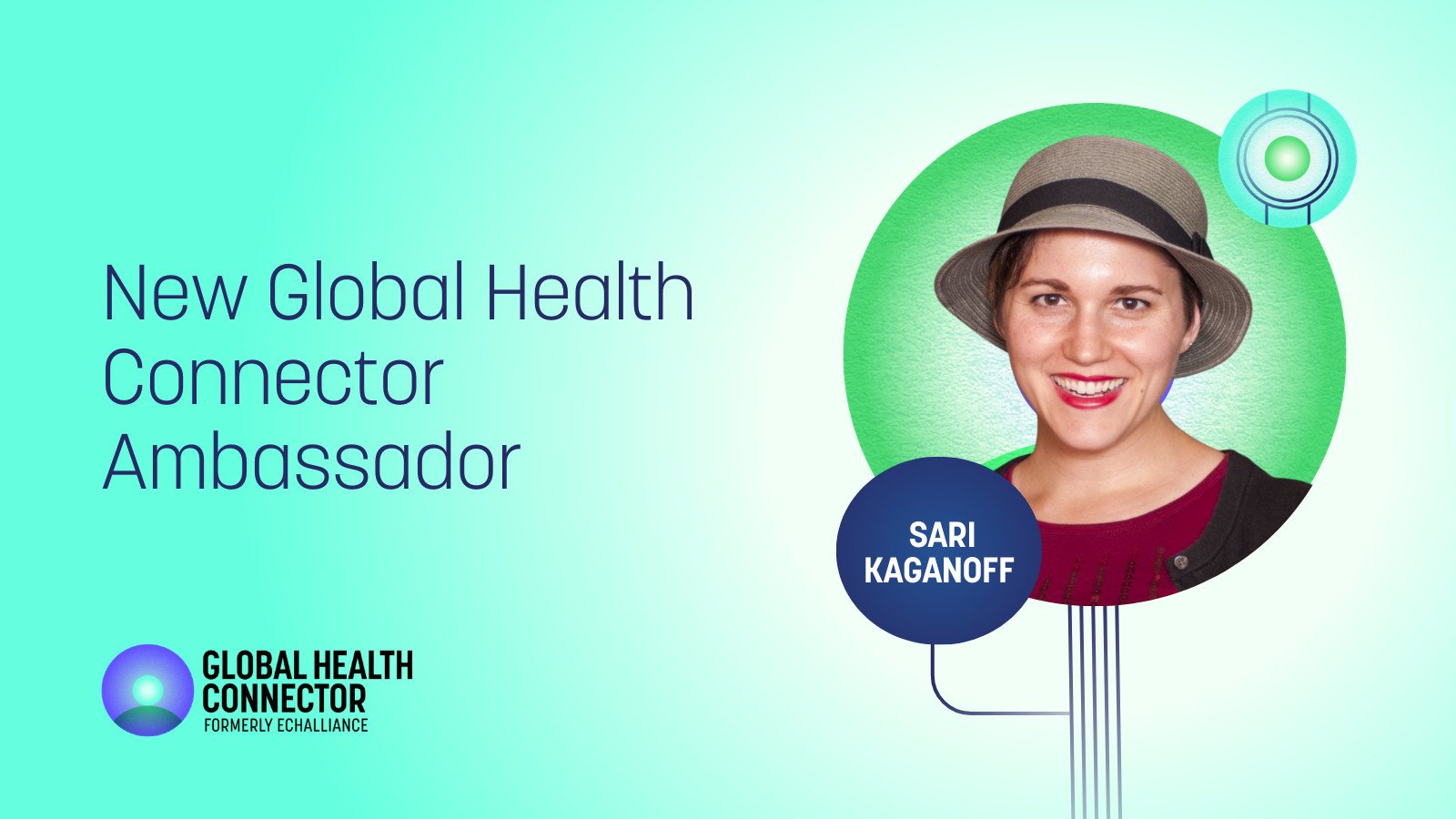
We are very pleased to welcome Sari Kaganoff as our newest US Ambassador at Global Health Connector.
Our Deputy Chair, Bleddyn Rees, commented on the news:
“We are delighted to welcome Sari to our circle of exceptional global Ambassadors. She co-led McKinsey’s Health Tech Network, with Tobias Silberzahn who is also one of our Ambassadors, and was Chief Commercial Officer at Rock Health. She will bring cutting edge experience of digital health strategy, innovation and investment. We are very excited to work with her, including her help and guidance on the development of the Global Health Connector Tech Network.”
Our Ambassador, Tobias Silberzahn, who previously recommended Sari, added:
“Sari not only has deep expertise in digital health, but also an incredible network in the healthcare innovation space. She knows what is needed to enter the US market and scale digital health solutions.”
Sari is the CEO and Founder of Aytza. Aytza combines expert advisors with proprietary AI and healthcare data to help health tech companies navigate their hardest strategic decisions: new market entry, commercialisation, new product strategy, and M&A.
She is also the host of the CEO Pajama Time podcast, where she talks to successful Health Tech CEOs about the story behind the strategic decisions and inflection points that shaped how they built their companies.
Prior to Aytza, Sari built and led Rock Health’s consulting practice as Chief Commercial Officer, which supported 70+ enterprise healthcare companies on digital health and innovation. She also served as an advisor to Rock Health Capital, bringing an investor’s perspective to her client work.
Sari developed her strategic foundation during her seven years at McKinsey & Company, where she co-led the Health Tech Network and Patient Experience domain and advised healthcare and life science clients on digital innovation, strategy, and commercialisation.
Sari received an MBA with honours from University of Chicago Booth School of Business and her undergraduate degree in Technology and Communications from Michlalah Jerusalem College. She currently lives with her family in Puerto Rico.
“I have always believed in the power of connections and collaboration across organisations and countries as a way to move the industry forward. Technology developed in one place needs to be adopted in another. Startups drive new grassroots innovation, and enterprises adopt and incorporate it into standard of care.
“As people working and living across different geographies and types of organizations, it’s our role to be connectors, to identify patterns and opportunities and create the linkages that move the broader healthcare ecosystem forward.”
Years ago, when I was at McKinsey, I co-led the Health Tech Network alongside Tobias and other colleagues. I saw firsthand that connecting health tech startups, investors, and enterprise healthcare companies can create truly meaningful outcomes. Now that the Health Tech Network is taking on a new life together with the Global Health Connector, I’m excited to reconnect with that mission and help bring it to new heights.
I’m excited to contribute new ideas and approaches around how we can further scale and systematise the activities within Global Health Connector to create even greater impact. I’m excited to bring that cross-sector perspective into Global Health Connector’s community to help foster meaningful collaboration and drive tangible outcomes across the ecosystem.’’
“We’re at a fascinating moment in the healthcare ecosystem, where we’re seeing a real step change in technology adoption and opportunity. This isn’t just another wave of technology transformation.
“AI will fundamentally restructure how our tools are built and how our work gets done. We’ll move toward more custom-built applications that evolve within individual organisations and workflows.”
On the healthcare incumbent side, one of the most important things leaders can do is experiment with new technologies while remaining rigorous and thoughtful. That means clearly defining your standards, creating sandbox environments to test solutions, and building more agile decision-making structures.
On the startup side, it’s important to recognise that technology being easier to build does not remove the need for a deep understanding of the problem you’re solving. Domain expertise and strong relationships remain critical ingredients for success.
One thing we’ll have to reconcile as an industry is the two-speed pace where clinical validation and outcomes assessment will still take time, even as technology evolution moves more quickly. Staying flexible and adaptable will help us assess new opportunities more quickly and ultimately create greater impact on the health and wellness of our communities and the world.”