
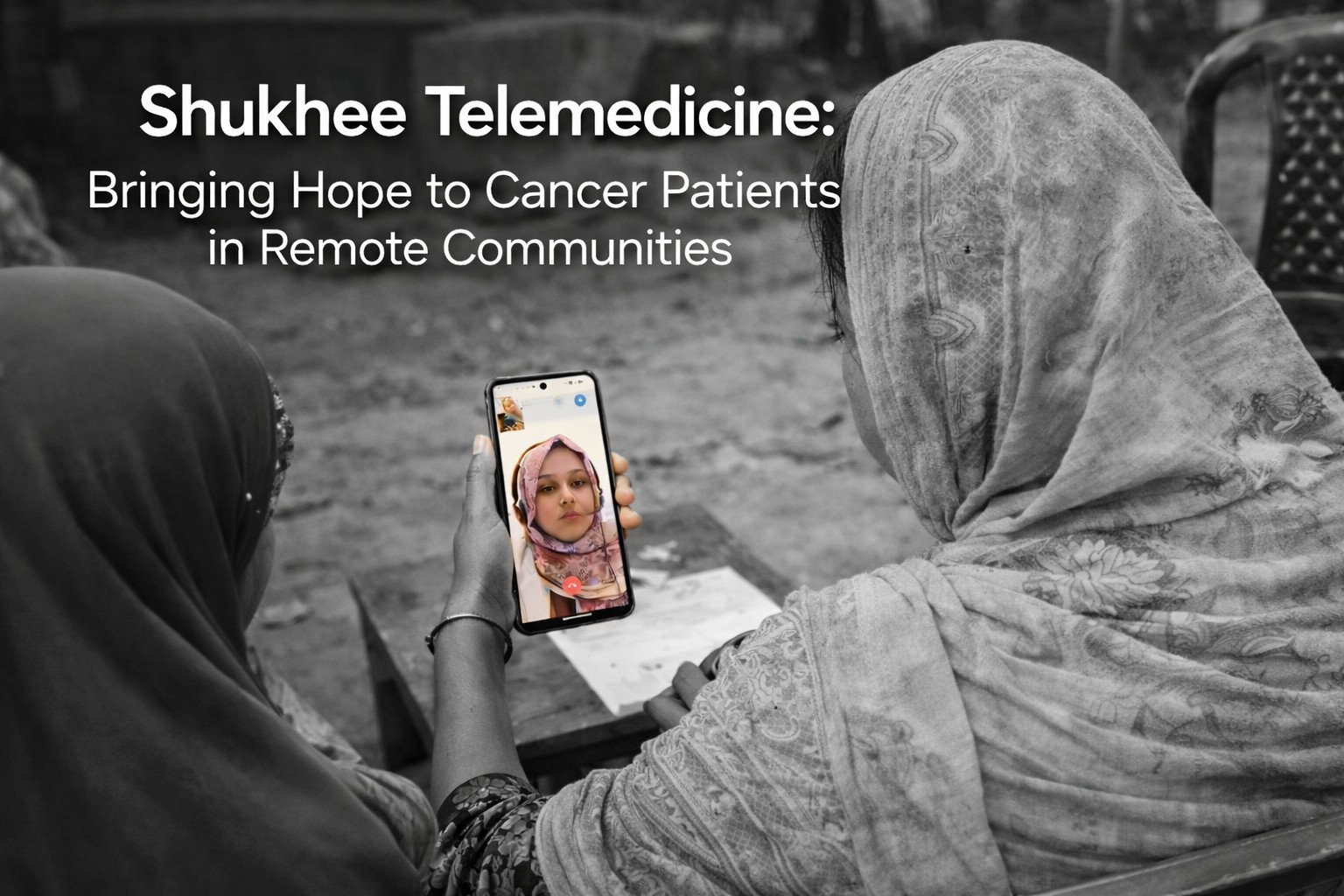
Cancer care in remote communities comes with unique challenges—delayed diagnosis, limited access to specialists, and the emotional burden of managing a serious illness far from support. Through the telemedicine platform of Shukhee, physicians are now able to provide
continuous guidance, real-time monitoring, and structured follow-up even for patients undergoing chemotherapy. In this interview, Dr. Nafiza Anzum shares her experience caring for a female patient diagnosed with Gastric Carcinoma, explaining how Shukhee’s 6-in-1 remote monitoring device and teleconsultation services helped track her vital health parameters, ensure timely referrals, and provide both clinical guidance and emotional support—turning distance and isolation into a bridge of hope and care.
Q: Dr. Nafiza, how did this cancer patient first connect with you through Shukhee?
Dr. Nafiza: The patient came from a remote area where access to specialists is limited. She connected with us through a teleconsultation. By that time, her diagnosis of gastric carcinoma had already been confirmed, and she had begun chemotherapy. However, she still needed regular medical guidance and monitoring, which telemedicine allowed us to provide.
Q: What were the key challenges in managing a cancer patient remotely?
Dr. Nafiza: Cancer patients, especially those undergoing chemotherapy, require close monitoring. Symptoms such as weakness, fluctuations in vital signs, or treatment-related complications can develop quickly. For patients living far from hospitals, frequent visits are often difficult. This is where digital health tools and telemedicine become extremely valuable.
Q: How does the Shukhee remote monitoring technology support cancer patients during teleconsultation?
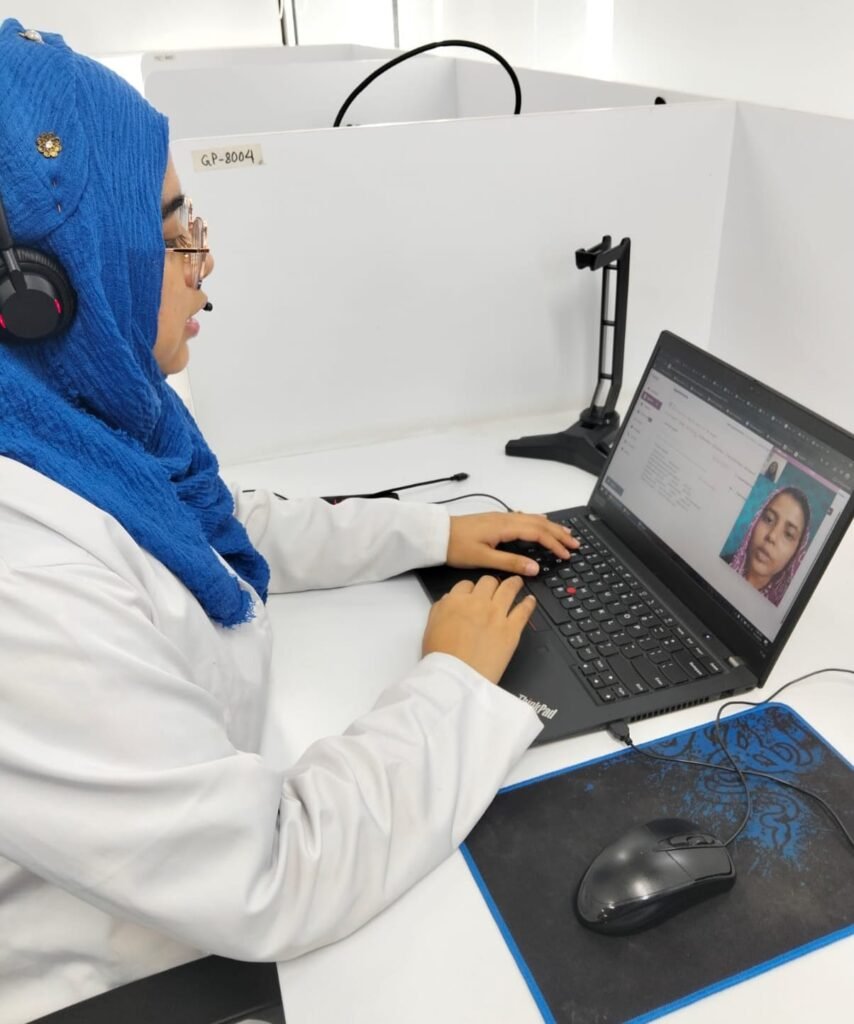
Dr. Nafiza: One of the most important innovations is our 6-in-1 remote monitoring device, which allows us to observe essential physiological parameters in real time. During teleconsultations, the patient’s vital signs—such as blood pressure, pulse rate, oxygen saturation, body temperature, Blood Glucose, ECG and other key indicators—can be measured instantly and shared with the consulting physician.
This real-time data adds a new dimension to telemedicine. Instead of relying only on verbal descriptions, we can assess objective clinical parameters while the consultation is happening. For cancer patients undergoing chemotherapy, this becomes extremely helpful in identifying warning signs early and ensuring that the patient remains stable.
Photo: Dr. Nafiza Anjum conducted a consultation with a patient presenting several risk factors for cancer. (Note: The photo was taken with the patient’s consent.)
Q: How did this real-time monitoring influence the patient’s care pathway?
Dr. Nafiza: With the remote monitoring device, we could track her vital parameters during follow-ups and consultations. This helped us determine whether her symptoms required urgent referral or could be managed with guidance and supportive care. It also provided reassurance to the patient, knowing that her condition was being observed and evaluated continuously.
Q: Beyond clinical monitoring, what role did telemedicine play in supporting the patient emotionally?
Dr. Nafiza: Cancer is not only a physical illness—it carries a significant emotional burden. Many patients feel isolated, especially in rural settings where specialized oncology care is distant. Through teleconsultations and follow-up calls, we were able to maintain regular
communication. Sometimes a patient simply needs to hear that someone is there to guide them through the uncertainty of treatment.
Q: What broader lesson does this case offer for the future of cancer care in remote areas?
Dr. Nafiza: The biggest lesson is that technology can significantly reduce the gap between patients and healthcare providers. With telemedicine and real-time monitoring devices, we can provide continuous support even when patients live far from tertiary hospitals. For cancer patients, this combination of digital consultation and physiological monitoring can improve early detection of complications and strengthen the continuity of care.
This experience reflects a growing transformation in healthcare delivery. In places where distance once meant delayed care, technology now creates a lifeline. Through teleconsultation and innovations like the 6-in-1 monitoring system, platforms such as Shukhee are helping ensure that even cancer patients in the most remote areas remain connected to medical guidance, timely intervention, and the compassionate reassurance that they are not facing their journey alone.