
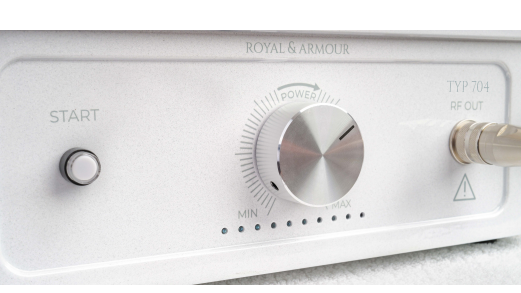
The Interreg Europe NOTRE project, where Global Health Connector is also a partner, is currently piloting a portable bioelectric device in Szombathely, Hungary, to address the lack of rehabilitation services in rural areas. Developed by Royal & Armour and tested by PBN, the non-invasive device uses microcurrent stimulation to help elderly patients manage pain and improve mobility outside of traditional clinical settings. By evaluating the tool's effectiveness in a real-world living lab, the project seeks to provide a scalable, decentralized solution that supports healthy ageing and reduces the burden on local healthcare systems.
Addressing Rural Healthcare Challenges
Within the Interreg Europe NOTRE project, pilot activities are currently underway to explore practical solutions supporting healthy ageing. One of these pilots, led by PBN in Szombathely (Hungary), focuses on testing an innovative approach to musculoskeletal rehabilitation among elderly populations.
Rural and smaller urban areas are increasingly facing limitations in healthcare provision, particularly in rehabilitation services. Restricted access to specialised care, workforce shortages, and longer travel distances make continuous and effective rehabilitation more difficult for elderly people. These challenges highlight the growing need for decentralised, easy-to-use solutions that can complement existing care systems.
The Solution: Portable Support for Rehabilitation
The pilot focuses on testing a portable bioelectric device developed by Royal & Armour, designed to support musculoskeletal rehabilitation among elderly users.
The device applies microcurrent-based stimulation to support natural recovery processes, reduce inflammation, and alleviate pain. As a non-invasive and easy-to-use solution, it is intended to complement standard rehabilitation practices rather than replace them.
Its portability makes it particularly suitable for use beyond traditional clinical environments, enabling application in rehabilitation centres, assisted living facilities, and home-based settings. This is especially relevant in rural contexts, where access to continuous rehabilitation services is often limited.
Pilot Implementation in Szombathely
To respond to these challenges, a pilot testing phase has been launched in Szombathely involving 25 elderly participants. The primary objective is to conduct real-life user testing of the solution in a controlled and professionally supported environment.
The pilot is implemented through a strong local partnership:
The testing process includes professional pre- and post-assessment, ensuring reliable and structured evaluation of the results.
Real-Life Testing Environment
The pilot takes place in the at.home living lab in Szombathely, providing a real-life environment for testing usability and potential impact.
The solution also supports the concept of decentralised rehabilitation, allowing elderly users to access supportive therapies beyond traditional institutional settings. This is particularly relevant in rural contexts, where access to rehabilitation services is often limited.
Expected Benefits and Early Observations
The pilot focuses on assessing:
In addition, the testing explores the potential to reduce the burden on caregivers and healthcare systems, while improving overall quality of life for elderly participants.
Next Steps and Call for Participation
Further testing phases are planned in the coming months. Additional participants are welcome to join the pilot programme, offering a valuable opportunity to contribute to the validation of innovative rehabilitation solutions.
The pilot also strengthens collaboration between SMEs, healthcare providers, and local communities, reflecting the multi-stakeholder approach of the NOTRE project and supporting the development of scalable solutions for healthy ageing in rural areas.