At a Glance
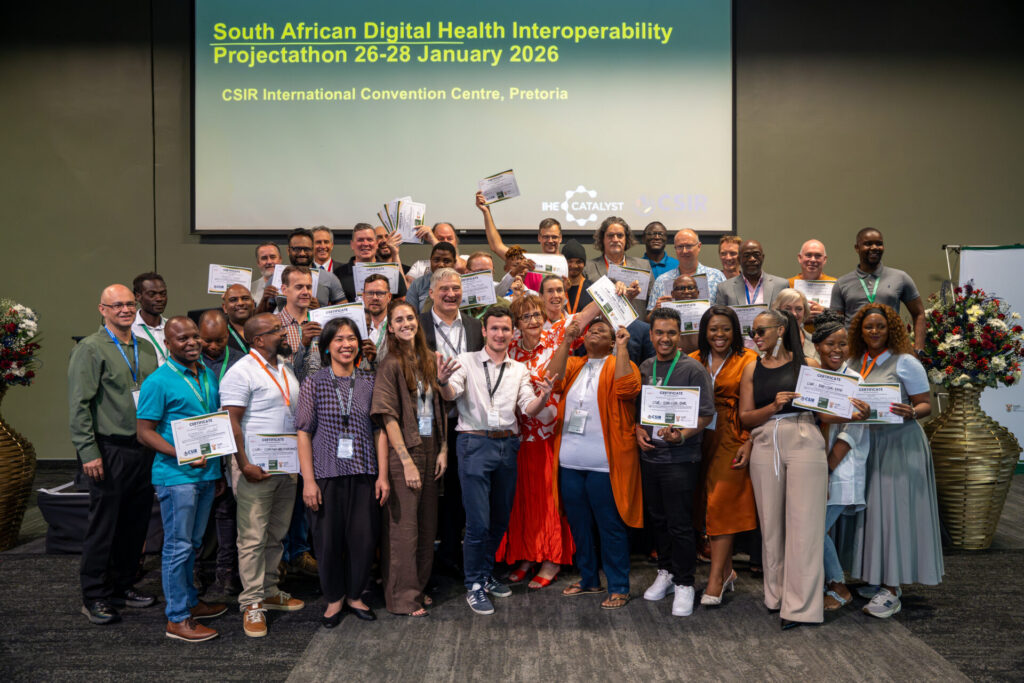
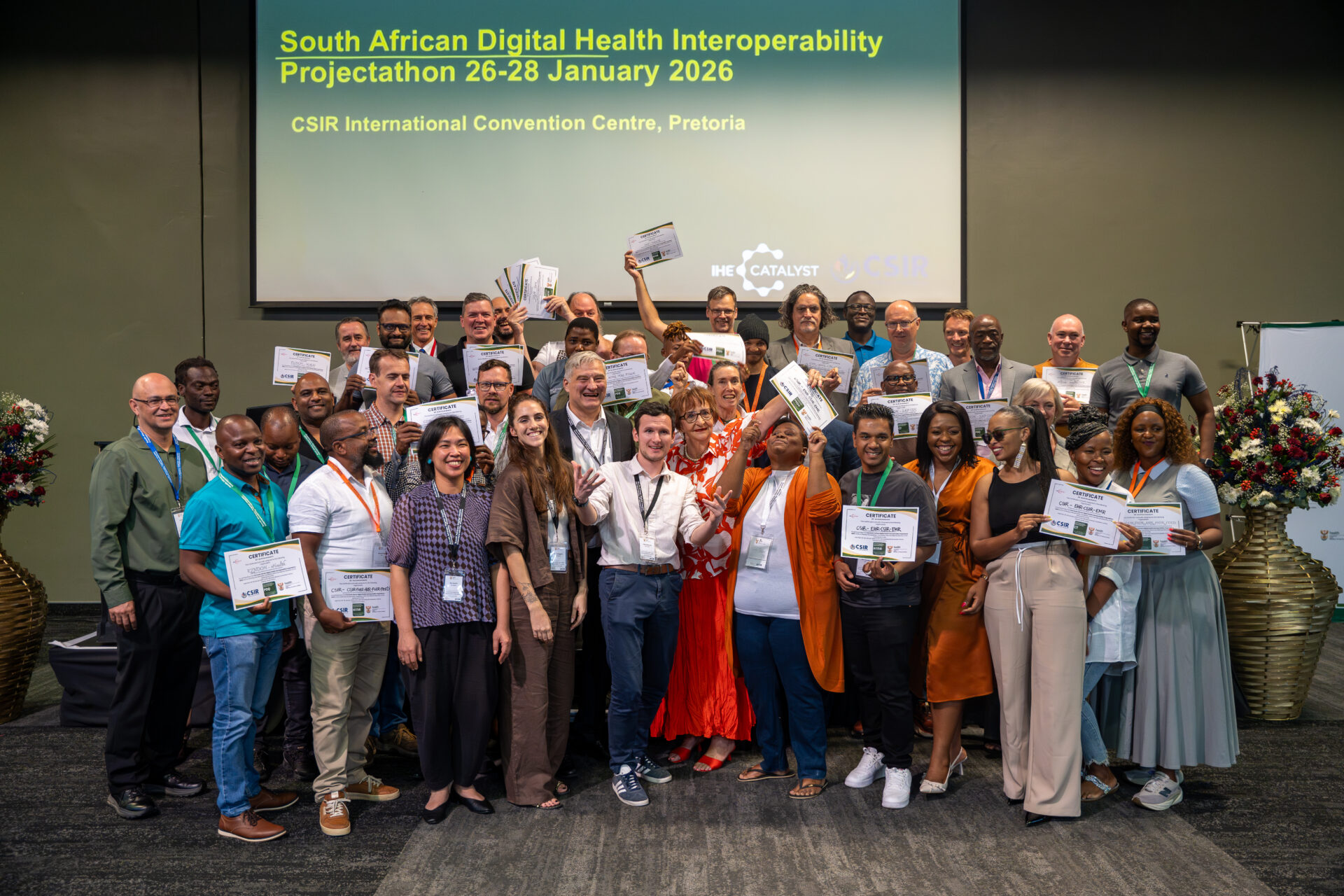
In January 2026, South Africa took a practical step toward a fully integrated healthcare system by hosting the first National Digital Health Interoperability Projectathon.
This multi-stakeholder initiative brought together public and private sector entities to rigorously test how their health information systems can share data.
The event not only showcased the technical readiness of current systems but also highlighted the value of public-private collaboration in building the foundation for the National Health Insurance digital ecosystem.
Setting the Stage: The Role of a Projectathon
Hosted at the CSIR International Convention Centre, this first Projectathon served as a practical testing ground for health IT interoperability. The goal was to ensure that different software systems can seamlessly and securely exchange patient data, regardless of who developed them.
To achieve this, systems were tested against “profiles” created by Integrating the Healthcare Enterprise (IHE). These profiles act as internationally recognised blueprints: they provide clear, standardised rules for how medical information should be formatted and transmitted over the internet. By testing in a structured, vendor-neutral environment, participants could identify implementation gaps, resolve configuration challenges on the spot, and clarify where further national technical guidance is needed.
Strong Cross-Sector Participation
The event saw remarkable engagement, featuring 20 different healthcare systems (Systems Under Test) brought in by 14 organisations. This included a balanced mix of 6 public sector entities and 8 private sector companies.
A critical part of the testing involved ensuring these external software solutions could successfully interact with two central national systems:
Key Technical Findings: What the Tests Revealed
Throughout the week, systems were evaluated on their ability to handle specific data exchange tasks. The results provided a clear picture of current capabilities and areas for future development:
Systems showed promising results when using modern, mobile-friendly technologies (specifically FHIR-based profiles). Tasks like securely retrieving patient demographics information (PDQm) or discovering available healthcare services (mCSD) demonstrated technical readiness and cross-vendor compatibility using the FHIR standard.
Mature and foundational profiles also performed consistently well.
Essential background tasks, such as ensuring clocks are perfectly synchronised across a hospital network (Consistent Time) and executing standard patient searches (PDQ), proved to be stable and reliable across the participating systems.
The tests indicated that security-focused features require more attention.
For instance, systems showed uneven maturity when implementing ATNA (Audit Trail and Node Authentication), which is the protocol responsible for tracking logs and keeping a secure communication using state-of-the-art security standards. This highlights a need for thoroughly integrating security protocols earlier in their software design process.
Collaboration and Measurable Success
The Projectathon achieved significant technical progress, with 53 out of 55 registered tests completed and verified by the end of the event.
Beyond the technical metrics, participants benefited heavily from real-time support, targeted educational sessions, and peer-to-peer collaboration.
This cooperative environment allowed developers from different organisations to work together and resolve complex interoperability issues during the event itself. Ultimately, all participating systems achieved full compliance with at least one tested standard.
Looking Ahead
Passing profile conformance tests is a crucial technical milestone, though it represents just one part of achieving full, system-wide interoperability. Nevertheless, the outcomes of the 2026 Projectathon provide concrete evidence that the core building blocks required for South Africa’s National Health Insurance Digital Health Systems are highly attainable within the current technological landscape.
Beyond technical validation, the event facilitated meaningful knowledge transfer and built confidence in the practical implementation of a federated digital health architecture. Moving forward, these insights will inform policy refinement, strengthen security frameworks, and support the progressive realisation of a safe, secure, and patient-centred national health information environment.