
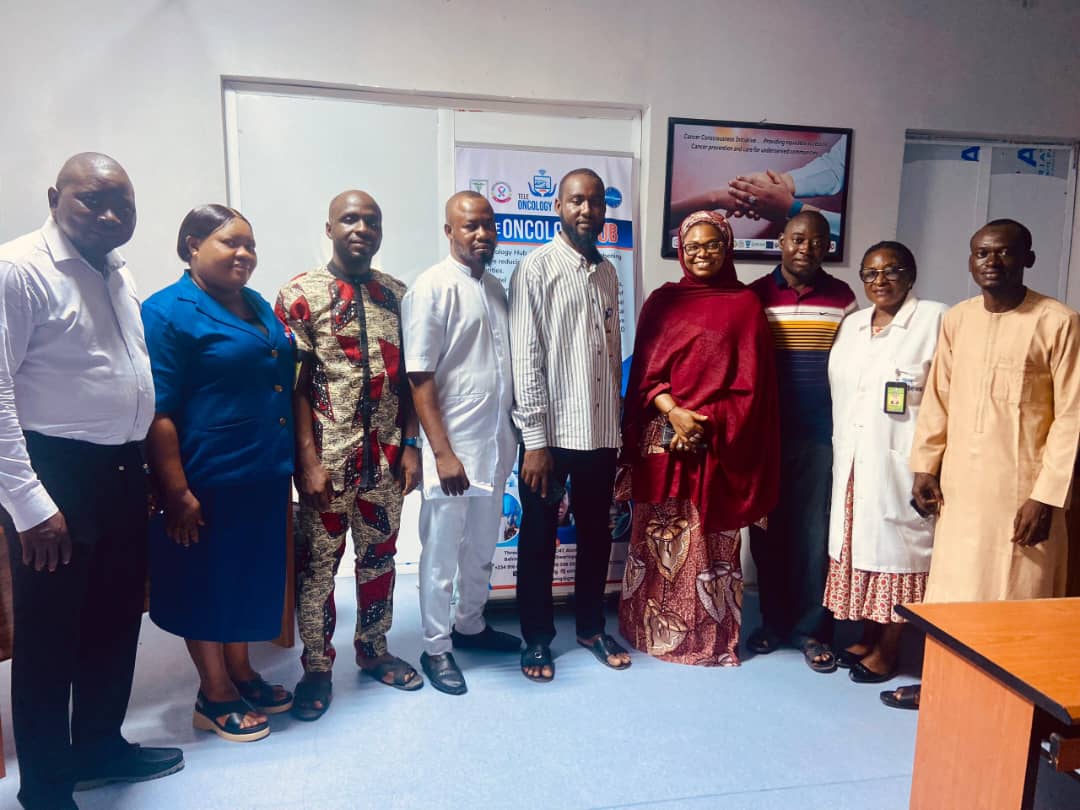
Over 1 year after launching from a single hospital in Jalingo, TeleOncology Hub has connected over 300 cancer patients across six Northeastern Nigerian states to specialist care they could never have reached alone — saving families millions in travel costs and earning international recognition along the way.
In April 2025, a small progressive and innovative team of The Cancer Consciousness Initiative with its health systems strengthening initiative thinking commenced its novel model at the Federal Medical Centre (FMC) Jalingo.
It launched a pilot with a simple but urgent goal: bring specialist cancer care to a region where it barely existed.
One year on, that pilot has become TeleOncology Hub, a regional health-system-strengthening initiative now reaching patients across Taraba, Yobe, Borno, Gombe, Bauchi and Adamawa — six states where insurgency, multidimensional poverty and thin health infrastructure have long kept cancer care out of reach to the grassroots where the bottom billion reside.
The model is deliberately practical. Primary care doctors in underserved communities hold virtual consultations with specialists.
Oncologists and other specialists across the country meet through multidisciplinary team videoconferences guided by NCCN protocols.
A dedicated electronic medical record system, PocketPatientMD, allows clinicians to tele-monitor patients between visits.
And a growing corps of more than 90 trained patient navigators walks alongside patients from diagnosis through treatment and follow-up, a role that has earned the Hub Community Participating Organization status with the American Cancer Society’s BEACON Initiative and selection by American Cancer Society leadership for the SPARK Initiative.
The numbers tell a story of impact that would be easy to miss from the outside. In twelve months, the Hub has coordinated care for more than 300 cancer patients, convened over 30 multidisciplinary team meetings, and logged more than 500 patient navigation sessions, with over 85% of those encounters resulting in a guideline concordant treatment, optimum care and better outcome for the patient.
Because consultations happen close to home instead of requiring a journey to a distant urban centre, patients have collectively avoided an estimated 325,200 kilometres of travel — an average of 1,500 kilometres saved per patient — and roughly 3,600 hours that would otherwise have been spent on the road with less disruption of family dynamics traveling far for treatment.
The financial relief is just as significant: patients have avoided an estimated ₦8.5 million in transport costs alone, a meaningful sum in a region where 80% of cancer patients experience severe financial toxicity and only 8.6% hold any form of health insurance.
The data collected through the programme also exposes why this work is so urgent. The majority of patients are still presenting late: about 45% at Stage III and 40% at Stage IV, leaving a narrow window for curative treatment. Breast cancer accounts for 60% of all cases seen through the Hub, most diagnosed after the disease has already advanced.
It is a pattern the team is working to change through community engagement and outreach, including the Taraba Pinktober 2025 Townhall meeting and MegaRally Cancer Walk, which brought together health professionals, traditional rulers and hundreds of community members in Jalingo for panel discussions on early detection, and free breast examinations and ultrasound scans and a Walk.
Partnerships have been central to the Hub’s growth. Roche has come on board to support diagnostics via the BRANT program with Oncopadi, Free KRAS mutation testing for colorectal cancers by Merck.
The program has evolved from the hospital based program which has now evolved to incorporate community patient navigation programs in Adamawa, Taraba , Gombe, and Borno.
The Borno version metarmophosed into an innovative humanitarian community oncology program, a vital post disaster rehabilitation activity in strengthening health systems collaboration with the Grow Strong Foundation.
Patient navigation now on another level as we collaborate to make NIH principled health literacy videos in local dialect in collaboration with oncology101.org.
The Hub was showcased at the ECHALLIANCE now Global Health Connector Nigeria Health Ecosystem launch on 17th July 2025, where it was singled out as a practical model for digital health innovation in Universal Health Coverage. It has also begun collaboration to strengthen the multidisciplinary team with the oncology specialists at Shefaa AlOrman International Cancer Hospital Luxor, Egypt.
The global recognition for the program reached a high point in 2026, when the Hub’s Programme Lead, Dr. Hannatu Ayuba Usman, received the Yvonne Award for Community Oncology at the American Society of Clinical Oncology (ASCO) Conference and Annual Meeting 2026 in Chicago — recognition that the model is one the Yvonne Awards selection committee believes deserves to be replicated globally.
“Amid insurgency, multidimensional poverty, and entrenched health inequities, our team has connected patients to specialists, provided patient navigation, and saved lives — one telemedicine session at a time.”
Dr Hannatu Ayuba Usman
Executive Director, CCI/Program Lead, TeleOncology Hub