
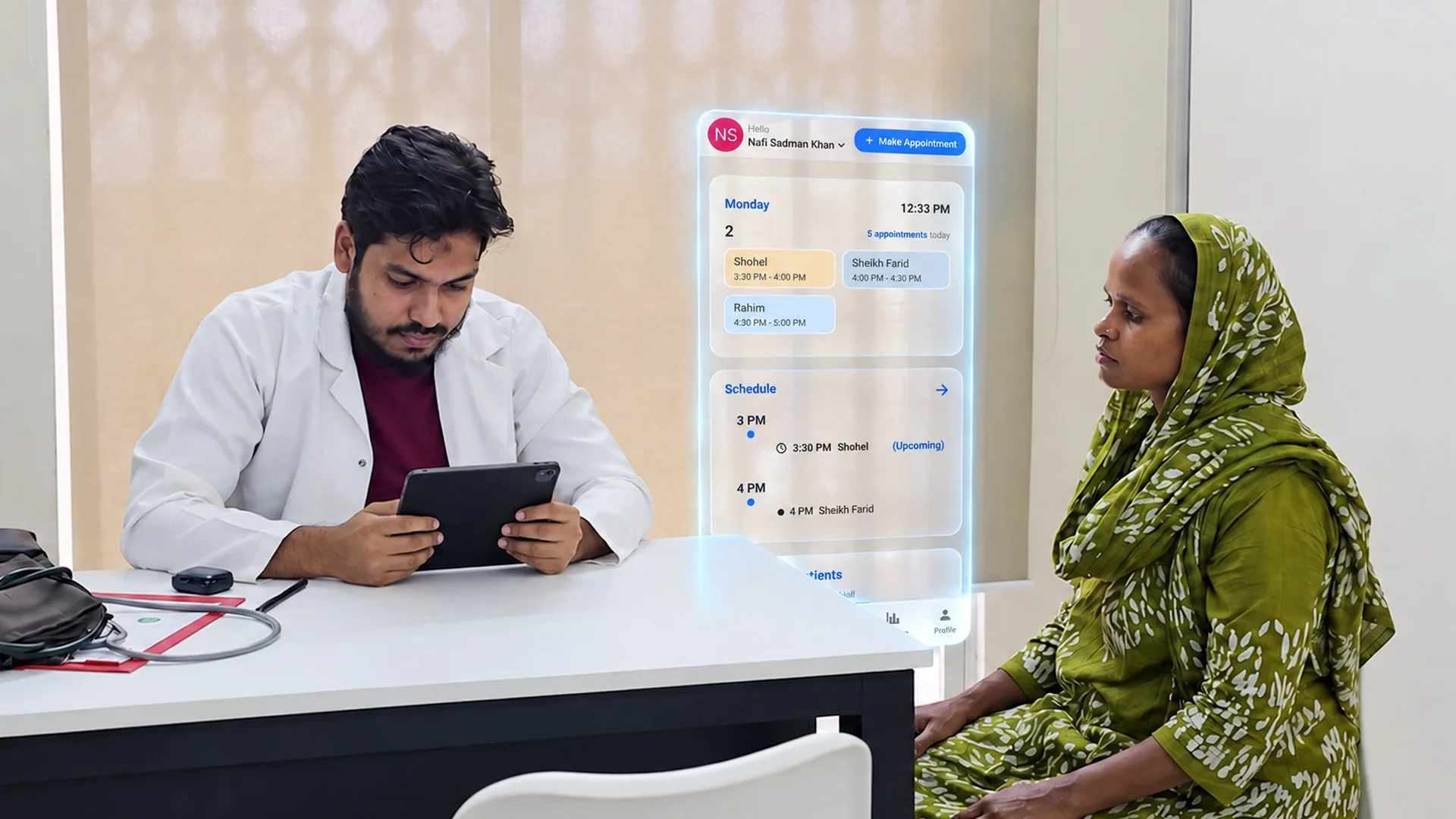
In Bangladesh, a primary care doctor often has less than a minute with each patient, and AI is now entering that minute. Spreeha Foundation has launched a one-year study of AI-supported primary care with the Health Economics Unit of the Ministry of Health and Family Welfare and IUBAT. Spreeha’s Senior Director of Programs and AI explains how the study is built and sets out three guardrails every AI health tool should meet before it scales.
By Dr Ishtique Zahid, Physician and Senior Director of Programs and AI, Spreeha Foundation
A doctor at a primary care facility in Bangladesh often has less than a minute with each patient: to listen, examine, decide and prescribe. A global study published in BMJ Open found these to be the shortest primary care consultations recorded anywhere in the world. Artificial intelligence is now being asked to change that minute. Before it does, we should be clear about what to demand of it.
In that minute, today’s lab report cannot be compared with the previous one. Drug interactions are checked from memory, in a country where polypharmacy is common and a patient may carry prescriptions from three different providers, none of whom know what the others have written. And no second pair of eyes check any decision.
The cause is arithmetic, and it says nothing about the doctors’ skill. Bangladesh has too few physicians for its population, they are concentrated in cities, and the queue outside a sub-district health complex forms before the doors open. The doctor seeing an eightieth patient before lunch is practising the only medicine the system’s numbers allow.
The government has just made the boldest primary care commitment in the country’s history. The new budget nearly doubles the health allocation, a primary healthcare unit is planned for every union and urban ward, and recruitment of 100,000 community health workers has begun, under a declared shift from treatment to prevention. This direction deserves support. But more facilities only change how many people reach a doctor. If every new unit inherits the same one-minute consultation, we will have multiplied the rooms without improving the care inside them.
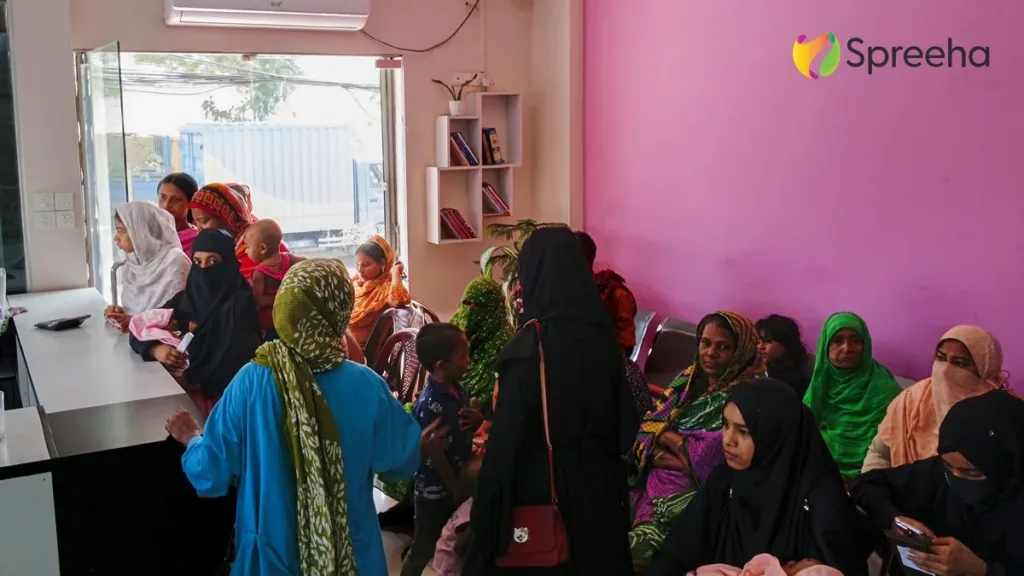
AI is arriving in Bangladesh formally, through announced initiatives and partnerships. It is also arriving informally. Surveys from health systems around the world now find clinicians quietly consulting general-purpose AI tools on their phones, with no validation, oversight or record. The real question for Bangladesh is whether it arrives accountably.
A study of AI-integrated primary healthcare delivery, launched by Spreeha Foundation with the Health Economics Unit of the Ministry of Health and Family Welfare and the International University of Business Agriculture and Technology (IUBAT), will spend one year examining AI-supported care across four districts and sixteen facilities. We have no results to promise yet, so judge how the study is built. Its safeguards matter more than the technology itself.
Developed and refined in Spreeha’s own urgent care centres, the tool is now entering the study’s consultation rooms to support the physician at the moment of prescribing in three ways. It offers clinical decision support: a structured second opinion within the time the doctor has. It interprets and compares reports, surfacing what has changed since the last test. And it automatically checks every prescription for drug interactions, a safety net human recall cannot reliably provide at this volume. The physician decides; the tool informs. Accountability stays with the doctor.
The most important word in this initiative is “evidence”. With government health economists embedded in the evaluation, the study asks two unglamorous questions: does the tool improve care, and is it worth what it costs, in Bangladeshi facilities, with Bangladeshi patients, at Bangladeshi prices? If the honest answer is no, the study is built to say so. That willingness to accept “no” is what makes the approach worth trusting.
Enthusiasm for AI in health is running ahead of the evidence. Three guardrails should bind every AI health initiative in Bangladesh, including ours.
First, local validation. Most clinical AI is trained on populations with different disease burdens, prescribing patterns and diagnostic baselines. A tool that performs well in Boston has proven nothing about Barishal. No AI system should influence clinical decisions at scale in Bangladesh without published validation on Bangladeshi patients.
Second, data protection with teeth. Bangladesh’s data protection framework is still emerging, and health data deserves to be its first and strictest chapter: clear limits on use, genuine consent and real consequences for breach.
Third, clear accountability and oversight. When an AI-informed prescription goes wrong, responsibility must be clear and the physician’s accountability undiluted. The health ministry should build one pathway every such tool must pass: registration, evaluation against standards and monitoring after deployment. Quiet, unvalidated use on personal phones is what regulation exists to prevent.
These guardrails call for sequence: study, validate, regulate, and only then scale. Global health has seen too many technologies arrive with promises and leave with the pilot funding. Bangladesh’s community health worker programmes show the opposite: built patiently, measured honestly and recognised worldwide.
A year from now, the study will have an answer, and we commit to sharing it whether it flatters us or not. Until then, every AI tool that wants to enter a Bangladeshi consultation room should meet the standard our doctors face eighty times before lunch: prove, in under a minute, that you make the patient safer.