
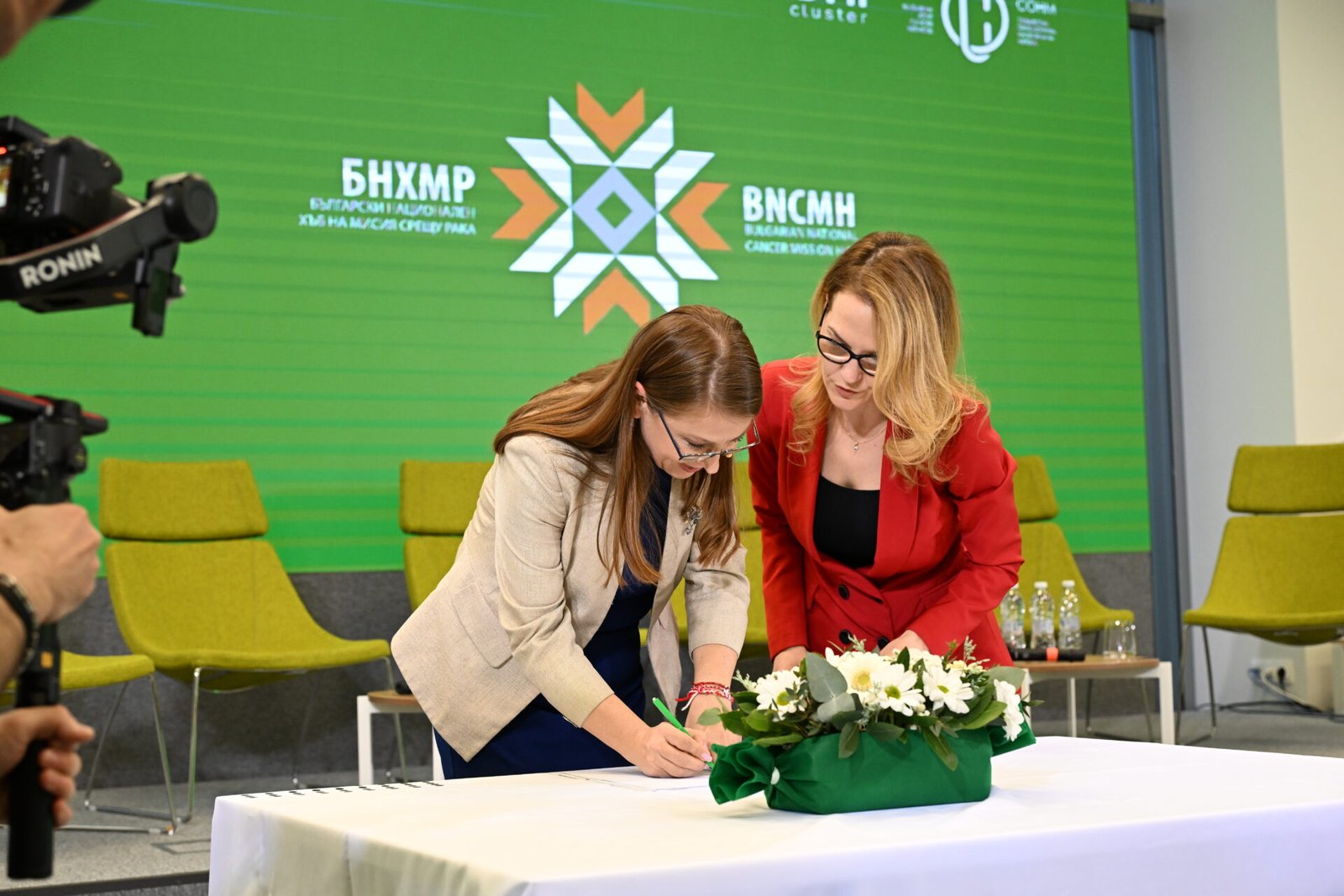
The National Cancer Mission Hub Bulgaria (NCMHB) was established at a forum organized by the Bulgarian Joint Cancer Network (BJCN) in partnership with the ECHoS initiative – a pan-European platform uniting over 60 leading organizations from 30+ countries in the fields of healthcare, science, innovation and civic participation. It was held at the GATE Institute of Sofia University “St. Kliment Ohridski” with the participation of a wide range of experts, Bulgarian MEPs, representatives of European cancer organizations and European institutions, and at the end a Memorandum of Synergy and Cooperation was signed to gave a symbolic start to the Hub. The goal is to start a sustainable trans-sectoral partnership between key stakeholders – public institutions, municipalities, academic and professional circles, civil society organizations and business, in sync with the European Mission on Cancer and ECHoS (Establishing Cancer Mission Hubs: Networks and Synergies).
Through NCMHB, this partnership will be structured as a national platform for implementing evidence-based policies in oncology with a focus on early prevention, education, research, digitalization, and social justice.
“We are all working together here to establish the Bulgarian hub on the principle of connectivity and synergy. We are building bridges, creating a sustainable ecosystem by connecting varios experts,” said Assoc. Prof. Dr. Assya Kounsulova, Chair of the Board of Directors of BJCN.
“According to medical data, 36% of cancer cases are preventable, but we need to establish a modern model of prevention based on education. Against the backdrop of all innovations and access to cutting-edge therapies in Bulgaria, we continue to predict cancer mortality of over 60%,” said Ivaylo Petrov, NCMHB coordinator. He presented results of a national survey confirming strong public support and the urgent need to launch a national hub in order to overcome ineffective communication, strengthen intersectoral cooperation with the participation of the state, and integrate into the European cancer control system.
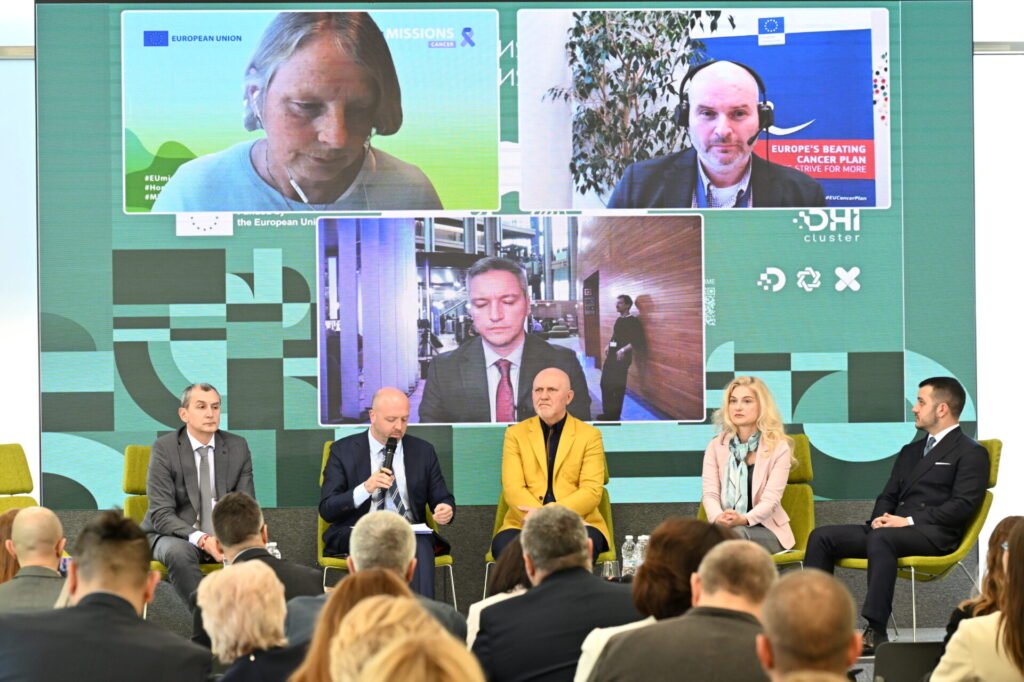
Support for the initiative was expressed by the Ministers of Health Assoc. Prof. Mihail Okoliyski and of Labor and Social Welfare Dr. Hasan Ademov. Dr. Maria Yurukova, Advisor to the President on Social Policies, stated the support of the presidential institution. In a welcoming speech to the forum, Bulgarian Commissioner for Start-ups, Research and Innovation Ekaterina Zaharieva supported the initiative. MEP Radan Kanev (DSB/EPP) expressed his readiness to assist through his advisor Zaritsa Dinkova. Prof. Dr. Silviya Ilieva, Director of the GATE Institute, expressed readiness for support and joint work through the opportunities in the field of digital technologies.
“Over the past 10 years, cancer mortality has been increasing in Bulgaria, while it has been significantly decreasing in the EU. One of the reasons is the lack of health culture at all ages,” said Assoc. Prof. Okoliyski. He expressed the readiness of the Ministry of Healthcare to be an active partner of all organizations in the implementation of the National Anti-Cancer Plan. “Together with you, we want to plan the screening programs, which are long overdue. We are firmly determined that they will start functioning,” the Minister added and announced that the Ministry of Healthcare already has a working group that will take the best from the experience of the National Cancer Registry and integrate it into the National Health Informational System. “I see the NCMHB as one of the key pillars, a coordination unit to share the good practices of the European Cancer Organization. We are ready for an open partnership so that we can have success in a short time,” said Assoc. Prof. Okoliyski.
Psychological support and a clearly outlined patient path are among the most important conditions for a person who has an oncological diagnosis, said Minister Hasan Ademov, MD. He welcomed the creation of the NCMHB as a platform that unites institutions, experts, civil society organizations and which will enable patients to navigate better. Minister Ademov also emphasized that oncological patients must be supported and that they want to be reintegrated into the labor market.
Prof. Galin Tsokov, Director of the Institute of Education, emphasized the need to integrate knowledge from medicine, biology, health education, using much more active teaching methods. This can lead to building skills for preserving and developing students’ health, he said. The transfer of innovations is not at the level and NCMHB can turn into an ecosystem in terms of precisely developing a health culture. Prof. Tsokov reminded of the programs that the Ministry of Education and Science is developing so that skills for a healthy lifestyle are formed from preschool age.
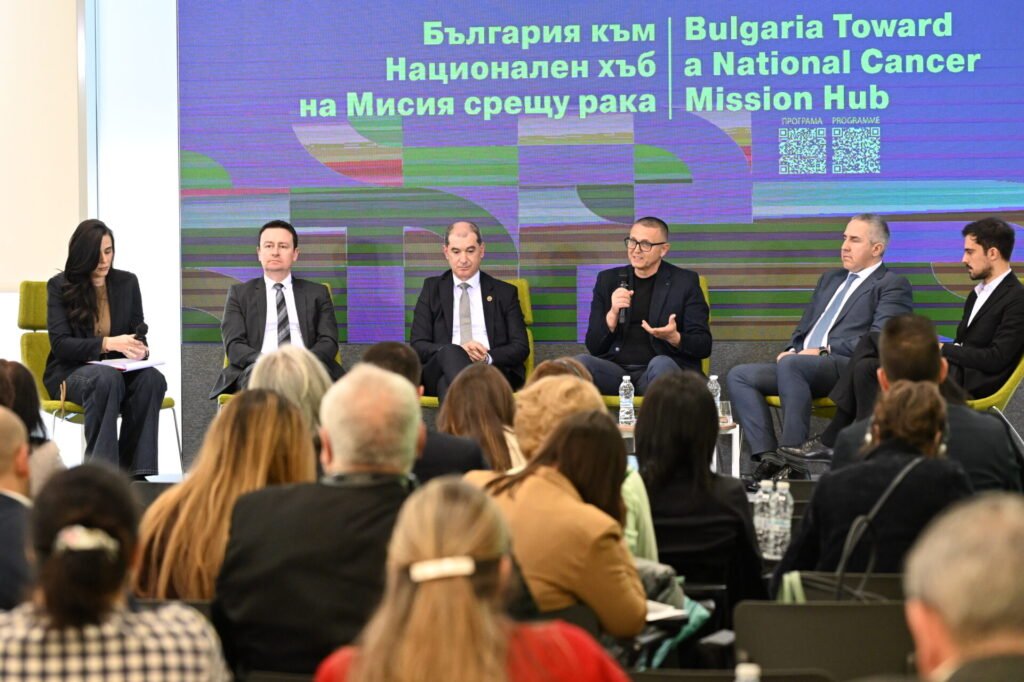
Cancer is one of the most serious challenges for European healthcare systems, with newly diagnosed patients expected to exceed 3.24 million by 2040. Around 40% of cancer cases are preventable and this is a goal that EU countries should work towards together, said MEP Emil Radev (GERB/EPP) in the discussion. Bulgaria has the potential to be an active part of the European system for scientific research and beating cancer efforts, it is important to ensure equal access for Bulgarian patients to new therapies and innovations being developed in Europe. Beating the disease already has a very strong ally – AI to help processing huge volumes of biological data. By the end of the year, eg, access to 60 million cancer images will be provided through the European Cancer Diagnostics Initiative. The genomic data infrastructure is also expected to be operational. We need joint efforts at local, national, European and global levels, the national hubs of the Mission on Cancer can contribute to dialogue and partnership, Radev also said.
The European Beating Cancer Plan and the EU Mission on Cancer are some of the strongest and most concrete examples of European added value – policies that show what Europe can achieve when countries work together on science, prevention, early diagnosis and treatment, said MEP Kristiyan Vigenin (BSP/Progressive Alliance of Socialists and Democrats), who also participated. The National Hubs of the Mission Against Cancer create a bridge between research, policy and the real needs of patients, and it is through such platforms that we can turn European policies into concrete results for each Member State. Investment in health and research are strategic to the future of Europe, and there is very broad party support in the EP on the topic of beating cancer. “Our task will be to protect the funding of key programs such as Horizon Europe, EU for health and the Mission on Cancer in the next European budget. For countries like Bulgaria, European healthcare initiatives are particularly important because they help reduce inequalities in access to innovations and good practices, and therefore it is a strategic priority for us to be part of these platforms,” said Vigenin.
The Bulgarian ecosystem of the Mission on Cancer already includes over 90 organizations and institutions, united by BJCN. Supported by the EC through the Directorate-General for Research and Innovation, BJCN took on the responsibility of building a network for cooperation and dialogue aimed at the introduction and implementation of systemic solutions and policies on health literacy, prevention, early diagnosis, treatment and improved quality of life of patients and their relatives. The creation of the Bulgarian hub was welcomed by representatives of the pilot countries with national hubs Poland, the Netherlands, Greece, Malta, Portugal, who shared their experience in overcoming challenges, achieving goals, and securing funding.
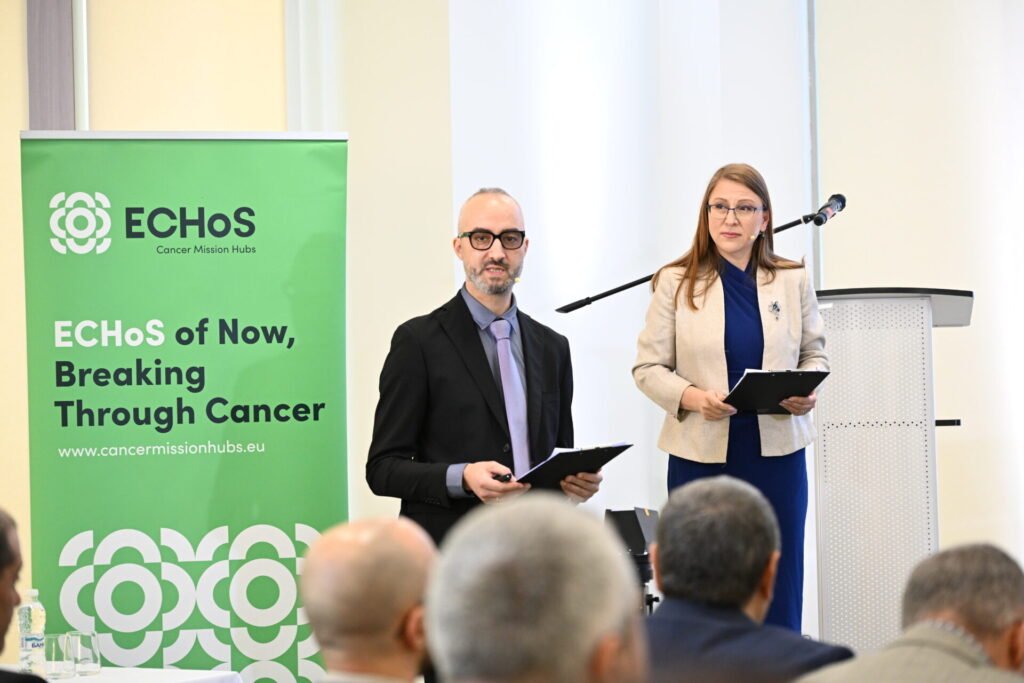
What is the ECHoS project, what is the benefit of the exchange of good practices between the hubs and what are the tools that the Bulgarian hub can benefit from as part of the pan-European network, explained Anabela Isidro, coordinator at ECHoS.
Kay Duggan-Wallace from the Directorate-General for Research and Innovation (DG RTD) spoke about the need to build a bridge between the European Commission and the Member States to share priorities and good practices in the care of cancer patients and to develop common strategies to combat cancer, adequate for each country.
How national hubs cover the path of cancer patients in diagnostics, therapy and overall cancer care, explained Matthias Schuppe from the Directorate-General for Health and Food Safety (DG SANTE).
In an interview for the forum, Prof. Christine Chomien, Vice-President of the EU Council for the Mission on Cancer, noted that the hubs represent an innovative approach at European level that effectively connects science and society, all stakeholders in the fight against cancer.
Alberto Costa, MD, PhD, CEO of the European School of Oncology (ESO), emphasized the paramount importance of the quality of cancer care and the need to work against inequalities in patient access.
About the initiative:
In 2024, BJCN was officially included as the national representative of Bulgaria in the European ECHoS initiative, uniting over 60 leading organizations from 30+ countries. With a mandate until 2031, the initiative aims to establish National Hubs of the Mission on Cancer in all Member States, with Bulgaria being among the first pilot countries.
BJCN is a non-governmental public benefit association that unites over 20 scientific societies and over 5,000 healthcare professionals. The organization works to integrate education, science, innovation and healthcare through evidence-based policies. Its main objectives include promoting partnerships, creating innovations in oncology care and structured participation of Bulgaria in the pan-European process of tackling cancer.
The National Cancer Mission Hubs are a management structure of the European Mission against Cancer, operating at national, regional and local levels in each EU Member State or associated country. By promoting collaboration, dialogue and partnerships between different stakeholders – including policymakers, healthcare professionals, researchers, businesses, patients and citizens – play a key role in joining forces and accelerating research and innovation in the field of cancer prevention, treatment and improving the quality of life of cancer survivors and their families.