What are the key priorities and strengths of your ecosystem?
Orlando’s life sciences ecosystem stands among the top ten in the United States as it is built on an unmatched combination of scale, diversity, and integration: a single contiguous medical city in Lake Nona houses the UCF College of Medicine, Nemours Children’s Hospital, a new VA Medical Center (one of the largest in the USA), HCA Healthcare (the largest health system in the USA), and AdventHealth’s global innovation headquarters—creating the only place in America where a medical school, children’s hospital, and Level-I trauma system share one campus with 75 million annual visitors and one of the nation’s most diverse resident populations flowing through it every year. This gives Orlando the fastest-enrolling, most representative clinical-trial environment in the country and a real-world-evidence engine that global pharma and medtech firms cannot replicate elsewhere.
Orlando leads the world in medical simulation and robotics training through the AdventHealth Nicholson Center and the national headquarters of VA SimLEARN, while ready-to-use BSL-2 wet labs at UCF and Orlando Health spin out companies like Hesperos (human-on-a-chip platforms licensed by half the top-ten pharma companies). Florida’s #2 ranking in medical-device and pharmaceutical manufacturing sits literally next door, giving startups direct, same-day access to prototyping, sterile fill-finish, and scale-up capacity.
Central Florida’s life sciences ecosystem is laser-focused on interlocking priorities that will define its next decade of growth: 1) aggressively scaling the talent pipeline by doubling the annual output of life-sciences-specific STEM graduates through expanded programs at UCF College of Medicine/BioEngineering, Valencia College, and new industry-led certification partnerships; 2) embedding digital health and AI across the entire care continuum; 3) dramatically expanding biomanufacturing and sterile fill-finish capacity, anchored by Olympia Pharmaceuticals’ 200+ new high-wage jobs and additional facilities coming online in 2026; 4) transforming the region into the fastest-enrolling, most diverse clinical-trial site in the nation for oncology, cardiology, and rare-disease studies by fully leveraging the region’s roughly 3 million residents and 75 million annual visitors; and accelerating economic diversification by shifting Central Florida from 37% tourism-dependent employment to more than 80% knowledge-based jobs, with life sciences as the clear primary engine powering this transformation and sustaining long-term prosperity as the region adds another million residents by 2045.
Who are the top 3-5 drivers of innovation and collaboration in your ecosystem?
In Orlando’s vibrant life sciences ecosystem—encompassing healthcare, medtech, biotech, and pharmaceuticals—the top drivers of innovation and collaboration are tightly integrated anchors that leverage the region’s unique assets like Lake Nona Medical City and a diverse patient base to accelerate breakthroughs in AI-driven care, clinical trials, and biomanufacturing. Leading this charge is AdventHealth, the global headquarters and largest health system in the region with 10 hospitals, which pioneers system-wide AI transformations, funds cutting-edge robotics training at the Nicholson Center (upskilling over 5,000 surgeons annually), and invests heavily in Lake Nona’s collaborative research hubs to bridge clinical practice with R&D.
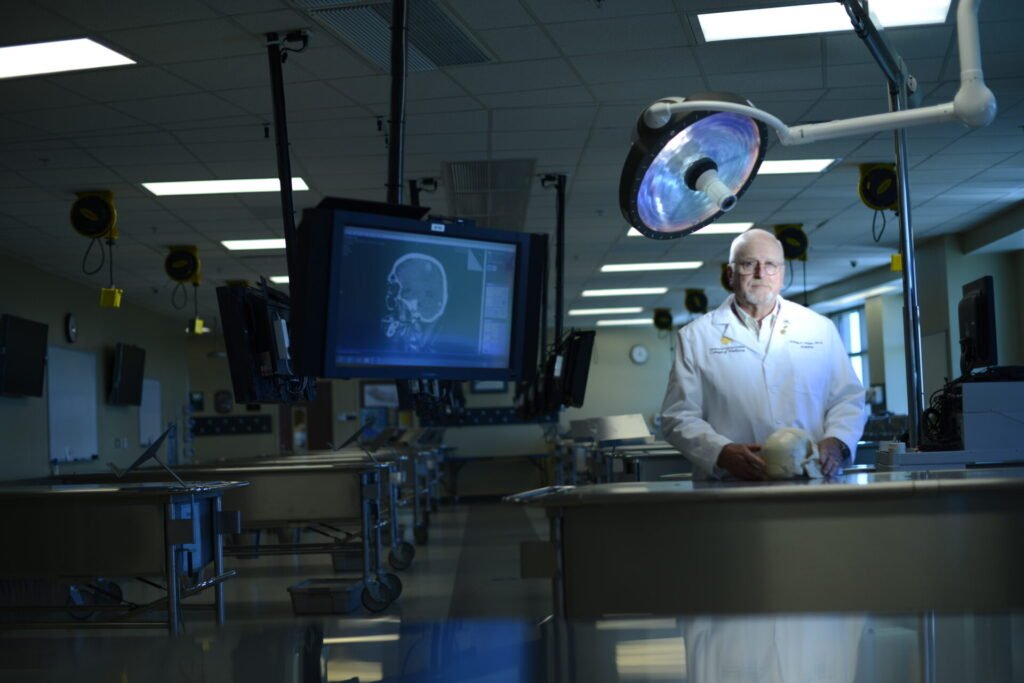
Another important element is the University of Central Florida (UCF) College of Medicine and Lake Nona Research Campus, the academic powerhouse producing 600+ life-sciences-focused STEM graduates yearly and receiving $1.4 billion in annual R&D funding to foster university-industry partnerships in oncology and genomics. Orlando Health, the second-major health system, drives oncology innovation through its Cancer Center of Excellence and joint programs with UF Health, while its Orlando Health Ventures arm strategically invests in early-stage companies.
The Florida High Tech Corridor (FHTC), a tri-university consortium of UCF, USF, and UF, amplifies regional collaboration across 23 counties by providing up to $150,000 in matching research grants, powering the Cenfluence life sciences cluster (supporting 170+ companies), and connecting entrepreneurs with federal funding. Rounding out the core is the Orlando Economic Partnership (OEP), the economic engine that recruits expansions like Olympia Pharmaceuticals’ 200+ job addition, markets Orlando as a top-10 life sciences hub, and orchestrates public-private initiatives—including the Central Florida Semiconductor Innovation Engine—to diversify the economy beyond tourism.
These five organizations meet regularly and work as a coordinated engine—delivering more than $3.6 billion in capital investment and 30,000 new jobs over the past eight years—making Orlando one of the most unified and fastest-moving life sciences clusters in the world for personalized medicine and digital health.
Can you highlight key services, solutions, or initiatives in cancer from your ecosystem?
Orlando’s Metropolitan Statistical Area (MSA)—covering Orange, Seminole, Osceola, and Lake counties—has emerged as a top-10 U.S. life sciences hub for cancer innovation, anchored by Lake Nona Medical City’s 650-acre ecosystem that integrates the UCF College of Medicine and the UCF Lake Nona Cancer Center, a comprehensive facility uniting cancer research, clinical treatment, and patient care. Florida’s FY 2025–26 $60 million Cancer Innovation Fund further accelerates statewide advances in cancer prevention, detection, and therapy.
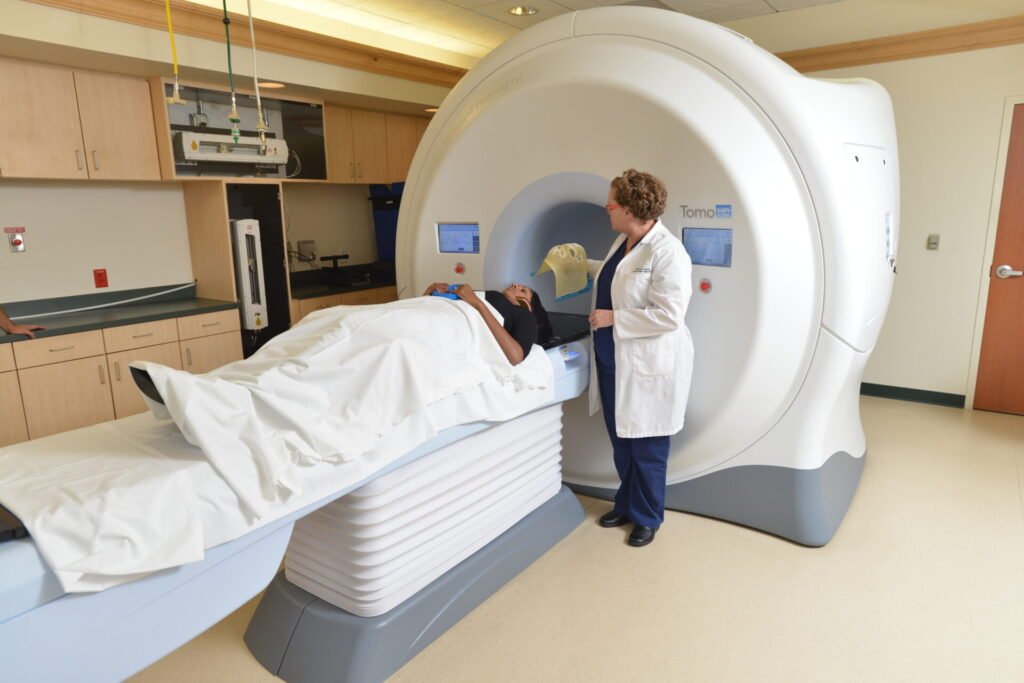
The Orlando Health Cancer Institute, serving more than 100,000 patients annually across 20+ regional locations, is a leader in precision oncology through technologies such as Ethos™ Adaptive Radiation Therapy, which uses AI to tailor treatments while minimizing damage to healthy tissue.
The AdventHealth Cancer Institute, ranked #30 nationally by U.S. News & World Report for 2025 with top performance in colon and lung cancer surgery, conducts 175+ clinical trials each year—including TIL therapies for solid tumors and Hoosier Network studies of MSI-H colorectal cancer with pembrolizumab—supported by robust precision-medicine programs in pharmacogenomics and population health analytics across seven Central Florida campuses.
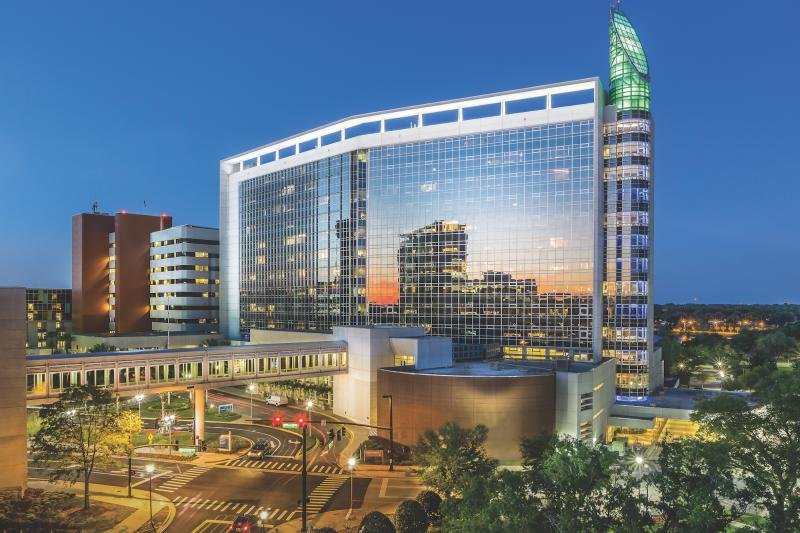
Nemours Children’s Hospital is expanding pediatric oncology capabilities with a recent $7.5 million state grant to strengthen infrastructure, recruit specialized talent, and increase access to clinical trials, helping families remain close to home for advanced care.
Are there any EU or international funding projects your ecosystem is involved in (or would like to join) related to health data?
UCF is a member of the Consortium of Universities for Global Health (CUGH), which connects over 190 institutions worldwide, opens doors to global-health collaborations, and maintains resources on international funding and global-health research.
For cancer specifically, global-cancer research and training, funding is available through entities such as the National Cancer Institute (NCI)’s Global Health branch or Horizon Europe where UCF can join multinational consortia on health / cancer-related projects alongside European groups.