
Osteoporosis is a chronic disease, unknown to many. However, around the world, 33% of women and 20% of men over the age of 50 will suffer a broken bone due to osteoporosis. In most countries, diagnosis does not happen until after the fracture occurred. This is very unintuitive and costly. Every year, millions of patients suffer from a sever decrease in their quality of life because of such an osteoporosis-related fracture. The reactive approach costs the healthcare systems of the EU alone circa 56bn Euros every year. Only 3% of this money goes to prevention. With our AI solution SpineQ, we at Bonescreen try to tackle this problem and enable millions of people to have access to an early diagnosis. Bonescreen is a Munich-based healthcare AI company that has received numerous acknowledgements by the German ministry of economics and climate change (BMWK), European institutions (EII Health) and it is currently part of the Future4Care program.
Osteoporosis literally means ‘porous bone’. It is a condition where bones become thin and lose their strength, as they become less dense and their quality is reduced. This can lead to broken bones, which cause pain, disability, and make everyday activities extremely difficult. Unfortunately, there is no population-based screening approach available today and most patients go unnoticed until its too late and a fracture already occurred. This is mainly because there is a lack of effective, fast and readily available bone health diagnosis system.
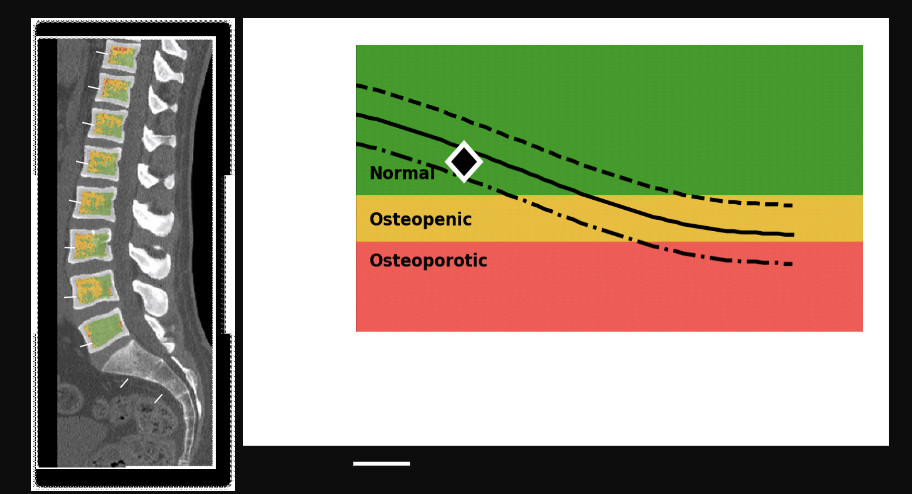
At Bonescreen, we developed the AI solution SpineQ. SpineQ utilizes the data from millions of annual CT scans that are done in the clinical routine. AI software “upcycles” any readily available CT scans of the spine or hip that is done for whatever reason and extracts the bone mineral density which then gives information about a patient’s level of osteoporosis (green = healthy; yellow = osteopenia and red = osteoporotic).
This information is obtained without additional radiation or the need for an extra DXA appointment of the patients who, especially in rural areas, save long travel times and gain access to SpineQ’s diagnostic information in the best-case years before the fracture occurs. Together with their treating clinician, they can decide on whether preventive treatment should be initiated (based on inclusion of additional patient individual risk factors) or whether classical movement exercises and supplements are sufficient. Especially rural areas where patient aftercare is not always readily accessible compared to metropolitan cities, patients have come to understand the value added that new technology can provide to enable an increasing preventive care focus.
SpineQ is CE certified and already commercially deployed at numerous radiologic practices and university hospitals in Germany. Bonescreen exists since 2022 and its vision is to build preventive AI software for the early detection of chronic diseases. The company currently expands into other European markets as part of its mission to make preventive AI accessible to as many (non-)patients as possible.