

Eurasanté is a regional economic development agency dedicated to health, nutrition and healthy ageing sectors in the Hauts-de-France region. Its core mission is to foster job creation through innovation, in alignment with the regional health strategic roadmap.
Its main priorities focus on healthcare innovation (medtech and biotech), digital health, healthy ageing, and nutrition-health, with an increasing emphasis on prevention.
Digital health plays a major role: approximately 60% of projects supported within incubation programs have a digital component, highlighting its importance in transforming healthcare systems and driving innovation.
Eurasanté operates across the entire innovation value chain, from opportunity detection and project maturation to company creation and market development, in close collaboration with hospitals, industry, and public stakeholders. It acts as both a regional innovation agency and a key player in research valorisation. Its activities include participation in collaborative projects, facilitation of partnerships between academia and industry, support for access to funding (including European funding), market analysis, and dissemination of project results.
A key strength of the ecosystem lies in its support model, covering the full innovation pipeline from project emergence to market deployment. This model is supported by four complementary incubators and accelerators:
This multi-site and multi-sector approach allows Eurasanté to address different levels of maturity and thematic areas across the Hauts-de-France region, while ensuring strong connections with clinical environments, industry and research.
In 2025, Eurasanté was involved in 17 European projects with partners from 21 countries, demonstrating a strong international positioning. It also leads Clubster NSL, a competitiveness cluster gathering over 300 members in nutrition, health and longevity.
Overall, this integrated positioning—combining innovation support, ecosystem animation and international collaboration—positions Eurasanté as a key actor in structuring and scaling health innovation at regional, national and European levels.
Our top 5 drivers of innovation and collaboration in our ecosystem
Besides, our ecosystem also focuses on nutrition and healthy ageing.
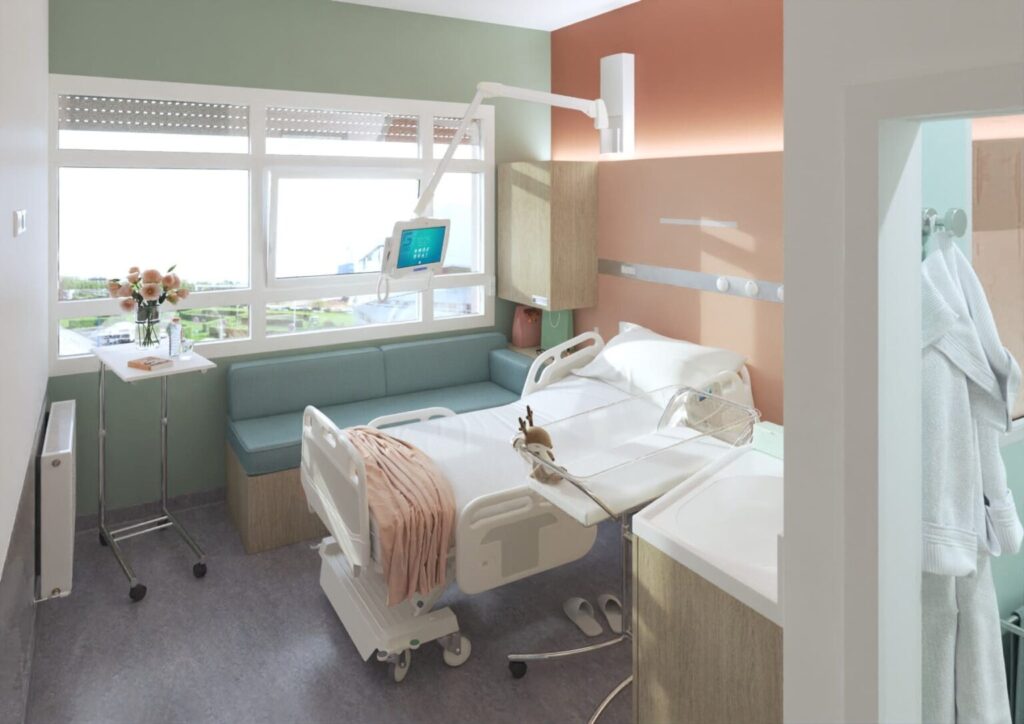
Eurasanté supports innovation in women’s health, notably through projects aimed at improving care environments and reducing environmental health risks.
A key initiative is the Eco-Designed Maternity Room, a collaborative innovation project co-led by Lille University Hospital (CHU de Lille) and Clubster NHL, the French competitiveness cluster dedicated to Nutrition, Health and Longevity run by Eurasanté. Developed within the long-standing “Concept Room” open innovation programme, the initiative brings together healthcare professionals, researchers, industrial partners, designers and patients to co-create a healthier and more sustainable maternity environment.
The project focuses on one of the most sensitive periods of life—the first 1,000 days—during which environmental exposures can have lasting impacts on health. Its objective is not only to reduce the environmental footprint of healthcare facilities, but also to create a safer and healthier care environment for mothers, newborns, accompanying relatives and healthcare staff.
Through a multidisciplinary co-design process, participants have worked on key aspects of the patient environment, including indoor air quality, the reduction of chemical pollutants, the selection of low-emission and eco-designed materials, circular economy approaches, waste management, lighting, furniture, bathroom facilities, newborn care areas and spaces dedicated to accompanying relatives. Particular attention has been paid to user experience, comfort, well-being and environmental health.
A pilot room is being developed within Jeanne de Flandre Hospital, the women’s and children’s hospital of CHU de Lille. Beyond testing innovative solutions in a real healthcare setting, the project seeks to identify practical design principles and good practices that could be replicated in other maternity wards and healthcare facilities, contributing to more sustainable and health-promoting care environments.
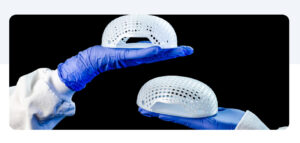
Also, we would like to talk about Lattice medical which developed a few years ago a women & cancer innovation (MATTISSE), which is a 3D-printed bioresorbable tissue engineering chamber implanted after mastectomy and filled with the patient’s own fat tissue. The porous structure acts as a temporary scaffold that supports tissue regeneration and vascularisation while gradually degrading. Over time, the implant is naturally resorbed and replaced by living autologous tissue, resulting in a more natural breast reconstruction.
Besides that, other women health initiatives we could highlight are some of our start-up’s projects:
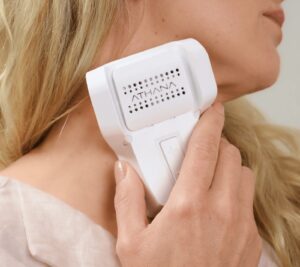
Finally, two more start-ups we work with are developing male contraception solutions designed to promote a more equitable distribution of contraceptive responsibility between partners.

Eurasanté is actively involved in European collaborative projects and regularly explores opportunities related to women’s health, particularly through transversal approaches (digital health, prevention, care pathways, environmental health).
The ecosystem is open to joining new EU consortia addressing women’s health challenges.
Eurasanté seeks to strengthen partnerships with: