
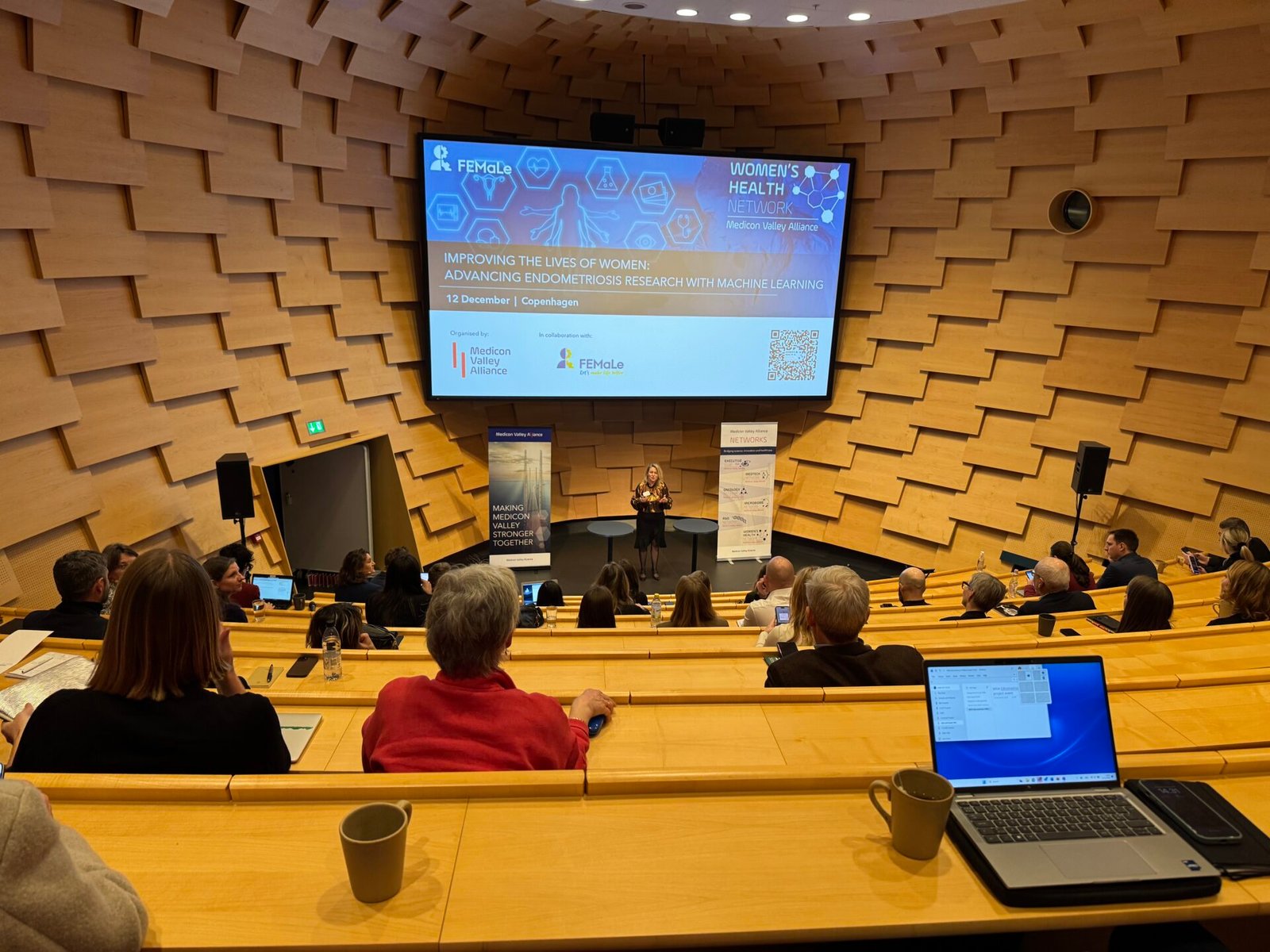
The EU-funded FEMaLe Project (Finding Endometriosis using Machine Learning) brought together researchers, clinicians, and patients across Europe to tackle one of women's health's most persistent challenges: the delayed, fragmented care experienced by people living with endometriosis. Through co-creation, digital health tools, and responsible use of AI, FEMaLe has translated cutting-edge research into practical solutions, supporting earlier recognition, more precise surgery, and more person-centred pathways.
An estimated 200 millions of people live with endometriosis globally, yet too many spend years searching for answers. The FEMaLe Project set out to change that. Launched in 2020 and supported by the European Union, FEMaLe united leading hospitals, universities, SMEs, and patient organisations to shorten time to recognition, improve surgical precision, and centre care around what patients say they need.
Co-creation as the starting point. From the beginning, FEMaLe treated women and people with endometriosis as equal partners, not subjects. We co-designed research and digital health tools with patient organisations across Europe to understand real-world barriers: long diagnostic journeys, gaps in coordination between specialists, and limited support between clinical contacts. This participatory approach shaped every deliverable and ensured that solutions were usable in daily life, not just in research settings.
Turning surgical video into actionable intelligence. Laparoscopic surgery is the gold standard for confirming and treating endometriosis, but recognising subtle lesions takes time and expertise. FEMaLe partners curated and annotated multicentre surgical video sequences from expert units in France, Hungary, Brazil, and Denmark. Using these data, we trained and validated deep-learning models to help identify typical lesion patterns during laparoscopy. The proof-of-concept showed that computer vision can support surgeons by highlighting suspicious areas in real time. Importantly, we embedded this capability into an augmented-reality decision-support prototype (SurgAR) developed with clinicians; an example of AI designed to assist (not replace) expert judgment and training.
A digital front door between visits. Patients repeatedly told us that months can pass between consultations, with symptoms fluctuating and uncertainty rising. In response, we advanced the Lucy app concept as a patient-centred front door to care. Lucy enables structured symptom tracking (including pain, bleeding, and quality-of-life indicators), supports preparation for appointments, and integrates trustworthy self-care information. The intent is to help people articulate priorities, spot patterns over time, and make every clinical interaction count. Lucy also lays a foundation for future digital biomarkers, signals derived from routine data and wearables, to support earlier recognition and personalised management.
What patients want from services. As a concluding milestone, FEMaLe conducted a national Danish survey in close collaboration with patient partners on preferences for multidisciplinary care. These insights are now informing regional policy discussions in Denmark about how to invest sustainably in women’s health, including endometriosis, and how to design a system that builds on existing strengths.
Bridging science, policy, and practice. A hallmark of FEMaLe was working across silos. We collaborated with surgeons on operating-room tools, with GPs on earlier recognition and referral quality, with data scientists on model governance and bias checks, and with policymakers on translating results into service improvements. This ‘bench-to-policy-to-bedside’ loop increased the odds that innovations would survive beyond the project’s end. For example, our AI workstream adopted transparent reporting, external validation across centres, and continuous clinical input; key steps for responsible AI in healthcare. In parallel, our policy papers distilled evidence and patient preferences into practical recommendations for regional health authorities considering targeted investments in women’s health.
Equity and inclusion by design. Endometriosis is not rare; it is under-recognised. FEMaLe wove equity considerations into study design and dissemination: inclusive recruitment materials, plain-language summaries, and open channels with patient groups. We also examined where digital tools risk leaving people behind and prioritised accessible design (e.g., simple onboarding, clear language, and options for low-bandwidth use). These choices matter: they help ensure that the benefits of innovation reach the people who need them most.
This changed because of FEMaLe:
Lessons for global health: FEMaLe’s experience offers three takeaways for any system seeking to improve complex, chronic conditions:
Endometriosis has long been a story of delay. FEMaLe’s success is a different story: one where patients, clinicians, and researchers build solutions together — moving from years of waiting to earlier recognition, better-guided treatment, and more humane, coordinated care. That is the future we chose to design, and it is already taking shape.