Despite the progress in cancer research and treatment, inequalities in cancer incidence, survival, and care remain a pressing global challenge. Cancer inequalities refer to the unfair differences in who develops cancer, how early it is diagnosed, the treatment people receive, and their chances of survival or quality of life. A major driver of these inequalities is the cancer access gap, which describes unequal access to essential services such as prevention, screening, diagnosis, treatment, and follow-up care. People with lower education levels, limited access to healthcare, or living in disadvantaged or rural areas face greater barriers to cancer prevention, screening, and treatment and are therefore more likely to be diagnosed at a later stage, which leads to poorer health outcomes.
As the cancer access gap directly contributes to wider cancer inequalities, it is critical to address it in order to improve outcomes and ensure more equitable care for all populations.
Global Health Connector has been contributing to innovative, EU-funded initiatives aimed at reducing the cancer access gap. These efforts align with the EU Cancer Mission and Europe’s beating Cancer Plan, focusing on advancing knowledge of cancer, strengthening prevention and early detection, improving diagnosis and treatment, and enhancing the quality of life for patients and survivors.
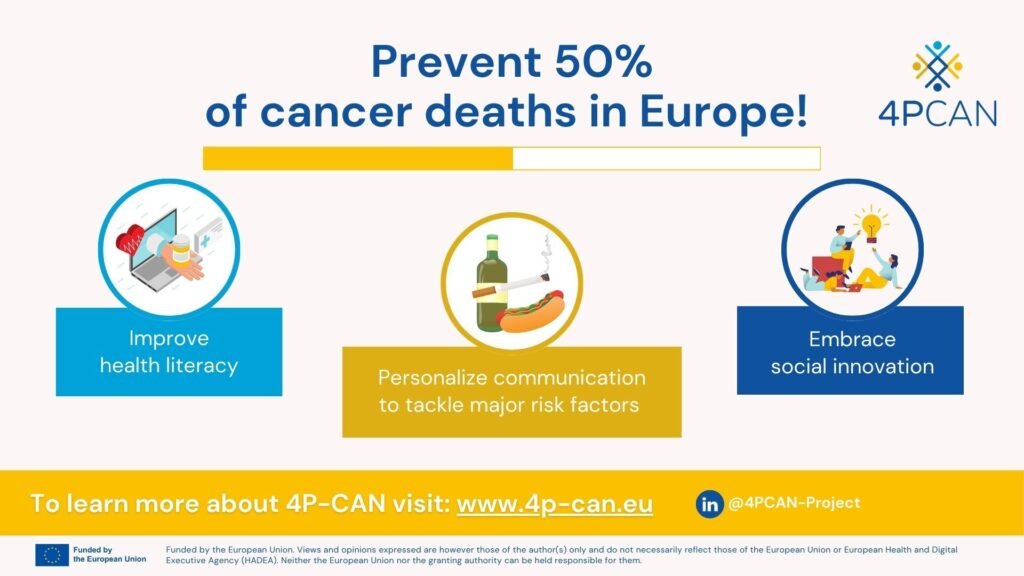
4P-CAN is a Horizon-funded project focusing on improving prevention and early detection through personalised, people-centred, and participatory approaches.
A key objective of the project is to address major modifiable risk factors for cancer (such as smoking, alcohol consumption, physical inactivity, excess body weight, preventable infections, and environmental pollutants like radon) across Eastern European countries, especially within rural communities. It aims to help citizens and caregivers better understand cancer risks, take part in prevention efforts, and access reliable information. By empowering communities and strengthening the capacity of local health and social care providers, 4P-CAN contributes to reducing cancer inequalities across Europe.
4P-CAN is also an active member of the Prevention and Early Detection Cluster – —Implementation Research, together with 5 other European-funded projects, to foster collaboration to better advance cancer prevention strategies at a broader scale.
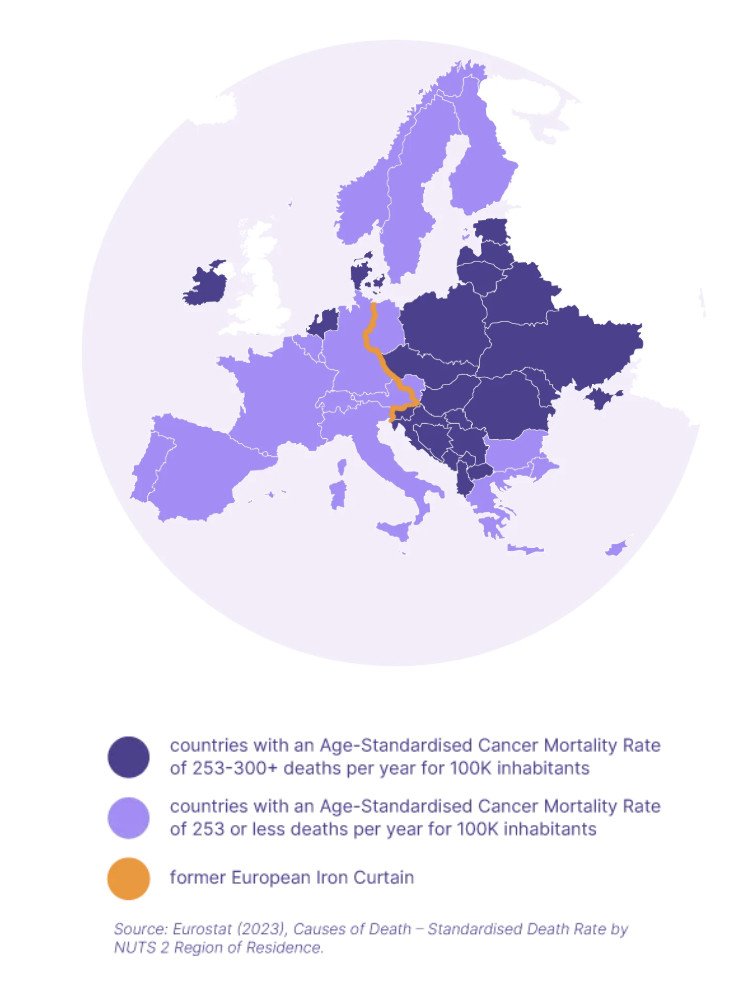
The CURTAIN Project is a 3-year initiative co-funded by the EU4Health Programme and coordinated by the Center for Innovation in Medicine – INOMED. By adopting the acronym CURTAIN (Cancer ineqUalities thRough liTerAcy IN Europe), the project highlights the persistent cancer inequalities between Eastern and Western Europe, which are visible today through the lens of the former Iron Curtain.
CURTAIN aims to reduce cancer-related inequalities across Europe by strengthening cancer literacy among citizens, health professionals, policymakers, researchers, and businesses. By fostering collaboration across sectors, CURTAIN shall close the gap in cancer prevention, diagnosis, care, and survivorship. To achieve this, CURTAIN partners will create training programmes, Living Labs, workshops, awareness campaigns and develop innovative digital health resources and tools.
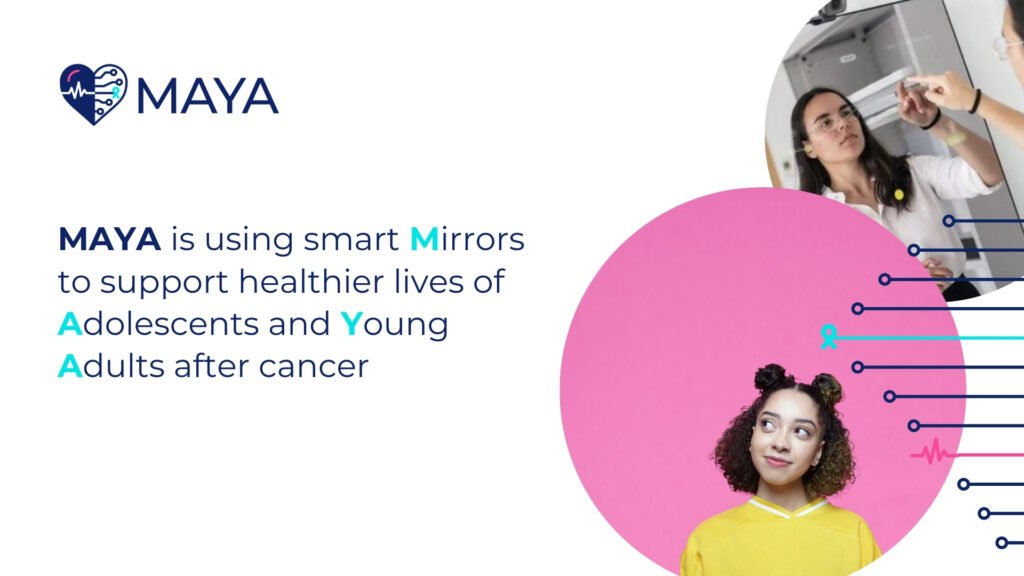
The MAYA Project, a 4-year initiative funded by the Horizon Europe Programme.
Late effects of cancer treatment often lead to increased risks of developing cardiovascular health issues for Adolescents and Young Adults (AYA) cancer survivors. To improve cardiovascular health outcomes, MAYA partners aim to develop the iCARE health hub, a system designed to monitor and manage late-onset cardiovascular health issues and address gaps in care during the transition to post-treatment stages.
In line with the core principles of the EU Cancer Mission, the MAYA project is testing the effectiveness of its innovative solution among cancer survivors of all genders and ages in five pilot sites and in eight Living Labs, involving both Western and Eastern European partners.
Global Health Connector has recently launched the Global Cancer Ecosystem (GCE), a connecting initiative that brings together stakeholders across regions, disciplines, and sectors to reduce cancer inequalities. Officially introduced on 2 March 2026 at the Global Health Connector Summit during Mobile World Congress in Barcelona, the GCE represents a significant step forward in global efforts to address disparities in cancer care.
Presented as a CollaborAction, the Global Cancer Ecosystem moves beyond dialogue toward measurable, collective impact. It acts as a global communication and collaboration platform that connects policymakers, healthcare providers, researchers, industry, and civil society to foster coordinated action and shared solutions.
The initiative focuses on three key pillars: addressing social and equity gaps in cancer prevention, diagnosis, treatment, and survivorship; strengthening global–local collaboration and capacity building, particularly in low-resource settings; and leveraging digital health, data, and artificial intelligence to support better decision-making, innovation, and system integration.
By facilitating knowledge exchange, amplifying underrepresented voices, and translating evidence into practice, the Global Cancer Ecosystem supports more inclusive and sustainable cancer care approaches. In doing so, it reinforces the collective commitment to closing the cancer access gap and achieving more equitable outcomes for all.