
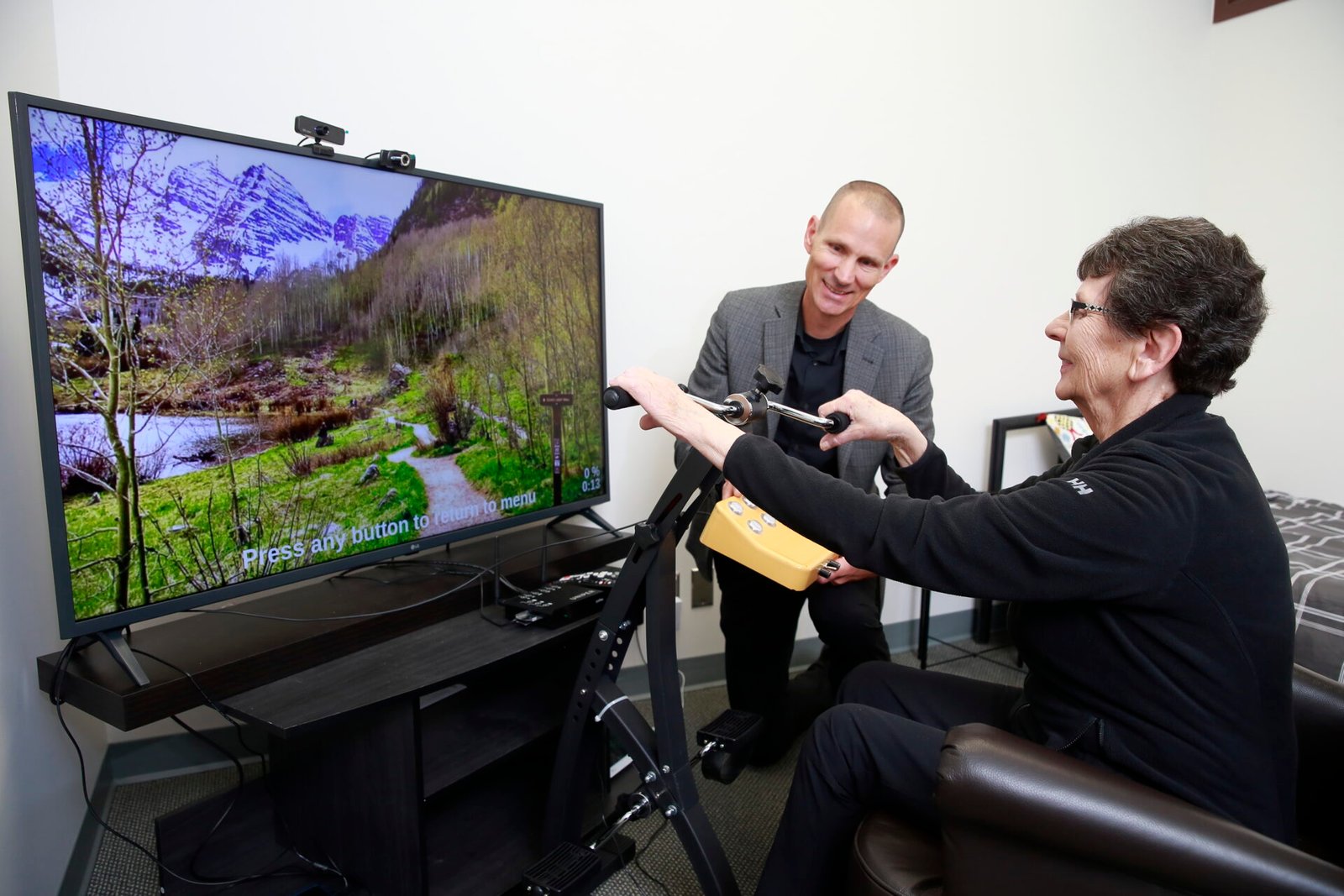
Aging in northern and rural communities often brings unique challenges for older adults and caregivers, from the need to travel vast distances for health services to limited connectivity and fragmented access to technologies compared to urban settings.
The Centre for Technology Adoption for Aging in the North (CTAAN), a national innovation hub that emerged from the AGE-WELL network in Canada, is working to reduce barriers to the adoption of technologies that can help older residents of northern and rural communities age happily and healthily.
Launched in 2020 as a partnership between the University of Northern British Columbia (UNBC), Northern Health and AGE-WELL, CTAAN promotes collaboration through multi-sectoral partnerships that test AgeTech products in real-world settings, with a goal to make them more available to older adults, caregivers and health-care systems.
“People living and aging in northern and rural communities have the right to the same supports and services as those in more urban environments,” says Dr. Shannon Freeman, Academic Director of CTAAN, which is based in Prince George, British Columbia (B.C.). “Everyone should be able to access the right technology in the right place at the right time that works to meet their needs.”
As a professor of nursing at UNBC and Canada Research Chair in Technology Adoption for Aging, much of Dr. Freeman’s work focuses on promoting health and wellbeing for older adults and caregivers in northern and rural communities. She says the number of older adults living in these areas, especially among the 75-plus population, is projected to grow, as is “the demand and the need for services and products to help them do so in a way that supports their quality of life.”
“We’re really expanding efforts to get tech out to where it’s needed,” says Dr. Richard McAloney, Director of CTAAN. The hub works closely with partners to set priorities, identify needs and match them with technologies that can be tested and validated through projects in the region.
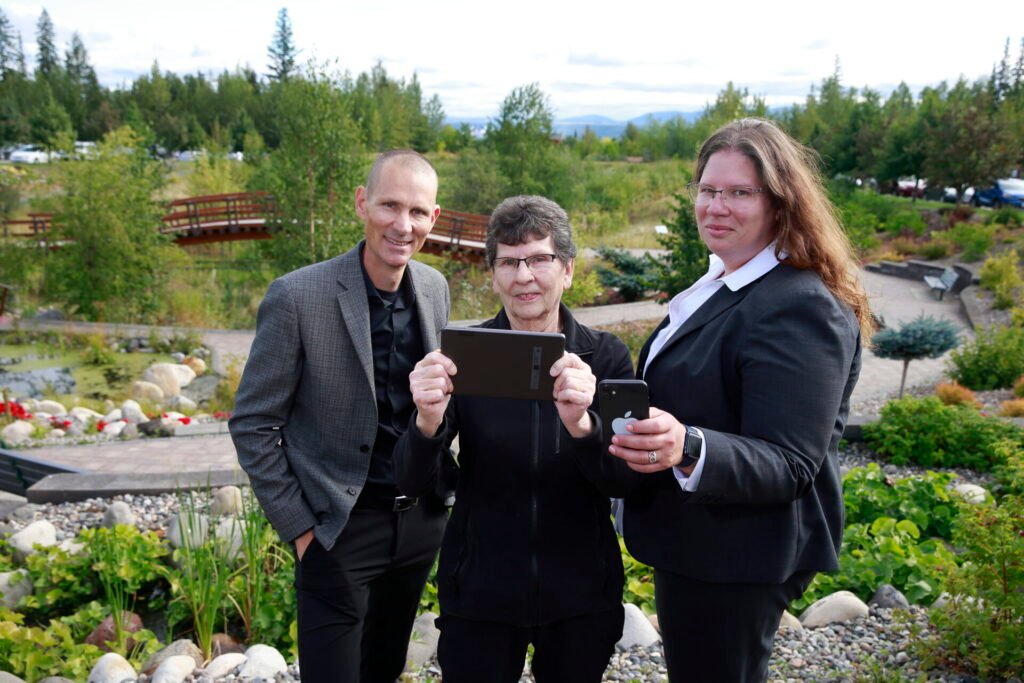
CTAAN collaborates with older adults, caregivers, health-care providers, and technology developers to test and implement solutions that support aging in northern and rural communities. With over 50 research partners in Canada and globally and more than 100 company partners, CTAAN connects innovation, research and real-world implementation. Through programs such as the National Research Council of Canada’s Industrial Research Assistance Program (NRC IRAP), small- and medium-sized enterprises gain access to living-lab environments and user feedback.
Recent collaborations include companies such as Tochtech Technologies and Care2Talk, exploring solutions that support safety, communication and independence for older adults. CTAAN also works with communities and care organizations to integrate technology into innovative care environments, including dementia-inclusive housing models like the Aurora Home in Vanderhoof.
Community partnerships are key. With support for community engagement and projects from partners such as Rio Tinto and the Vancouver Foundation, CTAAN has helped introduce innovations like Just Vertical’s indoor gardening systems into long-term care settings. “By integrating technologies, we aim to enhance Canadians’ wellbeing while fostering local innovation,” says Dr. McAloney.
Wilma Hartnagel, a retired schoolteacher in Prince George, says northern winters bring hazards such as icy walking conditions. After slipping and breaking her ankle several years ago, she relied on a smart home security system that let her stay on the third floor of her duplex and admit visitors using her cellphone.
“I couldn’t manage to live alone without it,” says Hartnagel, who is excited to see the hub raising awareness of the need to bring Agetech to isolated areas.
Dr. Freeman says CTAAN brings diverse voices and perspectives to the table. “We try to be the bridge, helping make technologies more accessible and adapted to Canada’s northern geography and highly distributed populations.”
CTAAN also serves as an innovation hub with the pan-Canadian envisAGE initiative, which supports SMEs to innovate in AgeTech.
One CTAAN project involved using eReaders to address apathy among older adults living in long-term care homes and community settings. Dr. Aderonke Agboji, an assistant professor in nursing at UNBC, led the research, supported by Rakuten Kobo and CTAAN. The study involved setting up ebook clubs at four long-term care homes and three communities across the region to see if the devices help participants become more socially engaged.
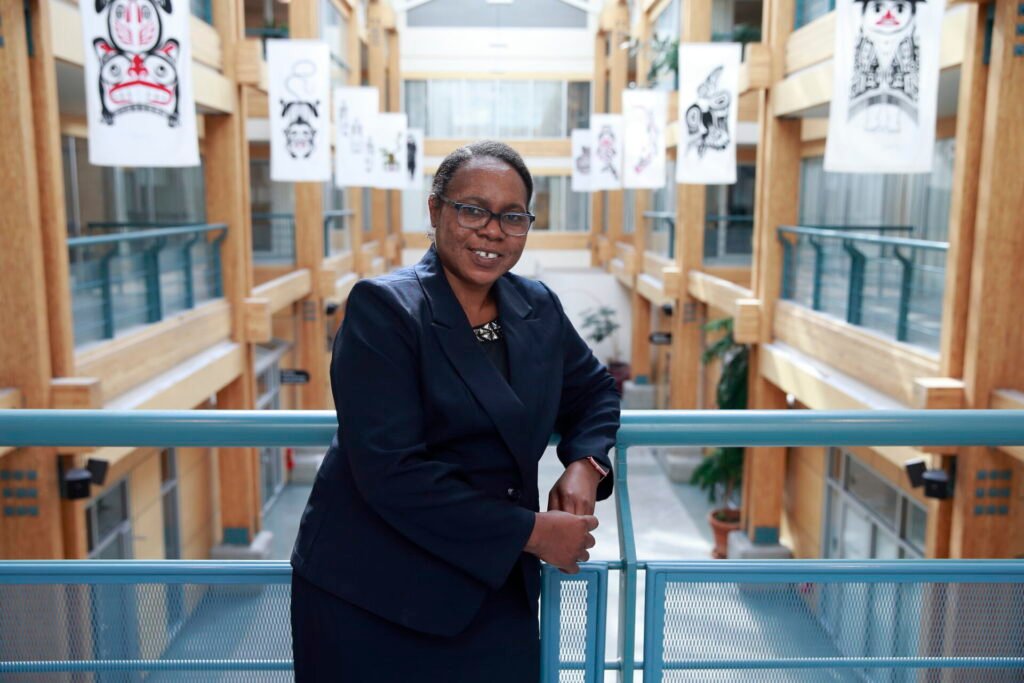
The study found the use of eReaders can mitigate apathy for older adults living in both long-term care and community settings. Dr. Agboji notes that CTAAN has played a crucial role in putting on the radar the “huge role” that technology can play in the wellbeing of older people living in different settings. She hopes the hub will help to “give older adults in the north equal rights to technology as people in urban centres.”
By building technology capacity and streamlining the process for its adoption in the north, CTAAN is working to do exactly that.