One of the companies is Direct Radiology It operates the radiology specialty group with 54 board-certified, sub-specialty trained radiologists. The company provides diagnostic interpretation and specializes in a series of services, including women’s imaging, cardiovascular, nuclear medicine, and more.
In 2019, Philips bought Direct Radiology (in order to scale to support radiologists globally.)
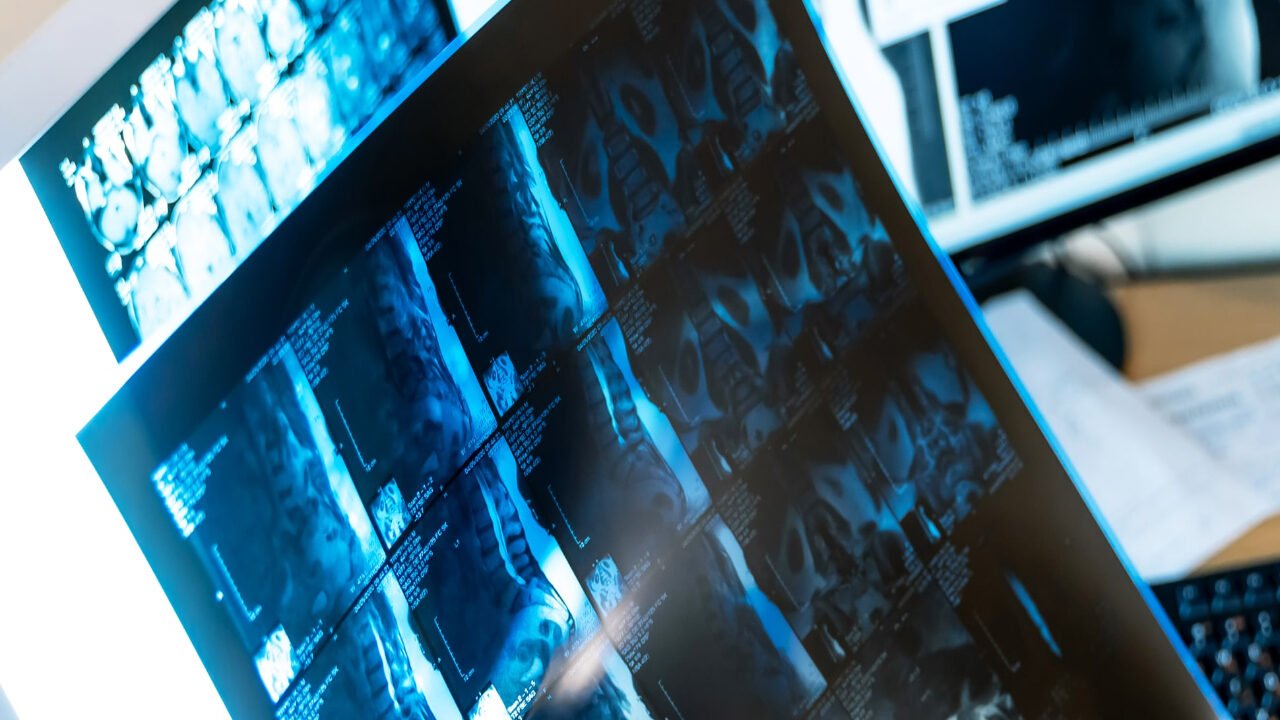
At first, the goal was to create radiology imaging software. The system should receive MRI images from the machine and provide the technologist with a convenient interface to validate the image’s quality. Once the MRI image passes through the validation process, it is sent to a doctor for further investigation.
After that, our team proceeded to develop a specialized application working with DICOM files. Its main purpose is to receive, process, and send medical examination results according to specific pre-set rules. The software can work both independently and in conjunction with other products, such as DICOM Viewer — a solution we’ve created a proof-of-concept for.
The implementation process revolved around resolving several major challenges typical for radiology imaging software development:
At the same time, a modern healthcare technology market doesn’t offer many software options that would be targeted specifically towards radiology specialists. That is exactly the problem our client was willing to resolve with unique radiology imaging software.
Their goal was to create a set of digital tools that could take care of different aspects of radiology workflow (receive, transmit, organize, review, and analyze MRI images and DICOM files), quickly process large volumes of data and guarantee maximum stability. The products should also work independently and complement each other, forming an agile system.
Bringing such an ambitious idea to life is challenging from the technical perspective and requires involving an experienced crew that has mastered innovative technology and has experience developing compliant healthcare software. Otherwise, the radiology imaging software either wouldn’t be able to withstand competition or would fail to meet strict security requirements typical for the healthcare industry.
One of the main goals of the solutions’ development was to streamline the radiology staff workflow and provide them with a way to transmit and process large volumes of data (studies) in a matter of seconds. To achieve that, we’ve incorporated asynchronous logic. It allows an application to perform tasks in a non-blocking manner, therefore, improving its performance.
To safeguard the best way to define the data requirements of an application and reduce the number of requests made to the server, Light IT Global’s experts used GraphQL to fetch all the data that is needed by the application. At the same time, the combination of GraphQL and Apollo Client provides a necessary scalability boost to the application.
While one of the solutions developed by Light IT Global was about to be used by radiology staff and doctors during their work with MRI images, the other product was supposed to serve as a mediator between different hardware or the hardware and the storage.
The introduction of bidirectional automation helped to minimise the need for human interaction as the DICOM files are transmitted, processed, and stored according to more than 100 pre-written rules. The software works with various cloud storage types (simple buckets and specialized ones, such as Google Healthcare). Both desktop and server installations are available.
Solution #1 helps radiology staff to manage medical data processing (MRI image studies) more effectively and streamlines the workflow of medical personnel.
Solution #2 is an application for exchanging and processing medical devices’ data (MRI machines) that works as a background tool automating DICOM file management.
Both of the systems were fully developed and market-ready. Direct Radiology software was successfully incorporated into the radiology department in one of the clinics in Israel. There it proved to be able to handle Big Data requests processing thousands of studies daily (>1M entries successfully processed).
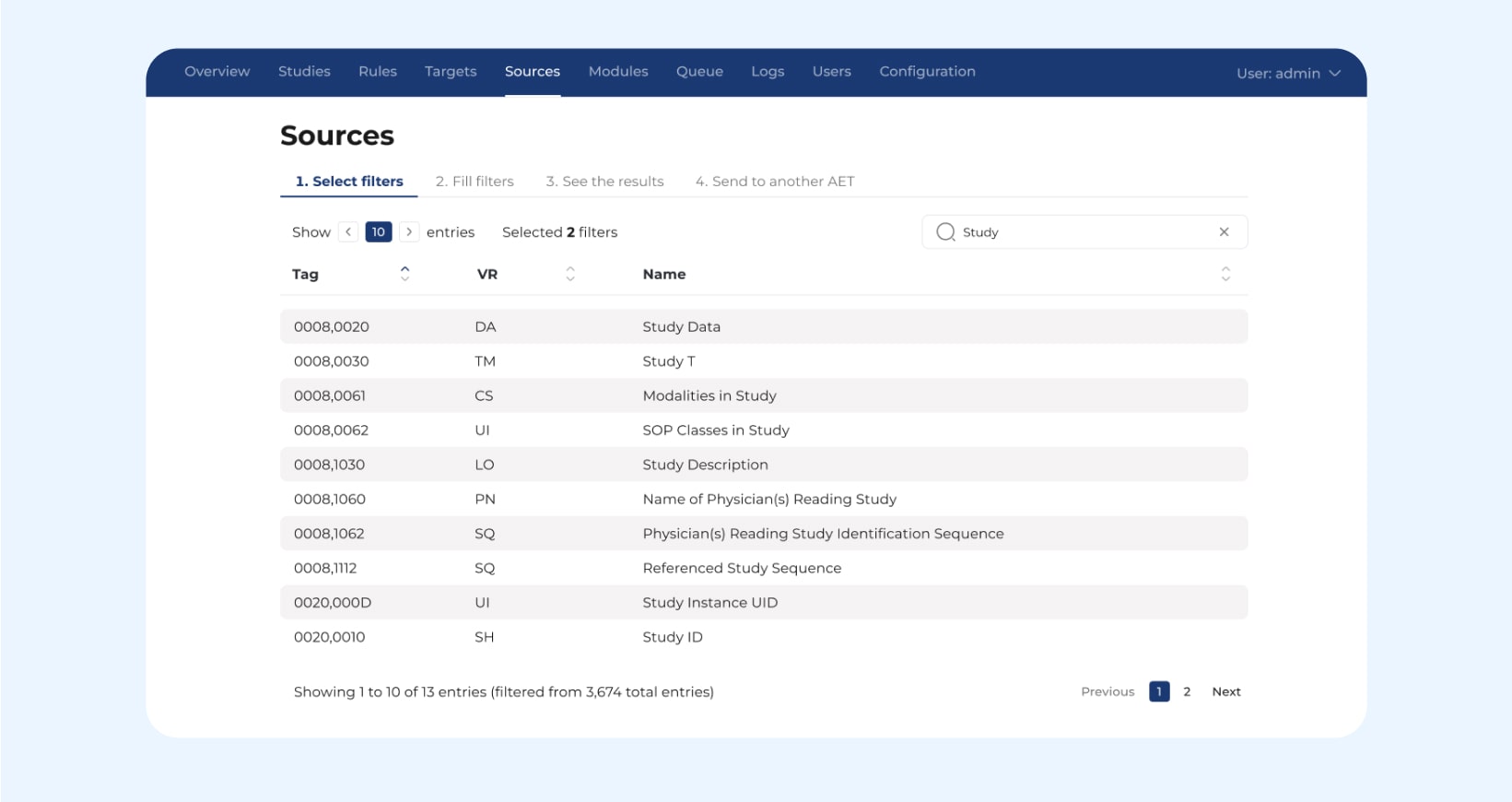
The software developed by Light IT Global enhanced processes at the level of a network of clinics due to the reduced manual routine work of radiologists. It enables fast loading, processing and transferring of MRI images saving time for healthcare professionals.
Seeking to address the increasing shortage of radiologists, Amsterdam-based Philips has acquired teleradiology platform vendor Direct Radiology. The scaled-up telehealth services are built on a cloud-based radiology informatics portfolio.

It is one of the most interesting projects from a tech perspective for me. Finding a solution to some issues that seemed unsolvable was hard but thought-provoking.
Ihor Pavlenko, CTO
Discover more about Light IT Global:
Light IT Global has been helping Healthcare and Healthtech businesses across the globe to provide better care and boost operational efficiency for 19+ years now. We specialize in custom software development of any complexity, delivering comprehensive, future-proof, and fully compliant software. We are ISO certified and have 350+ projects under our belt, including software developed for Pfizer, Famicord, Philips and other well-known HealthTech market players.