
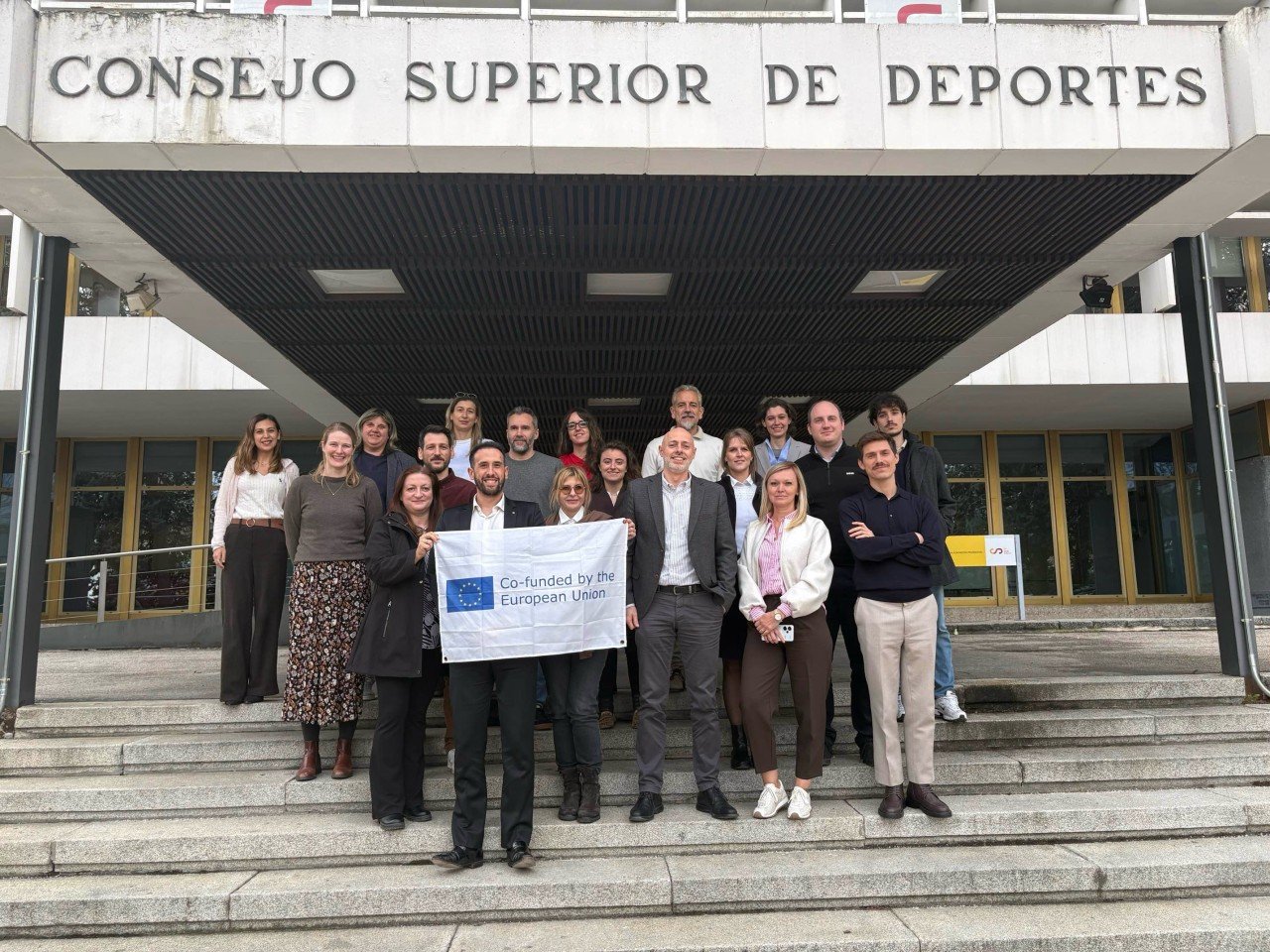
The SHIA (Sport and Health Innovation Accelerator) project officially held its kick-off meeting at the Spanish National Sports Council, bringing together a diverse consortium dedicated to using sport as a lever for social change and health improvement. Project partners aligned on SHIA as an opportunity to transform how Europe connects education and industry to drive innovation at the intersection of health and sports.
Funded with €1.5m under the Erasmus+ programme, SHIA is a 36-month initiative coordinated by ADESP (Asociación del Deporte Español). The project unites 12 partners from 11 countries and one associated partner, including universities, civil society organisations and research institutes from across Europe.
The project bridges the gap between education, research, and industry by developing a validated innovation acceleration programme at the intersection of the health and sports sectors. To achieve this, it will launch various pilot programmes to involve over 2,100 students, professionals and 50+ projects, utilizing agile methodologies to turn academic knowledge into market-ready solutions. A unique feature of the project is the creation of “Innovation Villages”: Living labs where startups, universities, and institutional stakeholders can co-create and test innovations in real-world environments.
“SHIA is the answer to ensuring scientific evidence guides product development,” Fabián Quesada Gómez, Director General of ADESP noted. “We are not just launching a project; we are building a self-sustainable collaboration network that will foster a culture of innovation across Europe”.
The project specifically responds to European challenges such as an aging population requiring preventive health solutions and a growing digital divide in sports technology. It also prioritizes Green Transition by integrating ecoresilience and sustainability approaches across its innovation tracks, which include Tech + Digital Sports, Grassroots Sports Innovation, or Active Living
The kick-off meeting allowed the consortium to align on the four main phases of the project:
“It is a great pleasure to see such good energy among the partners in the ‘engine room’ of this project,” said Elia Racamonde, SHIA Coordinator. “With diversity as our strength, we are co-creating strategies and tools – from stakeholder mapping to innovation ecosystems – that will ensure every participant has the resources to excel in the evolving landscape of sport and health”.
The Global Health Connector leads the dissemination, communication and sustainability work of SHIA. As Work Package 8 leaders, the organisation focuses on maximizing project visibility, ensuring sustainability, and facilitating the uptake of project results by relevant communities. Our tasks include the drafting and implementation of a comprehensive communication strategy, with the focus on digital tools, as well as stakeholder engagement and ensuring the project’s longevity after its conclusion. Furthermore, the Global Health Connector supports the design of the ecosystem, the identification and integration of a diverse group of key stakeholders, and assists in facilitating regular networking exchanges and events. Lastly, we are involved in identifying and validating 12–15 key variables for assessing the viability and sustainability of the SHIA project and assists in the operational preparation of the pilot interventions and engaging stakeholders through participatory dynamics.

Co-funded by the European Union. Views and opinions expressed are however those of the author(s) only and do not necessarily reflect those of the European Union or the European Education and Culture Executive Agency (EACEA). Neither the European Union nor EACEA can be held responsible for them.
To learn more about the project and how to get engaged, contact:
Website and social media channels to come soon.
List of project partners