
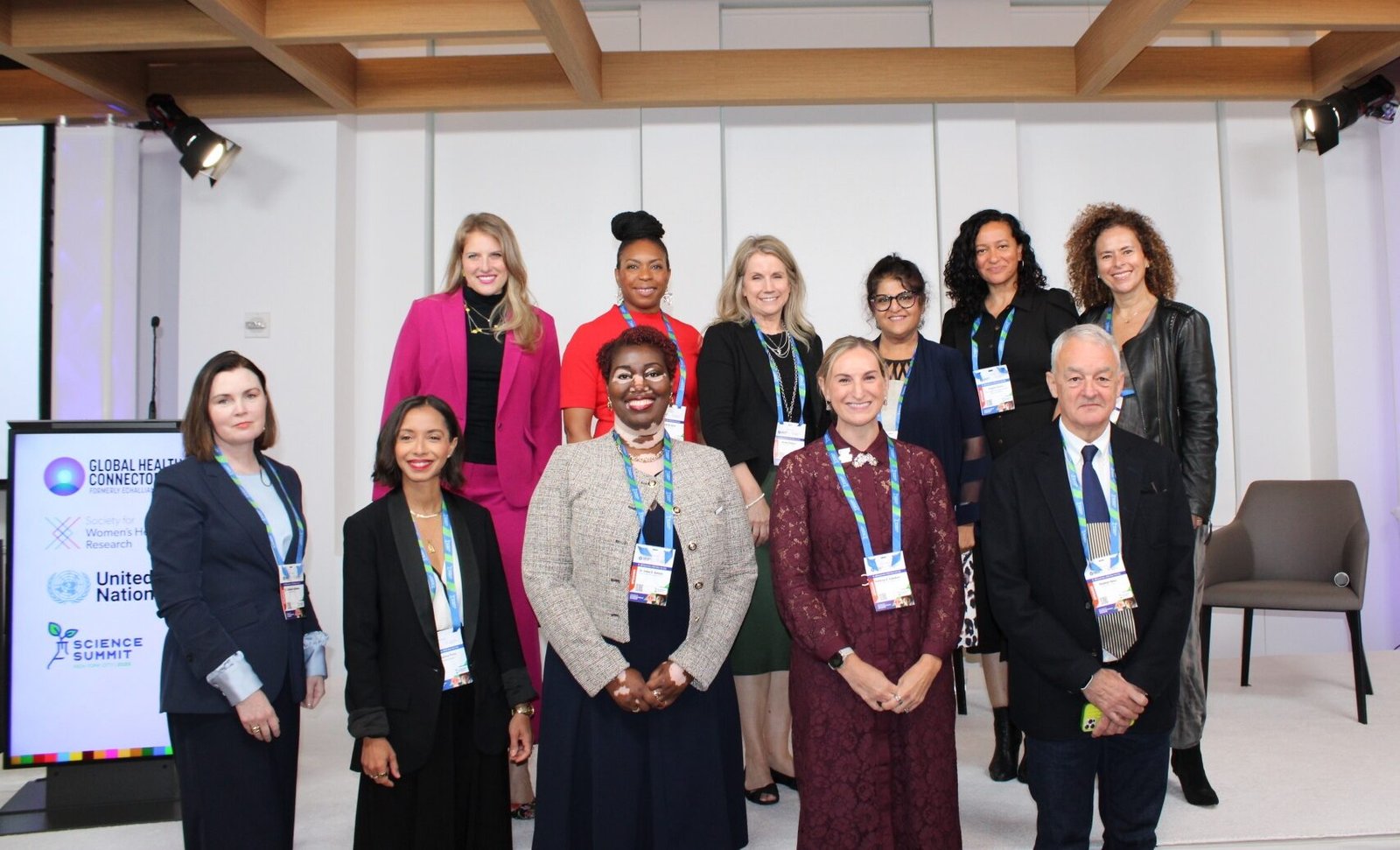
Bleddyn Rees opened the session, introducing the newly branded Global Health Connector—for the first time under this trade name—and emphasising our commitment to partnerships, impact, and actionable solutions.
Kathryn Schubert, President and CEO of SWHR, framed the importance of investing in women’s health, referencing findings from the McKinsey Health Institute (MHI):
“Women spend 25% of their lives in poorer health than men—a gap we must address. Investing in women’s health isn’t just about equity; it’s about greater prosperity, productivity, and economic value. Closing this gap could add 75 million healthy life years annually and unlock $1 trillion in global GDP by 2040.”
We were delighted to have MHI participate in the event and to be part of their ecosystem of partners driving progress in women’s health and overall health worldwide.
Dr Irene Aninye moderated a panel of global leaders on setting national priorities for women’s health.
Ayodola Anise, MHS, Senior Director at the Milken Institute Health, highlighted the historic underfunding of women’s health research and the need for collaboration across health, finance, and philanthropy. The Milken Institute Women’s Health Network focuses on collective action to overcome barriers such as regulatory delays, siloed innovation, and fragmented care.
Angela Kaida, PhD of Canada’s CIHR discussed policies requiring sex and gender integration in research, noting that although compliance has improved, only ~7% of funding supports female-specific health research. She called for broader investment to ensure research reflects women’s health needs across all life stages.
“Better sex and gender integration is better science—making research more accountable, more applicable, and ultimately more impactful. The real question is: who will seize the opportunity, and when?”
Deborah Loxton, PhD, Director of the Centre for Women’s Health Research in Australia, presented insights from the Australian Longitudinal Study on Women’s Health, emphasising the impact of high-quality, representative data in shaping policy and improving health outcomes.
The panel concluded that investing in women’s health is both a humanitarian imperative and an economic opportunity.
Progress in women’s health requires collaboration, and in Ayodola’s words: “If you want to go far, go together.”
Moderated by Nicole Althaus, this session highlighted how innovation and research can meet women’s health needs globally.
Delali Attiogbe Attipoe, MB, MBA, of DNDi emphasised gender-inclusive research for neglected diseases, ensuring women can participate in trials without compromising reproductive rights.
“No woman should have to choose between treatment and her reproductive rights.”
Zainab Shinkafi-Bagudu, MBBS, Founder & CEO of the Medicaid Cancer Foundation, shared her work improving women’s health and cancer care in Nigeria, focusing on coordinated efforts across awareness, access, treatment, and policy.
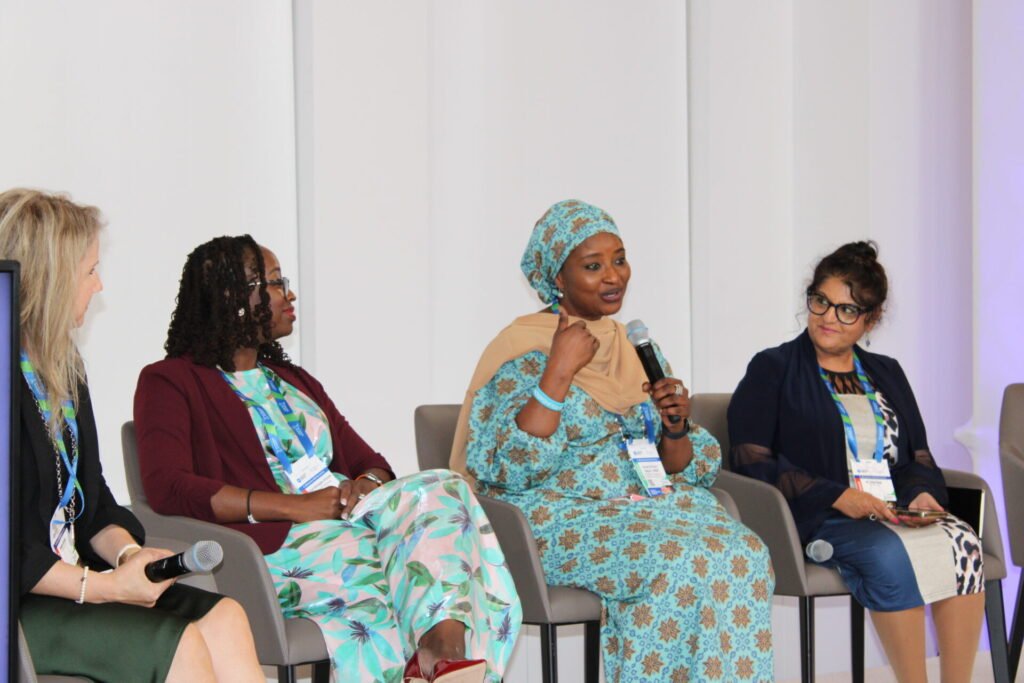
Antonella Santuccione-Chadha, MD, of the Women’s Brain Foundation underscored the economic impact of women’s brain and mental health, estimating that addressing these gaps could add $250 billion to global GDP by 2040.
“Innovation is about empowering people with knowledge and education. When local scientists from underserved communities are supported, they can create solutions for their own people—and the world.”
Zina Manji, MS, PharmD, of Innopathwayz highlighted the need to integrate patient needs, regulation, and local context to ensure innovations reach underserved communities.
Key takeaways included empowering local scientists, prioritising inclusivity, balancing speed with quality, reforming regulatory systems, and ensuring advocacy drives policy and funding.
Experts including Siobhan Kelleher (OnaWave Medical) and Roxanne Pero (O Positiv Health) highlighted structural bias in clinical trials, gaps in preventive care, and the potential of AI to improve precision health if trained on inclusive data.
Ashley Szofer of Johnson & Johnson emphasised the importance of investing in the predominantly female health workforce, addressing shortages, mental health, workplace safety, and leadership gaps.
“Investing in women health workers is essential for global health access and progress, not just altruism.”
Laura Sugam from Cencora explained how to shorten the path from idea to impact in women’s health by fostering collaboration across sectors to advance translational research.
Only 30% of health ministers globally are women—despite making up 70% of the health workforce—revealing a persistent leadership gap.
Speakers, including Shirley Malcom, PhD, Roopa Dhatt, MD, MPA, Sarah Hendriks and Gabriela Rojas, explored structural inequities in workplace leadership, strategies to improve workforce retention among women, and the importance of normalising conversations on women’s health across life stages—including menopause—and challenging the stigma surrounding it.
“It is fundamentally a right for women to lead. And women already are leading in global health.”—Shirley Malcom, PhD
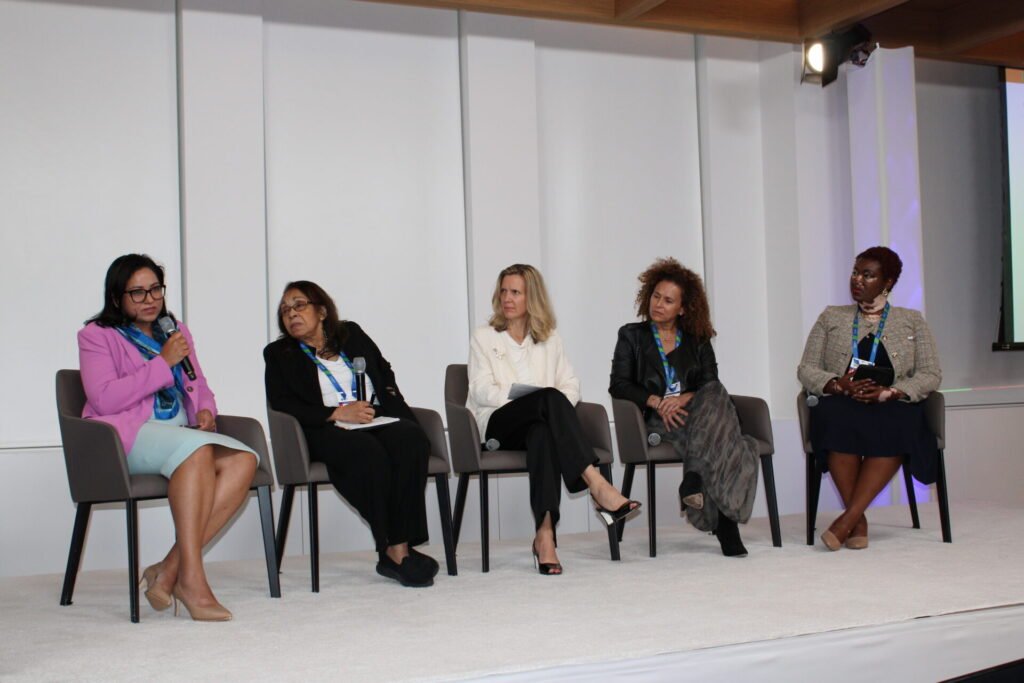
Panelists drew the attendees’ attention to systemic reforms, workplace adaptations, and the combination of human rights and business rationale to sustain women’s leadership.
The consensus was that success requires data, stories, strategies, and accountability, while collective action is essential to advance and scale workplace equity.
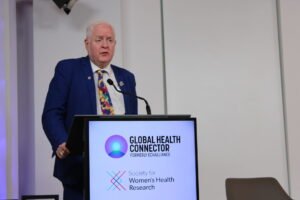
Prof Mark Lawler, Professor of Digital Health, Queen’s University Belfast, discussed how inequity in cancer research leadership affects both the quality of research and patient outcomes, making gender equity essential for effective, evidence-based cancer care.
He noted:
‘There are fewer female cancer researchers in leadership positions, and that’s just not acceptable.”
Additionally, Mary Lynne Van Poelgeest-Pomfret, President of the World Federation for Incontinence and Pelvic Problems, highlighted in her virtual talk the need to destigmatise women’s health and fully integrate it into healthcare systems.
Moderated by Nicole Althaus, speakers Julie Gerberding (FNIH) and Esther Ruiter (Africa Health Business) highlighted the role of partnerships in addressing women’s health challenges.
“Successful partnerships rely on diversity and collective leadership—especially women’s voices.”
They stressed integrating partnerships into local health systems for long-term sustainability, combining public, private, philanthropic, and patient perspectives.
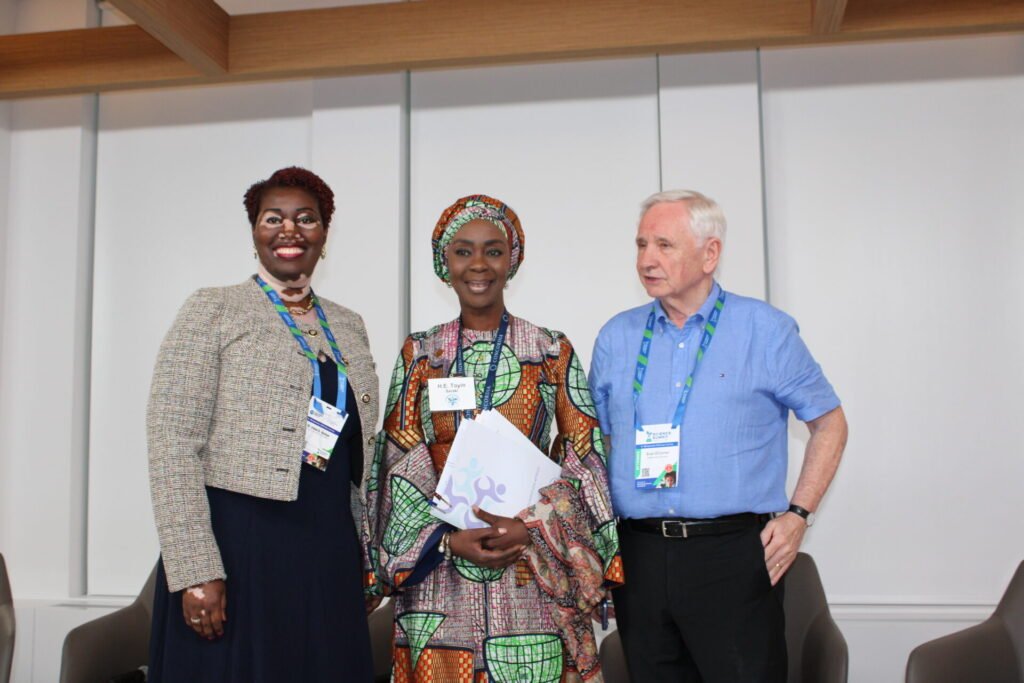
H.E. Toyin Ojora Saraki, LLB, LLM, BL, FPH, founder of Wellbeing Foundation Africa, shared her work in improving maternal and child health through midwife-led care, home-based health records, and community education.
“Respect for maternity care does not begin when a woman gives birth. True respectful maternity care starts with how we raise girls—shaping their expectations and teaching them to approach their health responsibly as they grow into womanhood.”
She emphasised that investment in midwives is a triple investment: in the mother, the newborn, and the broader community.
Dr Irene Aninye closed the day by highlighting key themes: addressing health challenges unique to women, sustaining partnerships, championing institutional policies, and closing research and development gaps globally. She urged participants to continue the conversation beyond the session and to implement the ideas and insights shared.
This event is sponsored, including by Novo Nordisk. Novo Nordisk has provided sponsorship to Global Health Connector to help cover in part the cost of this summit. Novo Nordisk has had no influence over the meeting agenda or arrangements.
All photo credits go to SWHR.