
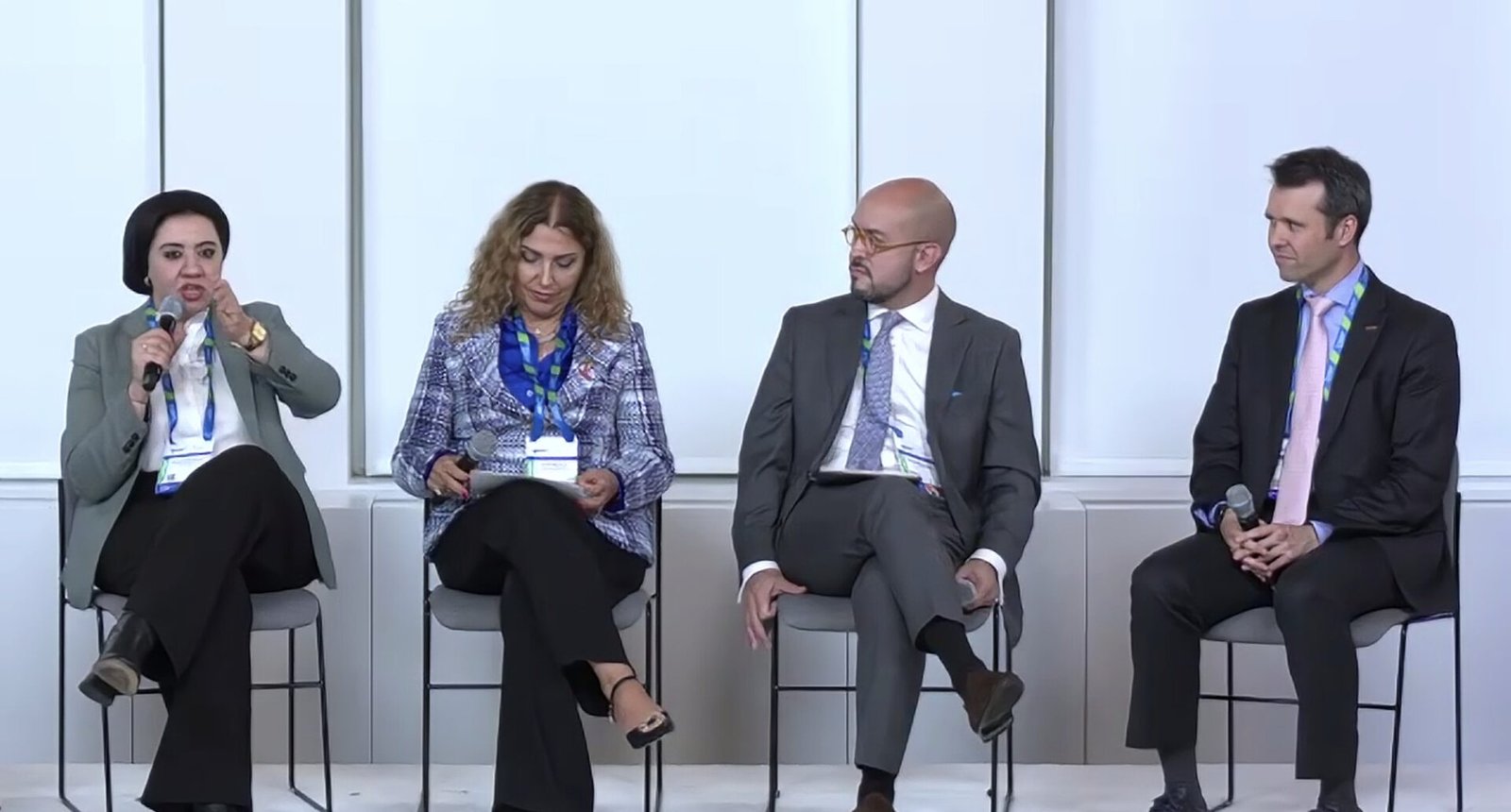
The discussions focused on how tackling global health challenges demands convergence—cross-sector collaboration between science, finance, policy, and civil society.

Bleddyn Rees, Deputy Chair, and Richard Eagleton, Business Impact and Growth Director at Global Health Connector, opened the day by calling for the need to break down silos between health, finance, and science to translate ideas into tangible solutions.
This first panel was moderated by Brian O’Connor, Chair of Global Health Connector, and explored how convergence is reshaping health systems globally.
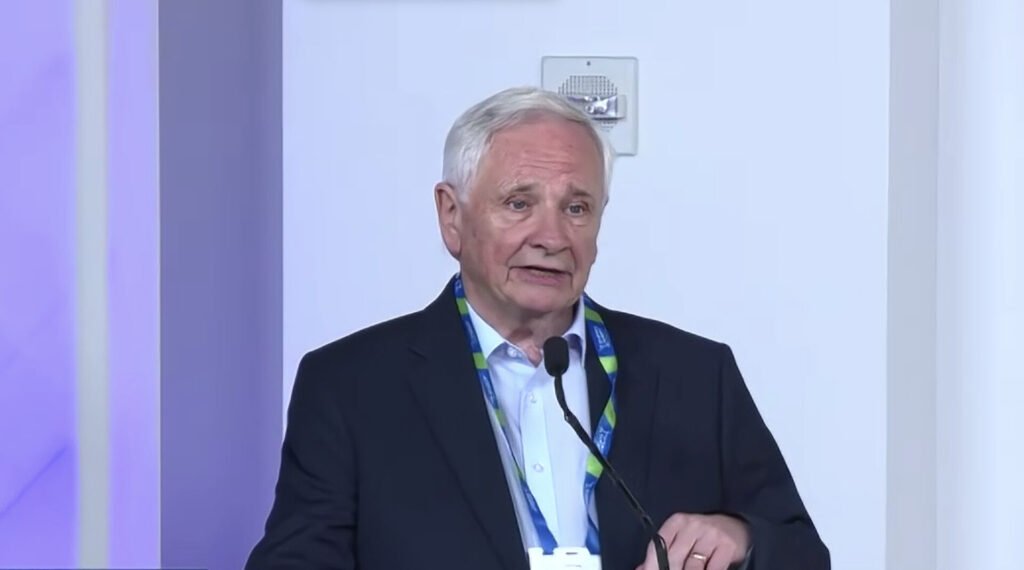
“This is about literally transforming and saving lives—we must remember that convergence has a real human impact.”
Jean Philbert Nsengimana (Africa CDC) shared how Rwanda’s Health Intelligence Center and Kenya’s Digital Health Superhighway demonstrate scalable models for connected systems.
“Convergence starts with people and sectors coming together — like a puzzle, every piece matters. Without one, the solution remains incomplete.”
David Hawkins (AIM4ALL) presented outcome-based financing that links innovation to affordability, while Caroline Mbugua (GSMA) underscored the importance of digital infrastructure and interoperability:
“Without digitalisation, true convergence is impossible. It connects sectors and provides the data needed to tackle complex challenges.”
Dr Rajendra Pratap Gupta (Health Parliament, India) called obesity a “systemic failure across science, urban design, and policy” and urged for a shift from treatment to prevention.
Dr Mariam Jashi (UNITE) noted that “every $1 invested in health yields $4 in economic return,” highlighting the economic imperative of investing in prevention. Moreover, the last two speakers stressed collaboration and efficiency over merely funding.
In the next session, moderator Lars Hartenstein (McKinsey Health Institute) turned the focus to non-communicable diseases and their broader impact on individual health. Experts discussed the science, technology, and policy connections. Key insights:
“Science communication is essential to build collective understanding and drive real-world change.” – Adam Wootton (DAISER).
Joe Nadglowski (Obesity Action Coalition) and Prof Mark Lawler (Queen’s University Belfast) agreed on the importance of using science and data to inform evidence-based policy decisions.
Panelists including Prof Ntobeko Ntusi (South African Medical Research Council), Prof Mark Lawler, Prof Jeffrey Lazarus (CUNY SPH & ISGlobal), and Charline Coquerel Couniot (Novo Nordisk) stressed that collaboration and implementation science are key to achieving impact at scale.
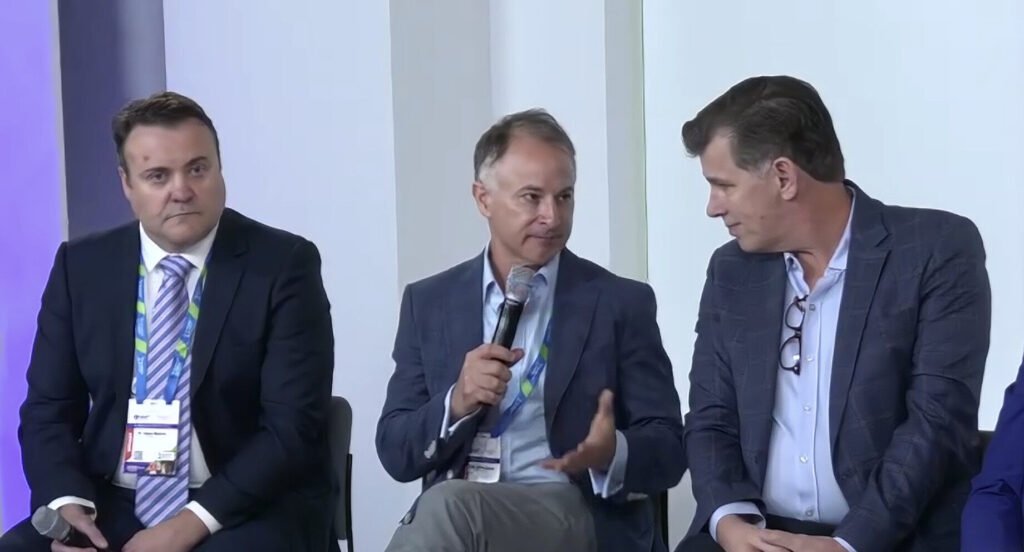
Moderated by Dr Irene Aninye (Society for Women’s Health Research), the session explored how primary care can integrate obesity and NCD prevention.
Dr Bruno Halpern (World Obesity Federation) highlighted obesity treatment as the foundation for diabetes prevention.
“If obesity is not recognised as a disease, we cannot have real solutions. Proper treatment could prevent nearly all cases of type 2 diabetes.”
Lisa Schaffer (Obesity Canada) and Sarah Le Brocq (All About Obesity) called for stigma-free, patient-centered care.“Eat less, move more” narratives discourage engagement with health services.
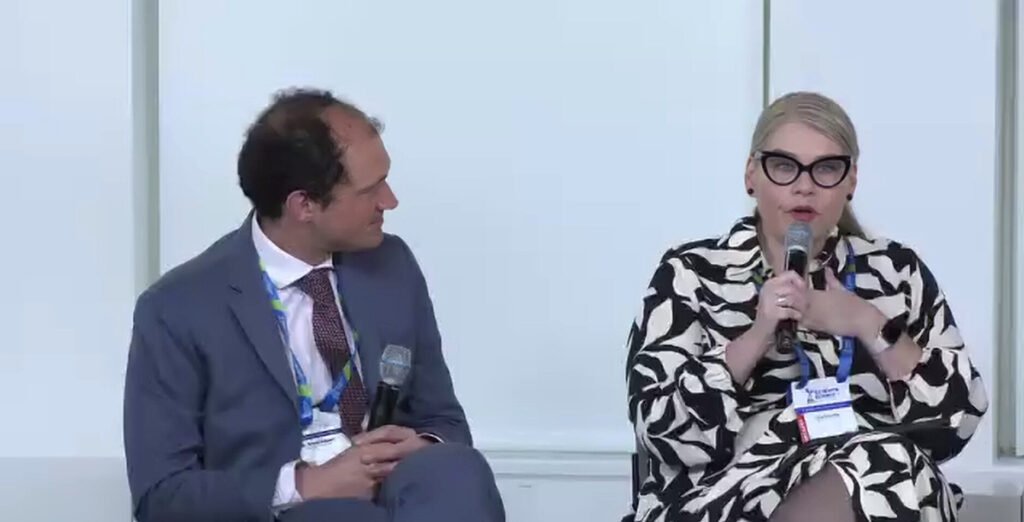
Dr Marius Geanta (Centre for Innovation in Medicine, Romania) showcased community-based models that empower local ownership of prevention.
Greg Perry (Global Self Care Federation) advocated for self-care frameworks, while Dr Amit Thakker (Africa Health Business) called for ‘collaboraction’—collaboration that drives action to strengthen healthcare systems in Africa.
“Middle- and low-income countries bear the brunt of chronic conditions, making urgent collaborative action on obesity essential.” – Dr Amit Thakker
Dr Michael Makunga (EDCTP) highlighted that addressing obesity and multimorbidity in Africa requires systemic solutions, integrating primary care and research to create resilient, equitable health systems.
The final session dynamically addressed how cross-sector policy integration can bridge silos between health, economy, and society.
Moderator Brad Herbig (Health Data & Analytics, McKinsey Health Institute), opened with a data-driven overview:
“NCDs cause 46 million deaths annually and 750 million years lived in poor health. Proven interventions could prevent 28 million deaths each year and add $11 trillion to global GDP by 2050.”
He emphasised that 25% of impact comes from outside the health sector, urging governments to treat health as an investment, not a cost.
Mike Farrar (Department of Health, Northern Ireland) reflected on the barriers created by vertical governance structures, saying:
“Our systems are designed vertically, but health spending is horizontal. That misalignment makes collaboration incredibly difficult.”
Guilherme Duarte (UNITe) described global health policy as confused and inert, calling for Health in All Policies and alignment of incentives across sectors.

Jackie Kassouf Maalouf, PhD, (International Diabetes Federation) shared global case studies—from the UAE’s National Nutrition Strategy to Finland’s cross-sector integration—reminding that “we can start from the bottom up; everyone has a role in improving health outcomes.”
Daniel Mora-Brito (IQVIA) underscored the role of data in coordination, warning that “without reliable data, policymakers are driving blindfolded.”
Amira Saber Qandil (Egyptian Parliament) highlighted how city planning, education, and civil society can align to reduce NCDs and food waste, while ensuring policies serve all citizens.
The main messages from Day 2 were:
The day closed with a unifying call to action: “Health is not a cost—it’s the foundation of prosperity. From talk to ‘collaboraction,’ it’s time to invest in prevention, systems, and people.”