

By Dr. J Dunn, Founder • MyHappyGenes, Inc.
As the world recognizes loneliness as a serious public health issue, Dr. J Dunn a clinician of more than 38 years and founder of MyHappyGenes® genetic testing platform, offers a hopeful, science-grounded perspective. Connection, she argues, is written into our very biology, and understanding our own genetic wiring can help us, and those we care for as we age, nurture it. This piece explores the emerging science of our “connection genes” and why compassionate, personalized education may be one of our most underused tools for supporting mental health in later life.
We don’t usually think of connection as biology. But it is, and the science behind it is some of the most hopeful I’ve encountered in more than three decades of clinical practice.
In June 2025, the World Health Organization’s Commission on Social Connection reported that loneliness is associated with roughly 871,000 deaths each year, about 100 every hour and that one in six people worldwide feel lonely. Two years earlier, the U.S. Surgeon General had already called loneliness an epidemic, noting that its toll on the body can rival smoking around 15 cigarettes a day. For older adults especially, navigating retirement, bereavement, and changing health, isolation can quietly wear on both mind and body.
I’ve watched this play out in real lives for years. And I’ve come to believe something that sounds almost too simple: connection is nourishment. Here is the science that convinced me.
Your brain’s “safe to connect” signal
At the heart of how we bond is a molecule called oxytocin, part hormone, part neurotransmitter, sometimes nicknamed the “love hormone.” Think of it as your brain’s “it’s safe to connect” signal: it softens fear and opens us to trust, warmth, and calm. What surprised me most is that not everyone’s oxytocin system runs the same way. Two genes help set the dial. OXTR shapes how sensitive we are to oxytocin, and CD38 influences how much of it we release. Research has associated variations in these genes with real differences in empathy, stress recovery, and how much comfort we draw from being around others.
In plain terms: some of us are soothed by a room full of people. Others recharge in solitude and bond through doing rather than touching. Neither is better. But when we don’t understand these differences, we tend to misread them as coldness, as neediness, as something wrong with us or with the people we love.
Why this matters as we age
This understanding becomes especially precious in later life. An older parent who withdraws isn’t necessarily unwell or difficult; their nervous system may simply seek connection in a different form. A caregiver who feels shut out may just be speaking a different biological language. When families and practitioners recognize the wiring, they can stop pushing one-size-fits-all “socializing” and start offering connection in the shape each person can actually receive, a shared meal, a slow walk, a quiet task done side by side.
A map, not a verdict
Here is what I most want people to hear: your genes are not your destiny. They are a map, not a verdict. The oxytocin system is responsive, to rest, to good nourishment, to balancing hormones, to safe relationships, and to the small daily practices that strengthen it. Understanding your genetic profile doesn’t box you in; it hands you a personalized place to start.
That is exactly why I created MyHappyGenes®. We help people understand the genetic variants research has associated with their brain chemistry and temperament, then pair that understanding with practical, natural, whole-person guidance and real human support. Not a dashboard that leaves you alone with your data, but a guided journey toward working with your biology rather than against it.
Loneliness is too large a challenge to face alone, which is rather the point. But I am genuinely hopeful, because the tools are within reach. When we treat connection as the biological need it truly is and help each person understand their own wiring with compassion, we give families, caregivers, and ageing adults a shared language for belonging.
Because no one should have to feel alone in their own biology.
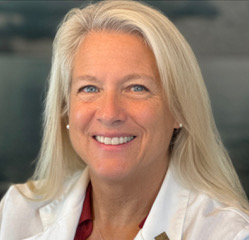
About the Author
Dr. J Dunn is the founder of MyHappyGenes® and a clinician with more than 38 years of experience. After overcoming her own struggles with mood and energy through biochemistry and genetics, she built MyHappyGenes® genetic testing platform, to help people understand their unique genetic profiles and support their health naturally pairing deep genetic insight with practical, whole-person guidance and real human support.