
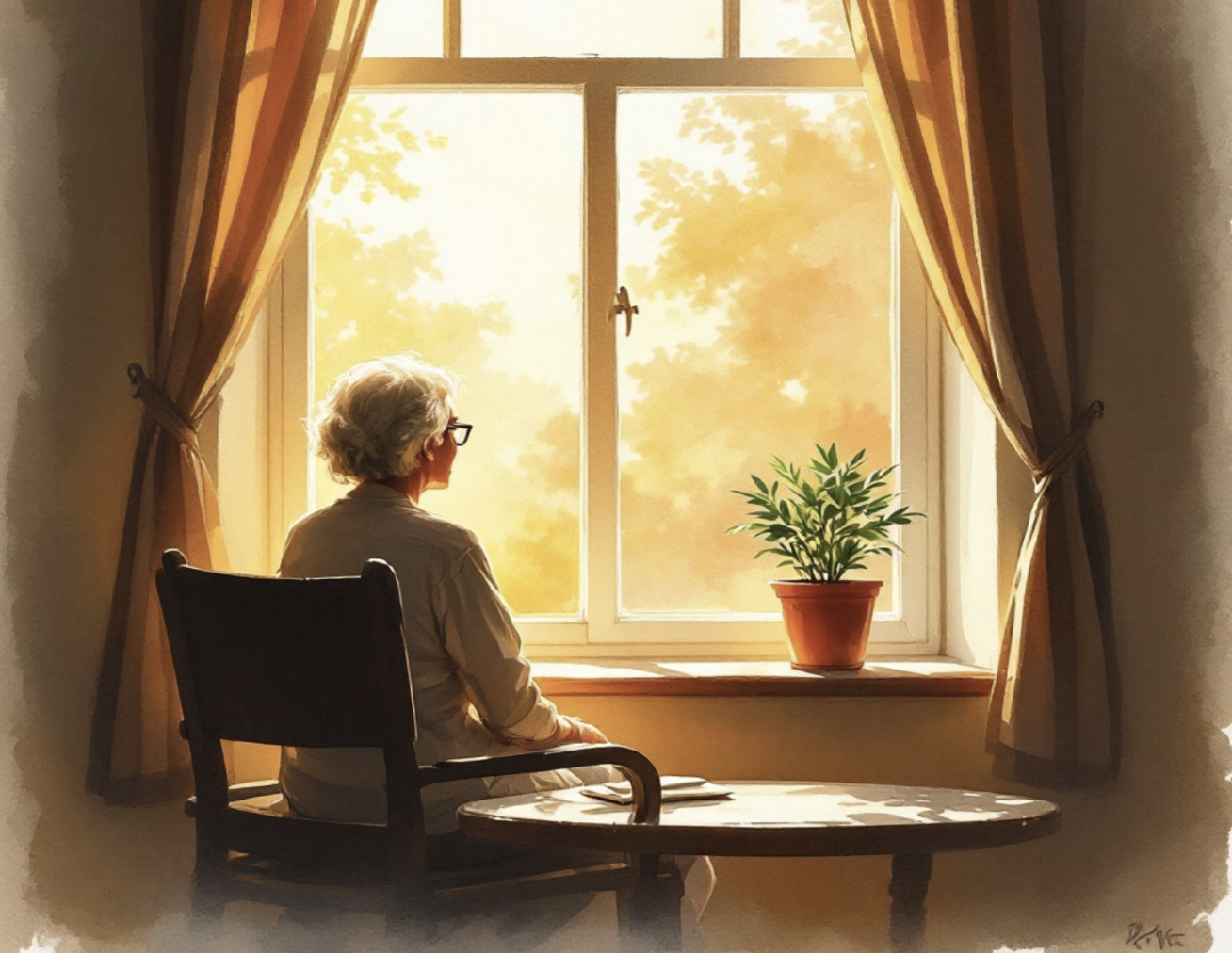
Loneliness in later life is not only about how often someone sees other people. It can also be a reflection of emotional disconnection, changes in health and independence, bereavement and a reduced sense of purpose or belonging. In this article, we explore why families, communities, mental health awareness, and opportunities to remain connected to life in personally meaningful ways should be part of meaningful support for older adults.
Author:
Alex Malioukis, Clinical Neuropsychologist & Cognitive Neuroscientist
Organisation:
The Self Research Institute ( TSRI is a nonprofit research institute with an international research team, advancing personal informatics and human data science through secure, person-centred tools that help people understand, manage, and benefit from their own health data.)
Loneliness in later life is, maybe too often, treated as a social isolation problem in itself. Social connection is vital, but loneliness may also be a sign of more profound emotional, psychological, cognitive, and existential needs that remain unmet. Supporting healthy aging, therefore, should probably involve much more than encouraging older people to ‘go out more’ or participate in social events. It additionally, and mainly, requires meaningful connection, mental health awareness, family and community involvement, as well as person-centered care.
Aging is a natural process. It can sometimes bring wisdom from experience, perspective, memory and a deeper appreciation of what matters. But it can also bring emotional complexity change. Retirement, bereavement, physical limitations, reduced independence, changes in family roles and a growing awareness of time. Loneliness is not only about being physically alone for many older adults. It can also be an internal experience: feeling less visible, less required, less understood, less integrated with the world around them.
This distinction is important. Too often loneliness is dealt with as if more social contact is the answer. Of course social contact is important. Surely, a coffee with a neighbour, a community group, a phone call or a visit to family can all make a real difference. But being there is sometimes not enough to alleviate the actual inner sense of loneliness. Even in a room full of people you can be emotionally alone. In that sense, these individuals may attend rather exciting or positive activities, but at the same time feel that nobody really knows them. They may be helped in practice, but not in voice. They may speak to other people regularly but still feel disconnected from their own identity, history and future.
This is why the phenomenon of loneliness in later life should be seen not only as a social issue, but a mental health and healthy ageing issue too. Older adults are a diverse group with diverse needs. Grief can make a person lonely in a case. Another may find it difficult because mobility problems reduce their independence. Another may be depressed, anxious, have memory changes, pain or sleep disruption or sensory problems such as hearing loss. For some, loneliness is tied to losing a professional role and the sense of purpose that went along with it. Finally, some may feel the disturbing sense that life is passing them by without their full participation.
Families can also help reduce this kind of loneliness. Being near older relatives is not simply about visiting them occasionally or meeting their biological needs. It may also mean involving them in decisions, asking for their opinions, respecting their choices, while understanding that aging can be a source of pride and vulnerability. Little acts of continuity count. These acts can take many forms and provide an underlying sense of safety over time. This could be through a lot of phone conversations, dinners, engagement in grandchildren’s lives, or just time spent together.
At the same time, not all older people have relatives close by. Some have no near kin. Some have lost a partner, a brother or sister, a friend. Some have distant, complicated or emotionally unsafe family relationships. In such cases families cannot carry the burden alone. The broader circle of support comprises communities, healthcare systems, social services, neighbours, volunteers, peer networks and community organisations. In a healthy society, the elderly without family should not become invisible.
Digital tools could have a role, too, particularly for people who are stationary, geographically isolated or unable to participate in regular activities. Video calls, telehealth, online groups, digital reminders and remote mental health help can keep people connected. But let’s not make technology a substitute for being there. Its value lies most in bolstering continuity, access and inclusion, not in becoming yet another barrier to people who may already feel left behind.
From a clinical and neuropsychological point of view, loneliness should be approached with curiosity, not assumptions. When an older adult says they are lonely, the question shouldn’t be just, “How often do you see people? It should also be, “Is there an emotional connection? “Do you feel useful?” “Do you feel understood? “Are there changes in mood, memory, sleep, pain, mobility or confidence that make connection more difficult?” These questions help us to move from generic solutions to person-centred support.
At this point we may understand that loneliness mitigation is not just about providing more activities. It’s about the making of meaningful ways of belonging. It requires families to be emotionally available when possible, communities to provide continuity, especially when families are not present, and healthcare systems to acknowledge loneliness as part of mental health and healthy aging. Like everyone else, older adults need more than contact. They need respect, choice, safety, and chances to stay connected with others, with themselves, and with life.
The goal, therefore, should probably be not only to help people be less alone. But to also help them feel less alone. And a good way to achieve that is to help them sense deep inside that their presence, memories, relationships, and future still matter.