
When patients struggle to follow treatment plans during clinical trials, it can affect both drug effectiveness and the overall patient experience. Improving support for participants and reducing early dropout rates can help create better treatments and contribute to a more sustainable healthcare system for everyone.
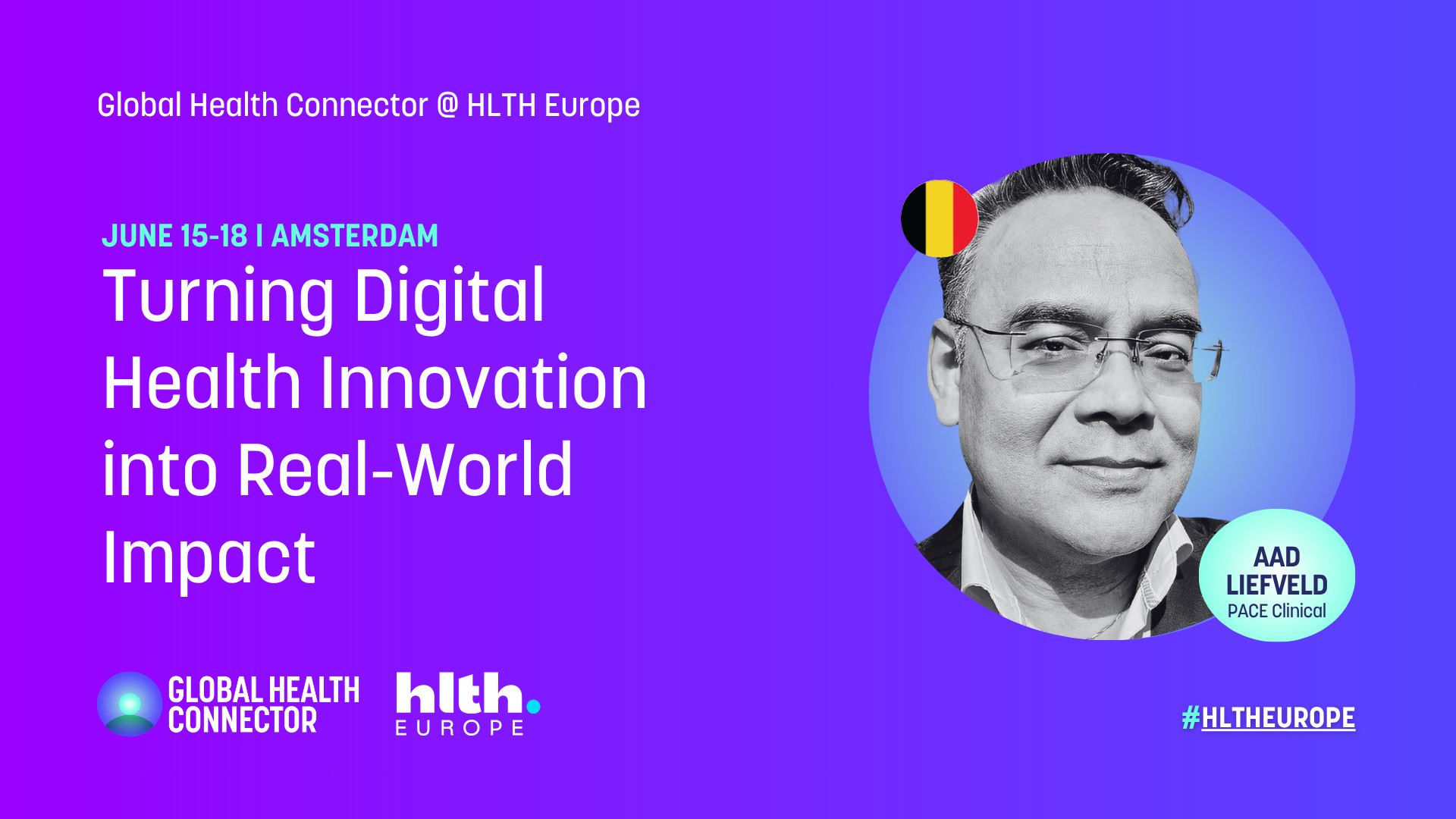
We discussed this critical issue with Aad Liefveld, an expert specialising in clinical trials and patient adherence, and a speaker at our upcoming Global Health Connector Partner Programme on 15 June, as part of HLTH Europe 2026. He is Chief Growth Officer at PACE Clinical and Advisory Board Member at Link2Trials.
He has over 30 years of management experience across multiple industries and is a strong advocate of patient centricity and patient experience.
Ahead of our panel, “Beyond the Pilot: Turning Digital Health Innovation into Real-World Impact,” in which he will participate, we wanted to learn more about Aad’s projects and work.
When I joined Link2Trials, a company specialised in patient recruitment and retention, I was confronted by the phenomenon of early dropout in clinical trials remaining at a steady rate of 25–30% across all conditions for decades. Early dropout can be seen as an extreme form of non-adherent behaviour and, like in clinical care, non-adherence in clinical trials has a profound negative impact on drug effectiveness and patient experience. When you connect the dots between this, the consequences for clinical trials, and the amount of time and effort spent on clinical trials, it becomes obvious that there is an opportunity to do better.
This epiphany led me to search for a simple, easy-to-use, and effective way to improve patient support and experience in order to enhance adherence behaviour during clinical trials. It resulted in the development of business processes and tools for adherence risk management, based on the Subjective Health Experience model of Prof. Dr. Sjaak Bloem. But it did not end there. The drugs and devices our industry develops will continue to go to market, and we will continue to see an even worse adherence situation, eventually affecting all of us. It dawned on me that finding ways to improve adherence is no longer just a professional goal; it is also a very personal responsibility as a member of our society. Improving early dropout rates and the patient experience during clinical trials will have a ripple effect and will eventually make healthcare more sustainable for all of us.
As a member of the advisory board of Link2Trials, I discussed my views and findings with the management team, and this led to the decision to invest in the BEAMER project and to become actively involved in its execution. The BEAMER project will effectively help not only to improve adherence to treatment in both clinical research and clinical care settings, but also to improve the patient experience during treatment or participation in a clinical trial. All of this will lead to more effective drugs, better treatment results, lower healthcare costs, and ultimately lessen the burden of poor health on society. What initially started as an addition to the Link2Trials services portfolio is now an independent company specialised in personalised patient support to enhance adherence during clinical trials: PACE Clinical.
As of 1 January 2026, PACE Clinical has taken over the role of Link2Trials in the BEAMER project.
Join this session to discover how three research projects are helping people live better lives while managing health conditions and undergoing treatment.
To better understand what the BEAMER project is about — and why it matters — here are three short articles written by Claire Everitt and me: