
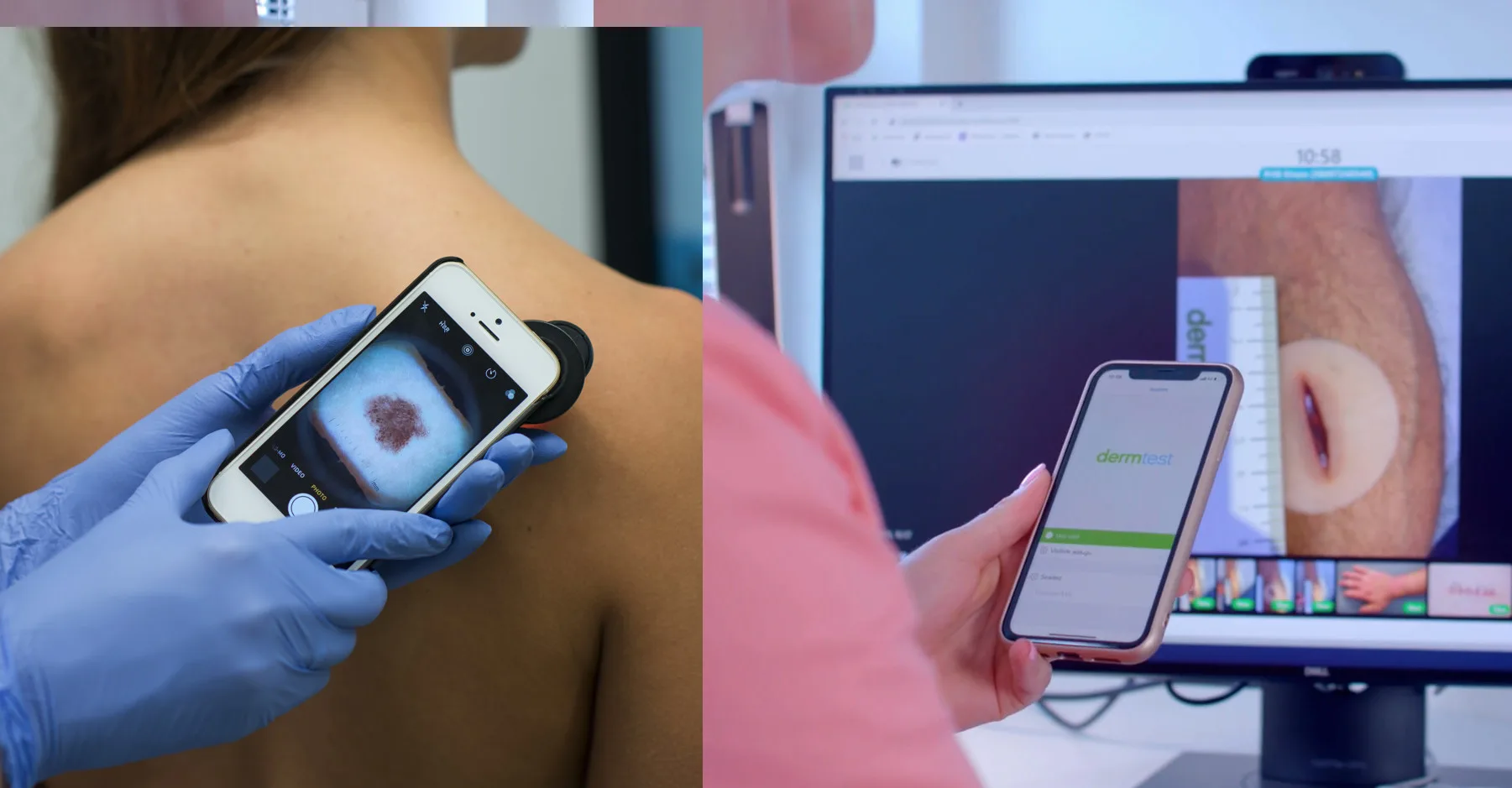
How can digital health solutions help healthcare systems move from fragmented consultations to connected, outcome-oriented care? Estonian health technology companies, also Tehnopol Science and Business Park HealthTech community members, Dermtest and DecDoc are addressing this challenge by connecting medical data, specialist expertise and clinical decision-making.
Healthcare systems across Europe face growing demand, limited specialist capacity and increasing financial pressure. Yet healthcare delivery remains fragmented. Medical information is scattered across systems, referrals often lack structured clinical data, and patients move between primary care, specialists and hospitals without sufficient continuity.
For the digital health group working under brand-names Dermtest and DecDoc, improving healthcare starts with connecting medical information, clinical expertise and decision-making. Dermtest started with medical photo management and skin cancer detection, while Decdoc is built for fluent GP-to-specialist teleconsultation flows. One company, two core offerings connected.
The ambition is to build the infrastructure for value-based healthcare: an approach that prioritises patient outcomes, quality of care and the efficient use of resources.
Dermtest and DecDoc address different but complementary parts of the patient pathway. While Dermtest focuses on medical photography, remote monitoring and clinical assessment, DecDoc connects primary care physicians with specialists through structured teleconsultations and referrals.
Together, their solutions aim to turn fragmented healthcare processes into more coordinated and scalable patient pathways.
Dermtest (Pildivaatur) is a digital platform for medical photography and documentation along the patient pathway. It is used by more than 100 hospitals and clinics in Estonia and Germany and supports over 15 clinical indications, including skin cancer detection, chronic wound care, inflammatory skin diseases and injury documentation.
The platform’s impact is reflected in its use in melanoma detection in Estonia. According to a 2022 study, approximately 10% of melanomas in Estonia are detected through Dermtest-enabled GP-to specialist teledermoscopy. Company’s data indicates that clinicians using the platform other medical photography features diagnose approximately half of the country’s melanomas.
Published clinical research in JAAD International has also demonstrated strong diagnostic performance, with 95.5% accuracy in melanoma management-plan recommendations, 90.5% sensitivity and 92.6% specificity.
By linking clinical data with Estonia’s national health registries, Dermtest can evaluate diagnostic accuracy and subsequent clinical outcomes in real-world healthcare settings. This creates opportunities to assess not only the performance of a digital tool, but also its contribution to the wider patient pathway.
Building on its experience in digital clinical workflows, Dermtest has also developed Dermapy, a remote monitoring solution for chronic inflammatory diseases, initially focusing on psoriasis.
Dermapy combines patient-reported outcomes, medical images and clinician-led follow-up to support ongoing disease management beyond individual appointments.
Studies have reported promising results: patients gained access to specialist care twice as fast, 68% reported improved disease management, and 76% reported improved or stable quality of life.
Further research is evaluating the solution’s clinical effectiveness and cost-effectiveness to support reimbursement and wider adoption.
DecDoc focuses on doctor-to-doctor teleconsultations and structured patient pathways. The platform connects primary care physicians with specialists through standardised clinical questionnaires, digital referrals and structured specialist responses.
Its scope includes dermatology, cardiology, ear, nose and throat (ENT) care, rheumatology, endocrinology, and other medical specialties.
By providing a structured way for primary care physicians to consult specialists, DecDoc enables patients to receive specialist guidance without always requiring an in-person appointment.
The approach supports better-informed clinical decisions and helps connect different stages of care, potentially reducing unnecessary fragmentation in the patient journey.
The company has spent more than a decade developing digital clinical workflows and monitoring healthcare processes and outcomes and launched several products. This experience has reinforced an important principle: technology creates value when it fits real clinical workflows and supports better decisions.
That experience also provides a foundation for their next step: integrating artificial intelligence into everyday healthcare.
Their ambition is to combine clinically validated AI technology with established patient pathways. This approach is supported by an outcome-based offering and a clinical safety system designed to enable the thoughtful deployment of AI in healthcare.
Rather than introducing AI as a standalone technology, the goal is to integrate it into clinical processes where it can support decision-making and contribute to measurable outcomes.
Estonia offers a valuable environment for this work, with its digital health infrastructure, national registries and established clinical networks. It is a melting-pot of digital health innovation, which enables fast validation and subsequent expansion in larger markets, like Germany where Dermtest and Decdoc have client clinics in 8 Bundesländer (states).
The experience of Dermtest and DecDoc illustrates a broader challenge for digital health innovation: developing a technology is only one part of the equation. Its value also depends on how effectively it connects with existing clinical workflows, supports healthcare professionals and contributes to better patient outcomes.
By bringing together medical images, structured clinical information, specialist expertise and remote monitoring, the two companies are working towards a more connected approach to healthcare delivery.
Their vision is to move healthcare from fragmented consultations towards connected, measurable and outcome-oriented patient pathways, combining medical data, specialist expertise and AI to deliver better care with available resources.
For healthcare professionals, researchers and health technology innovators, this approach highlights the importance of designing digital solutions around the entire patient journey, supported by clinical evidence and integrated into everyday care.